LAN DHCP and local DNS
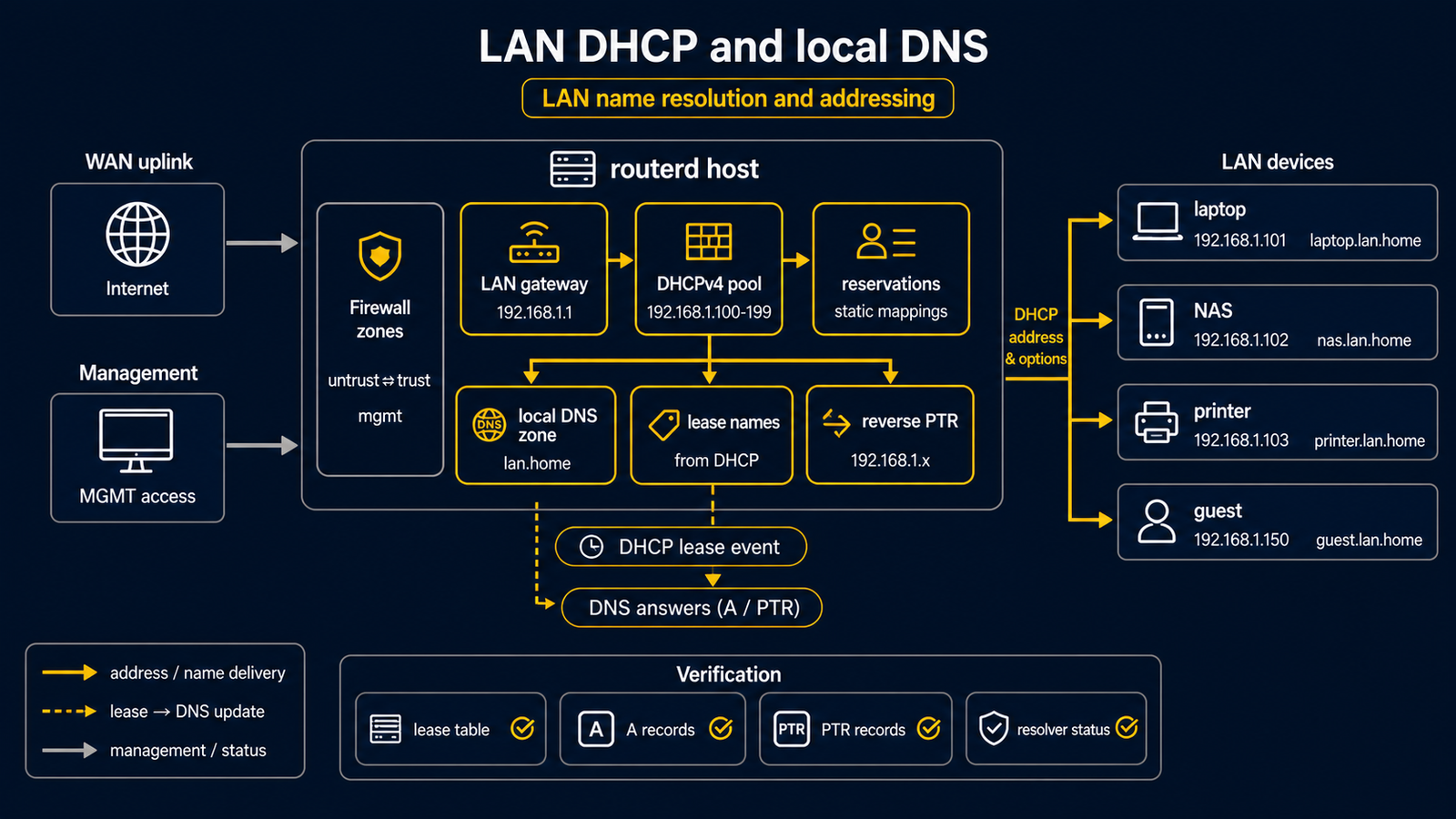
This example turns one LAN interface into a small home or lab service segment: routerd owns the LAN address, serves DHCPv4, answers a local DNS zone, and derives client names from DHCP leases.
The complete, validated YAML is in examples/example-lan-dns-dhcp.yaml.
Topology
Diagram map
| No. | Meaning | Main resources |
|---|---|---|
| [1] | Router address that also listens for DNS on the LAN. | IPv4StaticAddress/lan-base, DNSResolver/lan-resolver |
| [2] | Local DNS zone advertised as the DHCP search domain. | DNSZone/home |
| [3] | Dynamic clients that receive addresses and DNS settings. | DHCPv4Server/lan-dhcpv4 |
| [4] | Fixed infrastructure host with a stable lease and name. | DHCPv4Reservation/nas, DNSZone/home |
What this manages
| Area | routerd resources |
|---|---|
| LAN address | Interface/lan, IPv4StaticAddress/lan-base |
| Local names | DNSZone/home |
| Resolver | DNSResolver/lan-resolver |
| DHCPv4 | DHCPv4Server/lan-dhcpv4, DHCPv4Reservation/nas |
Key config
# [2] Local zone for names such as router.home.example and nas.home.example.
- kind: DNSZone
  metadata:
    name: home
  spec:
    zone: home.example
    records:
      - hostname: router
        ipv4From:
          resource: IPv4StaticAddress/lan-base
          field: address
    dhcpDerived:
      sources:
        - DHCPv4Server/lan-dhcpv4
      ddns: true

# [3] DHCP advertises the router address as gateway and DNS.
- kind: DHCPv4Server
  metadata:
    name: lan-dhcpv4
  spec:
    gatewayFrom:
      resource: IPv4StaticAddress/lan-base
      field: address
    dnsServerFrom:
      - resource: IPv4StaticAddress/lan-base
        field: address
    domainFrom:
      resource: DNSZone/home
      field: zone
Checks
routerd validate --config examples/example-lan-dns-dhcp.yaml

workdir=$(mktemp -d)
routerd apply --config examples/example-lan-dns-dhcp.yaml --once --dry-run \
  --state-file "$workdir/state.db" \
  --ledger-file "$workdir/ledger.db" \
  --status-file "$workdir/status.json"
rm -rf "$workdir"
After the service is running, inspect routerctl describe DNSZone/home,
routerctl describe DHCPv4Server/lan-dhcpv4, and
dig @192.168.30.1 router.home.example from the LAN.
Common edits
- Change
home.exampleto the local search domain you want to advertise. - Add
DHCPv4Reservationentries for NAS, printers, and infrastructure hosts. - Add
DNSForwarderandDNSUpstreamresources when some domains need private upstreams.