CloudEdge Mobility 演示
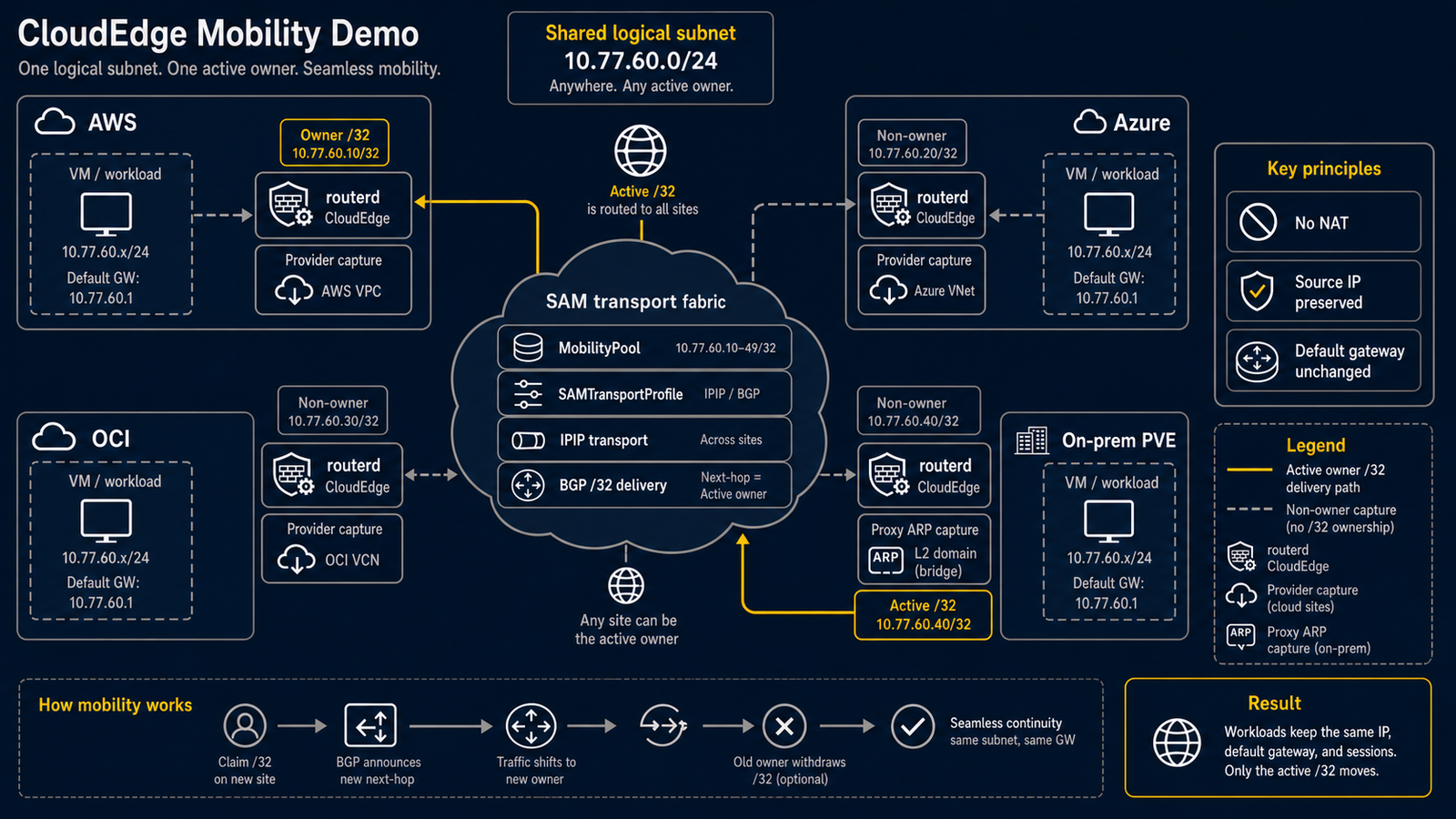
实验性功能(CloudEdge)。Selective Address Mobility (SAM) 的实验室演示。on-prem、AWS、Azure、OCI 共享一个逻辑
/24,每个站点都能提供其他站点拥有的地址 — 无 NAT 且不变更客户端的默认网关。可执行包位于examples/cloudedge-mobility-demo/。
本演示展示的内容
- 1 个逻辑
/24由 4 个站点共享 — on-prem / AWS / Azure / OCI 全部将10.77.60.0/24作为单一逻辑地址空间。 - 非拥有者站点捕获拥有者的地址 — 每个拥有者地址在所有其他站点变为可达(云端:提供商的辅助 IP,on-prem:proxy ARP)。进行单一拥有者仲裁。
- 12 方向 SSH 流通过 — 4 个演示客户端之间全方向通信。
- 无 NAT、源 IP 保留、网关无变更 — 连接保持实际源 IP,不进行 NAT,不触碰客户端的默认网关。
- 云端维护捕获迁移(D5) — 捕获的地址在同一提供商内迁移到另一个路由器作为备用,流量通过新的持有者恢复。
地址设计
所有 4 个站点共享一个逻辑子网,每个站点仅拥有其中 1 个 /32。
| 站点 | routerd 节点 | 拥有者地址 | 捕获机制 |
|---|---|---|---|
| On-prem | onprem-router | 10.77.60.10/32 | LAN 上的 Proxy ARP |
| AWS | aws-router-a | 10.77.60.11/32 | ENI 辅助 IP |
| Azure | azure-router | 10.77.60.12/32 | NIC 辅助 ipConfig |
| OCI | oci-router | 10.77.60.13/32 | VNIC 辅助私有 IP |
逻辑子网:10.77.60.0/24。路由器间传输使用独立的 RFC1918 端点/内部地址体系(与链路本地 169.254/16 或 CGNAT 100.64/10 分离)。地址约束请参见 Selective Address Mobility。
数据平面
- provider-secondary-ip 捕获 — 在每个云端路由器上,其他站点的拥有者地址作为辅助 IP 附加到该 ENI / NIC / VNIC,云端 fabric 将流量交付到该路由器。
- proxy-ARP 捕获 — 在 on-prem,路由器在 LAN 上对其他站点的拥有者地址响应 ARP。
- BGP
/32交付 — 每个拥有者广告其拥有的/32,其他路由器导入最佳路径并通过 overlay 转发到拥有站点的路由器。 - 生成的 SAM 传输 — 路由器通过从
SAMTransportProfile导出的 IPIP 隧道和 BGP 对等体互连。如果启用 WireGuard,则为端点限定的加密底层网络。其AllowedIPs包含传输端点前缀,不包含移动/32。
交付是路由(而非 NAT),因此源 IP 得以保留,客户端的默认网关不会变更。
控制平面
操作员只需声明意图,其余均为导出。
- SAMNodeSet — 7 台 router 的唯一共享 identity/topology/placement registry。
- MobilityPool — 本地 address/capture intent。它导入该 node set,只保留 self 的 provider、capture、discovery overlay。
- 北极星成员结构 — 每个渲染配置通过
profiles.cloudCaptures、spec.values、targetFrom、subnetRefFrom完全声明自身站点,不重复 remote member 或其提供商 NIC/子网实现细节。 - SAMTransportProfile — 从共享拓扑和内部前缀导出逐对等体的
TunnelInterface、端点/32IPv4Route、BGPPeer资源。 - BGP
/32mobility 路径 — 每个拥有者广告其拥有的主机路由,其他站点通过生成的 SAM 传输学习当前最佳路径。 - 提供商 trap 操作 — 云端路由器最终将远程拥有的
/32作为辅助 IP assign/unassign 以进行本地捕获。这些操作不再位于关键转发路径上。 - Event Federation —
routerd.client.ipv4.observed事实在站点间传播(EventGroup/EventPeer/EventSubscription,参见 Event Federation)。 - 提供商操作 executor — 在
ProviderActionPolicy下,使用实例自身的云原生 ID 执行门控云端变更(辅助 IP 的 assign / unassign、forwarding)(参见 ADR 0007)。 - pathSig fencing — 提供商操作针对当前 BGP 期望路径签名和持有者进行 fence,因此过时的操作无法变更在其他地方已重新收敛的路由。
示例配置使用共享 SAMNodeSet 和 MobilityPool.membersFrom。每个 Pool 只保留一个 local
self overlay;remote identity、placement、maintenance 留在 node set 中。remote member 的
provider、capture 与 discovery detail 会被 routerctl validate、plan、apply 拒绝。
运行方法
使用 examples/cloudedge-mobility-demo/ 中的包。假设实验室实例、NIC/VNIC、ID 权限、SSH、可选的 WireGuard 端点密钥、提供商 CLI 已准备就绪 — 脚本不会配置云端资源。
cd examples/cloudedge-mobility-demo
cp env.example env
$EDITOR env            # 填写所有占位符。secret 不要放入 git

./run-demo.sh          # 渲染 + 部署、事件发布、D3 运行,然后 D5 迁移
./collect-evidence.sh  # 收集提供商状态、日志、连接信息
./reset-lab.sh         # 尽力清理。停止计算资源以避免闲置费用
无论是否失败,每次运行后都请执行 reset-lab.sh。
已验证的结果
- D1 位置自动反映:出现在 on-prem 的拥有者地址被各云端路由器识别。
- D2 云端 -> on-prem 捕获(proxy ARP)。
- D3 4 站点 12 方向 ping + SSH 通过 — 源 IP 保留、无 NAT、默认网关无变更。
- D4 on-prem HA / VRRP 捕获故障转移。
- D5 云端维护 / 捕获迁移通过 — drain
aws-router-a后,捕获的地址迁移到aws-router-b,流量通过 B 恢复。过时的 pathSig 操作被 fence(skipped: stale mobility desired path)。参见 D5 证据。
注意事项
- 这是实验室演示,不是生产就绪的交钥匙方案。
- 不是完整的 L2 扩展 / EVPN — 没有广播/多播桥接。
- 这是选择性
/32地址移动性:不是整个子网,而是选定的地址在站点间移动。 - 脚本假设预配置的实例,使用占位的非机密逻辑地址。绝不提交实际的账户/订阅/OCID/ENI/VNIC ID 或私钥。