有状态防火墙
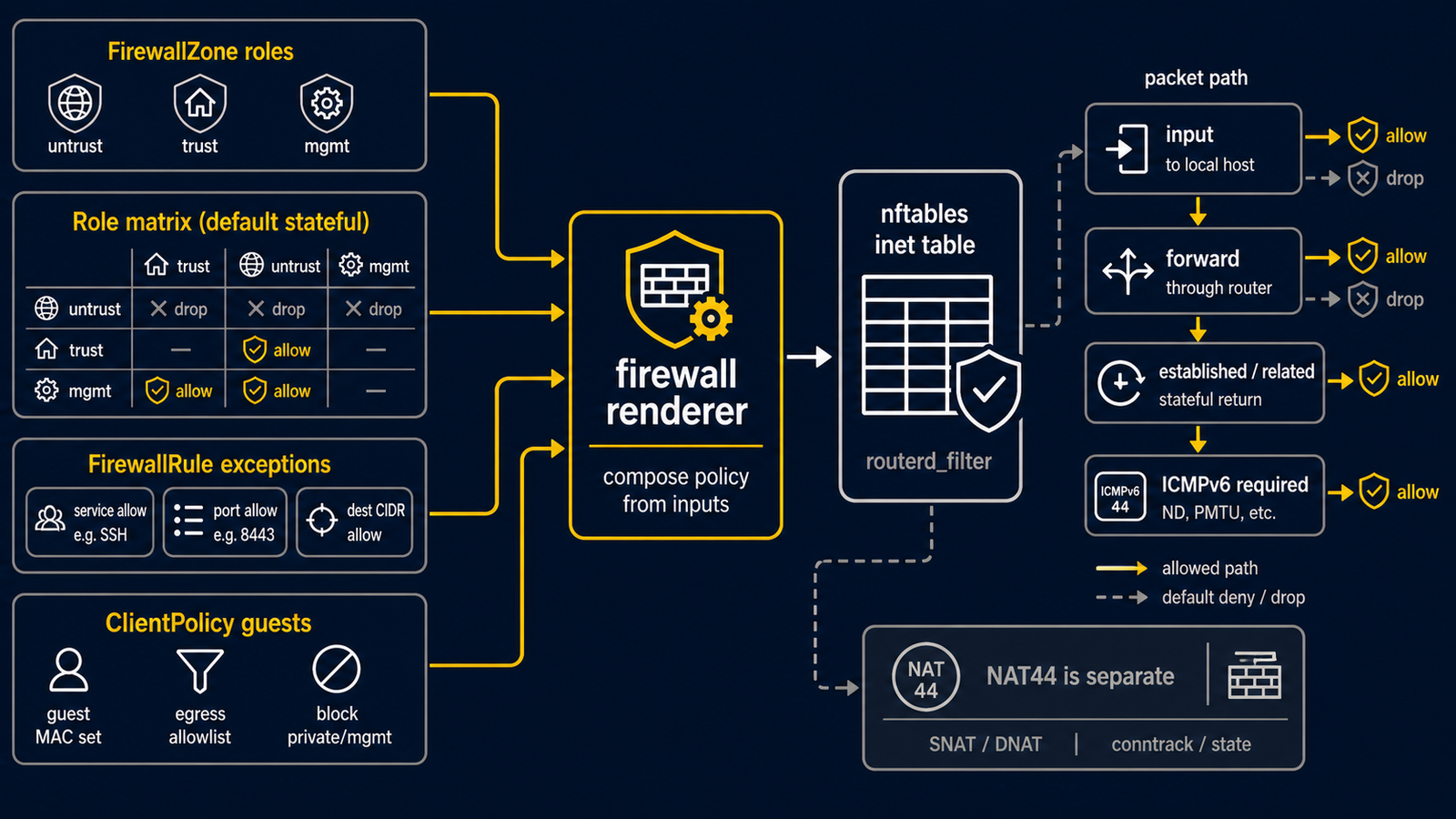
routerd 管理 nftables 的 inet routerd_filter 表。
防火墙以 4 种资源表达。
FirewallZone将接口分配至区域。FirewallPolicy表示拒绝日志等全局配置。FirewallRule表示无法以角色组合表达的例外。ClientPolicy依 MAC 地址分类 LAN 客户端。
角色有 untrust、trust、mgmt 三种。wan、lan、
management 等是区域名称,需与角色区分看待。
默认行为由以下表格决定:
| 来源 | self | mgmt | trust | untrust |
|---|---|---|---|---|
mgmt | 允许 | 允许 | 允许 | 允许 |
trust | 允许 | 拒绝 | 允许 | 允许 |
untrust | 拒绝 | 拒绝 | 拒绝 | 拒绝 |
所生成的规则始终允许已建立的通信、关联通信、loopback,以及必要的 ICMPv6。
DHCPv6 PD、DS-Lite、dnsmasq 的 DHCP、routerd-dns-resolver 等所需的开口也由 routerd 在内部生成。
NAT44 使用独立的 ip routerd_nat 表。
Rule expression
FirewallRule 支持依 CIDR 匹配来源 / 目的地、可复用的 IPAddressSet 目的地引用、TCP/UDP 的 sourcePorts / destinationPorts、ICMP / ICMPv6 的 type 名称、nftables 的 rateLimit,以及以来源为单位的 connLimit。
rateLimit 与 connLimit 在超过阈值的通信时相符,因此基本上与 drop / reject 规则组合使用,以缓解扫描与暴力破解攻击。
访客设备隔离
ClientPolicy 是依 MAC 地址分类同一 LAN 网段内设备的访客模式。
适用于可信任设备与访客设备从同一 DHCP 服务器获取地址的环境。
访客设备仅能使用路由器的最小限度服务,无法访问私有网络。
策略有两种:
| mode | 行为 |
|---|---|
include | 仅将列表中的 MAC 地址视为访客,其余为 trusted。 |
exclude | 仅将列表中的 MAC 地址视为 trusted,对象接口上的其余设备视为访客。 |
ClientPolicy.spec.macs 是常用场景的简写形式。省略 interfaces 时,对象为所有属于 trust FirewallZone 的接口。spec.isolation 可以易读的方式表达互联网、LAN、management、本地探索的 allow / deny。
访客设备默认可使用 DNS、DHCP、NTP。
目的地为 10.0.0.0/8、172.16.0.0/12、192.168.0.0/16、fc00::/7 的通信会被拒绝。
面向全球互联网的通信,依一般的区域矩阵与路由策略处理。
ClientPolicy 以 Linux nftables 的 Ethernet 来源地址集合实现。
FreeBSD pf 在 routed filter path 上不具备相同的 MAC 匹配模型,routerd 明确将此资源视为不支持。
日志
FirewallPolicy.spec.logDeny 为 true,且 FirewallEventLog 资源有效时,
所生成的 nftables 规则会将被拒绝的数据包送至配置好的 NFLOG group。
在 Linux 上,routerd-firewall-logger 直接从 nfnetlink 读取该 group,
并存储至 firewall-logs.db,不另外启动数据包捕获程序。
可完整存储 NFLOG 的 prefix、接口、数据包 family、协议、
地址及端口。
Web 管理界面的 Firewall 标签页与 routerctl get firewall-logs 会读取此数据库。
请以受管理的 generated service artifacts 方式启用 logger。
例如使用 routerd-firewall-logger daemon --path /var/lib/routerd/firewall-logs.db --nflog-group 1。
若要将已接受的流量用于 DPI 观测,可通过 FirewallEventLog.spec.log.copyRange
配置 NFLOG 从每个数据包复制的数据量上限。
配置为 1536 或 2048 字节左右,可在看到 TLS/HTTP/DNS 分类所需的数据包开头的同时,
避免持续将整个数据包复制至用户空间。