状态与拥有权
routerd 将声明的意图与观测到的状态分开处理。 YAML 是用户管理的意图。 SQLite、租约文件、events.jsonl 则是 routerd 及专属守护进程观测到的状态。
状态的存放位置
正式版安装时,配置的正本存放在 /usr/local/etc/routerd/router.yaml。
routerd 可执行文件存放在 /usr/local/sbin。
Linux 上的状态存放位置如下所示。
| 种类 | 示例 |
|---|---|
| routerd 状态数据库 | /var/lib/routerd/routerd.db |
| DHCPv6-PD 租约 | /var/lib/routerd/dhcpv6-client/wan-pd/lease.json |
| DHCPv4 租约 | /var/lib/routerd/dhcpv4-client/wan/lease.json |
| PPPoE 状态 | /var/lib/routerd/pppoe-client/<name>/state.json |
| 健康检查状态 | /var/lib/routerd/healthcheck/<name>/state.json |
| 运行时 socket | /run/routerd/.../*.sock |
FreeBSD 上,配置与可执行文件同样存放在 /usr/local 下。
运行时 socket 存放在 /var/run/routerd。
持久状态存放在 /var/db/routerd。
拥有权的概念
routerd 在主机端创建的配置对象,各自有其拥有来源资源。
例如 dnsmasq 配置由 DHCP 和 RA 各资源生成(render),routerd-dns-resolver 的配置由 DNSResolver 和 DNSZone 生成,nftables 的 NAT 表格由 NAT44Rule 生成。
从多个隧道汇集而来的 TCP MSS clamp 表格则由最上层的 Router 拥有。
明确掌握拥有来源后,可以判断以下事项:
- 这个配置对象是否允许 routerd 修改。
- 从 YAML 中删除资源时,是否也可以删除主机端的对应配置。
- 只是纳管既有配置,还是由 routerd 全新创建。
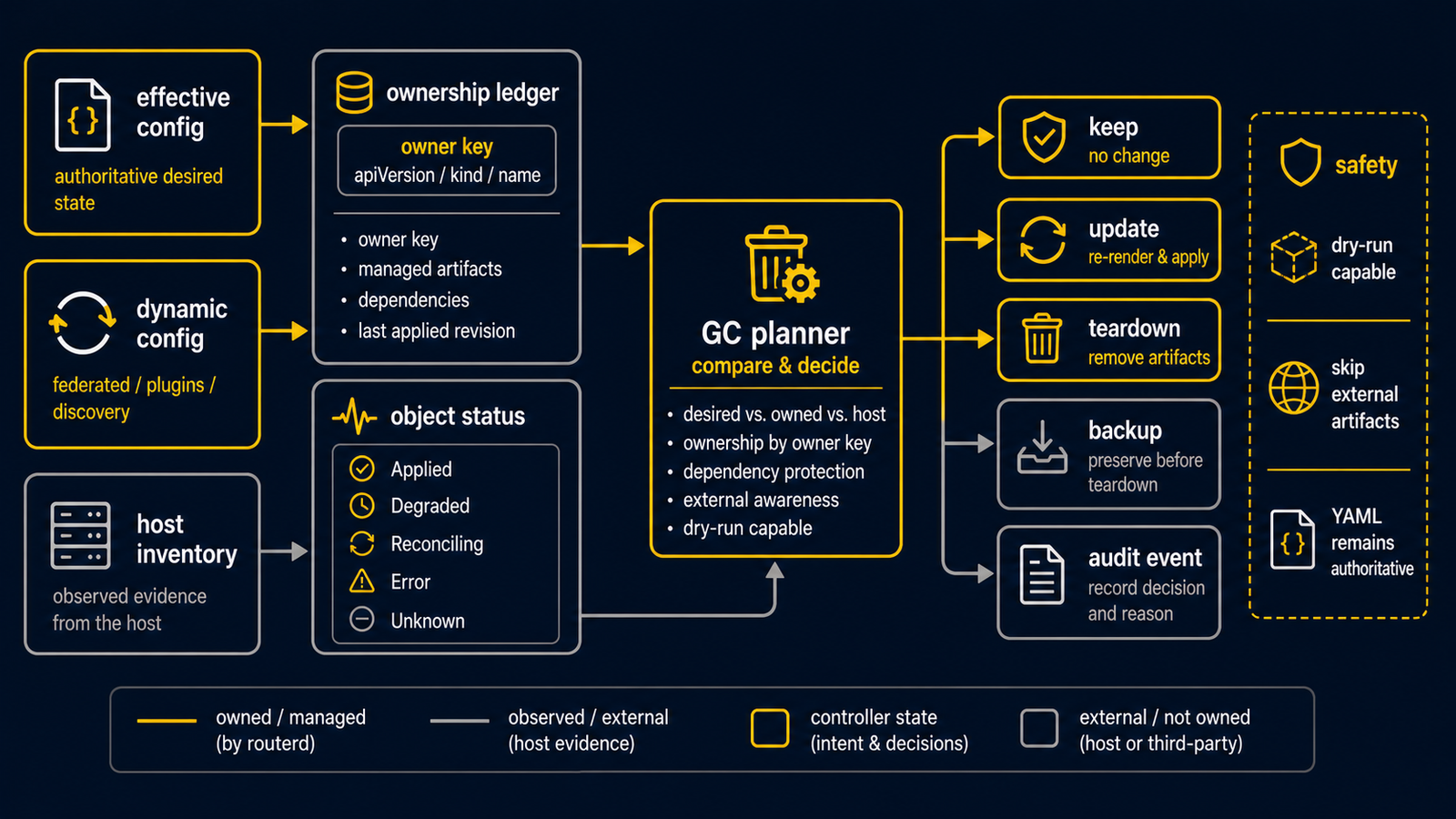
owner key 是 apiVersion/kind/name;apply generation 不属于该 identity。
resource status 包含 owner 与 lifecycle metadata,使 stale cleanup path 也能区分
routerd-managed resource 与 adopted/external object。
lifecycle GC
routerd 保存具体 host artifact 的 ownership ledger,以及 resource-specific teardown
所需的 object status。在 apply、serve startup 与 delete flow 中,generic GC planner
会将这些记录与 apply 使用的同一份 effective config 比较。effective config 包含
when filtering 之后的 startup YAML、active dynamic config 与生成的 SAM resource。
GC plan 可以表示 owned artifact 删除、resource teardown、ledger row forget、stale status row 删除、event 记录,以及破坏性 cleanup 前所需的 state backup。不支持的 OS integration 会被跳过,adopted 或 externally managed status 会被保留。
resource 对应的 artifact map 与 teardown contract 请参阅 资源拥有权。
不使用过时状态
租约和观测值虽然方便,但持续使用过时的值是危险的。 特别是 DHCPv6-PD 的前缀,只有在确认为 Bound 状态时才会向下游展开。 无法确认时,会停止应用 AAAA 记录、RA、DHCPv6 服务器和 LAN IPv6 地址。
事件
routerd 及专属守护进程会将状态变化记录为事件。
事件保存在 SQLite 的 events 表格,以及各守护进程的 events.jsonl 中。
EventRule 和 DerivedEvent 会利用这些事件和状态,生成虚拟的状态变化。
应用世代
status 中显示的 generation 是最后完成的应用世代编号。
此值在 routerctl apply 更新主机端意图、并将应用完成记录至 SQLite 时递增。
这不是调和(reconcile)循环的执行次数。
dry-run 计划、守护进程事件、健康检查、控制器链的定期调和均不会使其递增。
新的应用世代会保存当时应用的 YAML 快照。
Web 管理界面使用此快照,以只读方式显示世代历史记录,以及世代间的差异(unified diff)。
在 YAML 保存功能导入之前的记录仍作为历史保留,但无法作为差异显示的对象。
有状态数据包过滤器
在 Linux 上,routerd 以一次 nft -f 事务更新 nftables 的管理表格。
生成(render)的规则集会在必要时创建管理表格。
之后在同一个 nftables 批次中清空表格,并载入新的链。
防火墙区域的接口 set 或 client-policy 的 MAC set 等由 routerd 拥有的具名 set,
在重新定义之前只会删除受管理的 set。
这样可以防止已删除的 set 元素在重新载入后残留。
不会将运行中的 NAT 表格或过滤器表格删除后重建。
因此,即使 routerd 重新启动或进行一般配置变更,现有的 conntrack 条目仍会保留在内核的状态表格中。
在 FreeBSD 上,routerd 以 pfctl -f 载入生成的 pf 规则。
pf 在重新载入规则时,只要不明确清除状态,就会保留现有的状态表格。
routerd 的一般应用处理不会清除 pf 的状态。