资源模型
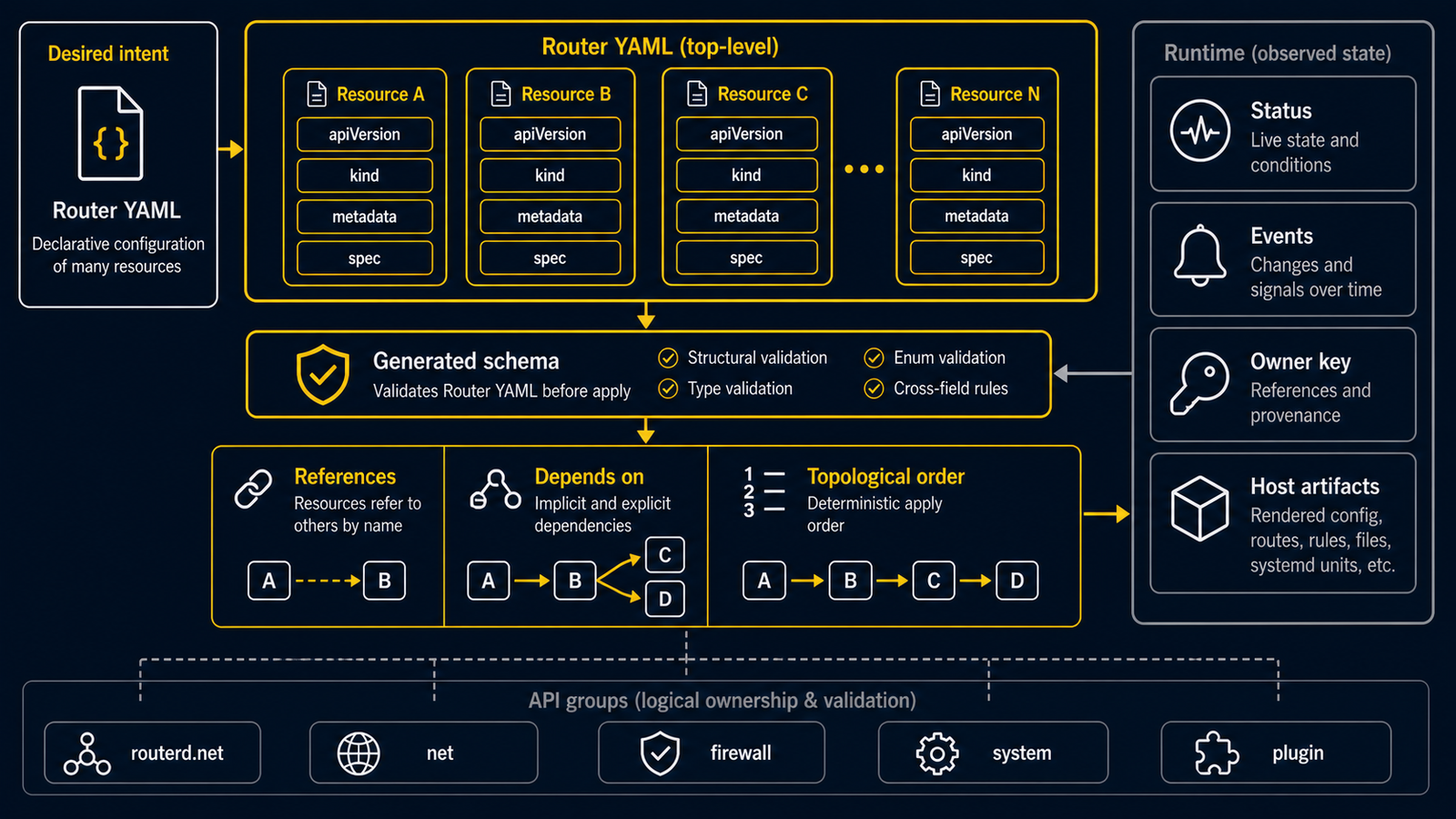
routerd 的配置由最上层的 Router 以及其下并列的多个资源所构成。
每个资源的格式与 Kubernetes 相近。
apiVersion: net.routerd.net/v1alpha1
kind: DHCPv6PrefixDelegation
metadata:
  name: wan-pd
spec:
  interface: wan
公共字段
apiVersion:资源所属的 API 组与版本。kind:资源的类别(Kind)。metadata.name:在相同kind中唯一的名称。spec:用户声明的意图。status:routerd 或专属守护进程观测到的状态。
配置文件中主要编写的是 spec。
status 则通过控制 API、状态数据库,以及守护进程的 /v1/status 来确认。
API 组
routerd 使用以下 API 组。
| 组 | 用途 |
|---|---|
routerd.net/v1alpha1 | 最上层的 Router |
net.routerd.net/v1alpha1 | 接口、DHCP、DNS、路由、隧道、WAN 选择、连接流量记录 |
firewall.routerd.net/v1alpha1 | 防火墙区域、策略、规则、记录 |
system.routerd.net/v1alpha1 | 主机名、软件包、sysctl、网络接管、systemd 单元、NTP、日志转发、Web 管理界面 |
plugin.routerd.net/v1alpha1 | 受信任的本地插件 |
不使用 routerd.io 这类临时组名称。
依赖关系
资源以名称互相引用。
例如 IPv6DelegatedAddress 引用 DHCPv6PrefixDelegation,DSLiteTunnel 引用 DHCPv6Information 和 DNSResolver 的结果。
当被引用的资源尚未就绪时,资源会维持在 Pending 状态。
待引用资源就绪后,会依次进入 Applied、Bound、Up、Installed、Healthy 等阶段。
dependsOn
部分资源可通过 dependsOn 指定应用的前置条件。
dependsOn 中需明确指定所引用的资源及其状态字段。
dependsOn:
  - resource: DHCPv6PrefixDelegation/wan-pd
    phase: Bound
  - resource: Interface/lan
    phase: Up
若要使用其他资源的状态值,不在一般字段中编写表达式,而是使用
deviceFrom、gatewayFrom、addressFrom、ipv4From、ipv6From、
prefixFrom、rdnssFrom、addressFrom 等专用字段。
deviceFrom:
  resource: DSLiteTunnel/ds-lite
  field: interface
拥有引用
ownerRefs 表示某个资源从属于另一个资源。
当父资源尚未就绪时,子资源不会持续输出过时的配置。
这是一个重要机制,用于防止 DHCPv6-PD 丢失时遗留旧有的 LAN IPv6 配置。
依赖委派前缀的 LAN IPv6 地址、RA、DNS 记录、DS-Lite,在父资源尚未就绪期间均不会输出过时状态。