資源模型
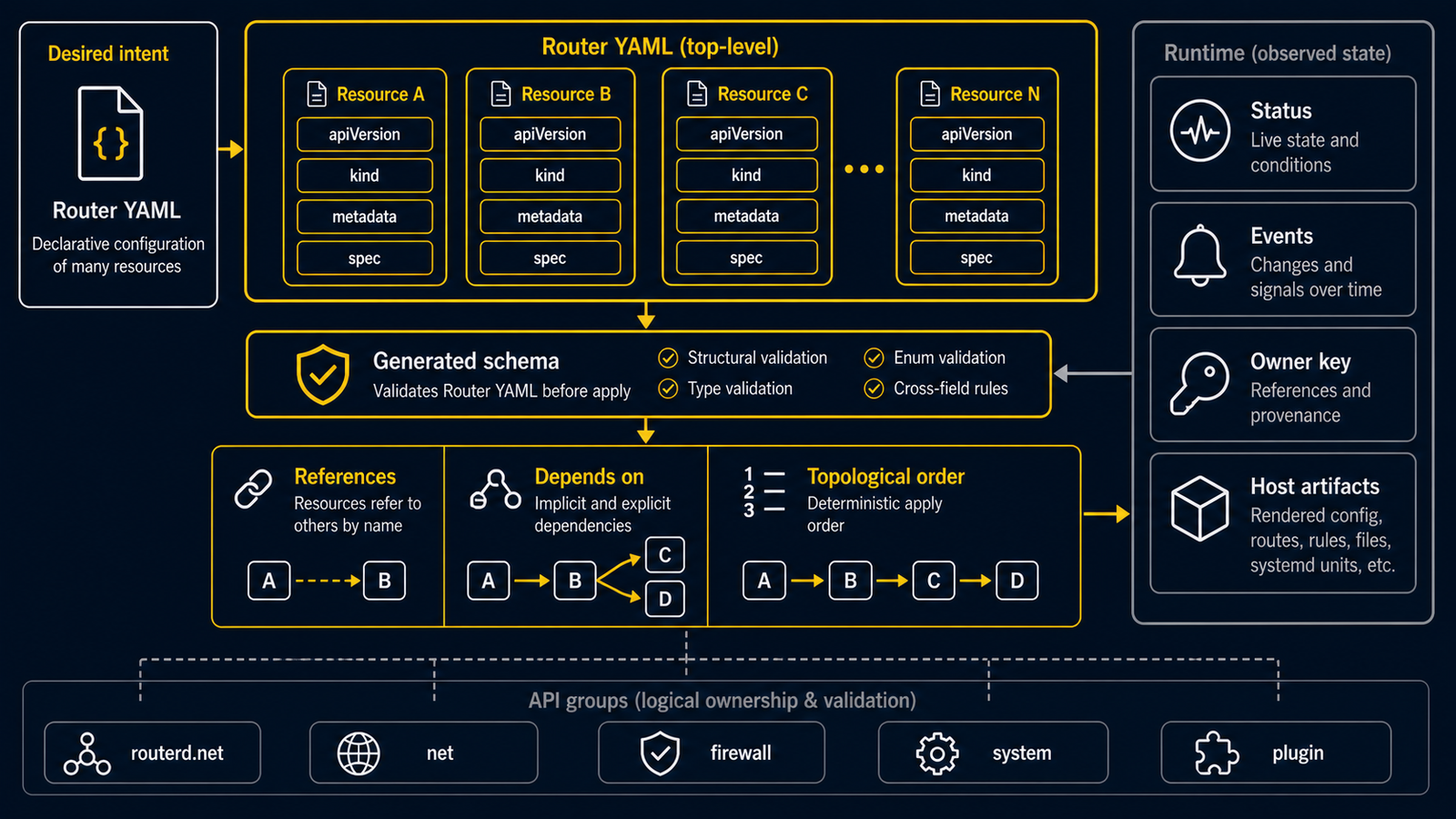
routerd 的設定由最上層的 Router 以及其下並列的多個資源所構成。
每個資源的格式與 Kubernetes 相近。
apiVersion: net.routerd.net/v1alpha1
kind: DHCPv6PrefixDelegation
metadata:
  name: wan-pd
spec:
  interface: wan
共通欄位
apiVersion:資源所屬的 API 群組與版本。kind:資源的種類(Kind)。metadata.name:在相同kind中唯一的名稱。spec:使用者宣告的意圖。status:routerd 或專屬常駐程式觀測到的狀態。
設定檔中主要撰寫的是 spec。
status 則透過控制 API、狀態資料庫,以及常駐程式的 /v1/status 來確認。
API 群組
routerd 使用以下 API 群組。
| 群組 | 用途 |
|---|---|
routerd.net/v1alpha1 | 最上層的 Router |
net.routerd.net/v1alpha1 | 介面、DHCP、DNS、路由、通道、WAN 選擇、連線流量記錄 |
firewall.routerd.net/v1alpha1 | 防火牆區域、政策、規則、記錄 |
system.routerd.net/v1alpha1 | 主機名稱、套件、sysctl、網路接管、systemd 單元、NTP、記錄轉送、Web 管理介面 |
plugin.routerd.net/v1alpha1 | 受信任的本地插件 |
不使用 routerd.io 這類臨時群組名稱。
相依關係
資源以名稱互相參照。
例如 IPv6DelegatedAddress 參照 DHCPv6PrefixDelegation,DSLiteTunnel 參照 DHCPv6Information 和 DNSResolver 的結果。
當被參照的資源尚未就緒時,資源會維持在 Pending 狀態。
待參照資源就緒後,會依序進入 Applied、Bound、Up、Installed、Healthy 等階段。
dependsOn
部分資源可透過 dependsOn 指定套用的前置條件。
dependsOn 中需明確指定所參照的資源及其狀態欄位。
dependsOn:
  - resource: DHCPv6PrefixDelegation/wan-pd
    phase: Bound
  - resource: Interface/lan
    phase: Up
若要使用其他資源的狀態值,不在一般欄位中撰寫運算式,而是使用
deviceFrom、gatewayFrom、addressFrom、ipv4From、ipv6From、
prefixFrom、rdnssFrom、addressFrom 等專用欄位。
deviceFrom:
  resource: DSLiteTunnel/ds-lite
  field: interface
擁有參照
ownerRefs 表示某個資源從屬於另一個資源。
當父資源尚未就緒時,子資源不會持續輸出過時的設定。
這是一個重要機制,用於防止 DHCPv6-PD 遺失時遺留舊有的 LAN IPv6 設定。
依賴委派前綴的 LAN IPv6 位址、RA、DNS 記錄、DS-Lite,在父資源尚未就緒期間均不會輸出過時狀態。