DHCPv6-PD 上的 DS-Lite(僅 IPv6 接入網路)
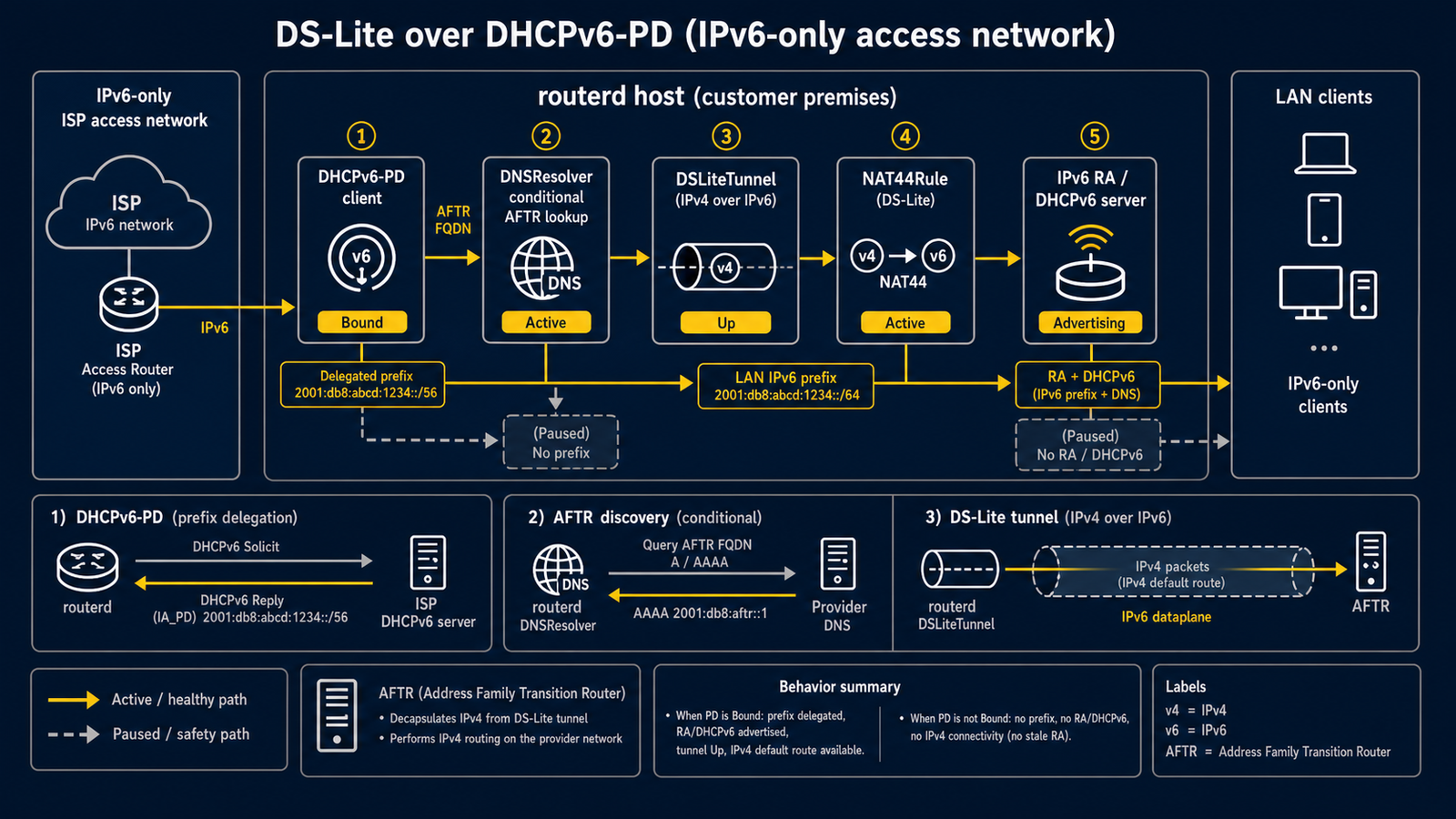
適用情境
ISP 提供僅 IPv6 的接入網路,IPv4 連線透過 AFTR(Address Family Transition Router)的 DS-Lite 隧道實現。在這種配置中,路由器負責以下工作:
- 透過 DHCPv6-PD 取得 IPv6 前綴,並分配給 LAN。
- 建立通往 AFTR 的 DS-Lite(IPv4-in-IPv6 /
ip6tnl)隧道。 - AFTR 的 FQDN 有時只有接入網路的 DNS 才能解析,因此使用條件式轉送。
- 在 IPv6 RA 中加入 RDNSS,讓 SLAAC 用戶端(包含 Android)自動取得 DNS 設定。
此模式在日本 FLET'S 系列線路(NTT NGN + gw.transix.jp 等)中最為典型,但同樣適用於類似的 DS-Lite 部署。
前提條件
- WAN 介面已透過 HGW 或 ONU 連接至僅 IPv6 的接入網路。
- 該介面可使用 DHCPv6-PD。
- AFTR 的 DNS 是否會透過 DHCPv6 information-request 回傳,因 ISP 或 HGW 而異,請針對兩種情況做好準備。
DHCPv6-PD
- apiVersion: net.routerd.net/v1alpha1
  kind: DHCPv6PrefixDelegation
  metadata:
    name: wan-pd
  spec:
    interface: wan
租約儲存於:
/var/lib/routerd/dhcpv6-client/wan-pd/lease.json
可透過 Unix socket 確認常駐程式狀態:
curl --unix-socket /run/routerd/dhcpv6-client/wan-pd.sock http://unix/v1/status
LAN 位址推導與 RA
- apiVersion: net.routerd.net/v1alpha1
  kind: IPv6DelegatedAddress
  metadata:
    name: lan-from-pd
  spec:
    interface: lan
    prefixDelegation: wan-pd
    dependsOn:
      - resource: DHCPv6PrefixDelegation/wan-pd
        phase: Bound
    addressSuffix: "::1"

- apiVersion: net.routerd.net/v1alpha1
  kind: IPv6RouterAdvertisement
  metadata:
    name: lan-ra
  spec:
    interface: lan
    prefixFrom:
      resource: IPv6DelegatedAddress/lan-from-pd
      field: address
    oFlag: true
    rdnssFrom:
      - resource: IPv6DelegatedAddress/lan-from-pd
        field: address
RA 廣播的 RDNSS 使用從委派前綴推導出的 LAN 側位址。 SLAAC 用戶端會自動取得此解析器位址。
AFTR 的條件式 DNS 轉送
AFTR 的 FQDN 通常只有 ISP 接入網路的 DNS 才能解析。 只將該網域轉送至接入網路的解析器,其餘流量交由一般上游處理。
- apiVersion: net.routerd.net/v1alpha1
  kind: DNSResolver
  metadata:
    name: resolver
  spec:
    listen:
      - name: local
        addresses: [127.0.0.1]
        port: 53
    sources:
      - name: aftr
        kind: forward
        match: [transix.jp]
        upstreams:
          - udp://[2404:8e00::feed:101]:53
      - name: default
        kind: upstream
        match: ["."]
        upstreams:
          - udp://1.1.1.1:53
請將 transix.jp 及上游 IPv6 位址替換為 ISP 公告的實際值。
DS-Lite 隧道
- apiVersion: net.routerd.net/v1alpha1
  kind: DSLiteTunnel
  metadata:
    name: ds-lite
  spec:
    interface: wan
    tunnelName: ds-routerd
    localAddressSource: interface
    aftrFQDN: gw.transix.jp
    dependsOn:
      - resource: DNSResolver/resolver
        phase: Applied
localAddressSource: interface 使用 WAN 側透過 SLAAC/RA 取得的 IPv6 位址作為隧道的本地端點。
此位址比 LAN 側推導更早取得,因此隧道可更快建立。
若 ISP 公告了穩定的 AFTR 位址且希望省略 DNS 解析,可直接指定 aftrIPv6:
spec:
  aftrIPv6: 2001:db8:cafe::1
在 NTT NGN 的 HGW 等不透過 DHCPv6 information-request 回傳 AFTR 的環境中,靜態指定 aftrFQDN 或 aftrIPv6 是正確的備援方式。
隧道內側的 IPv4 位址通常使用 RFC 6333 的 B4-AFTR 連結範圍 192.0.0.0/29。
若要使用從 LAN 範圍切出的位址,請以 IPv4StaticAddress 資源定義,
並從 DSLiteTunnel.localAddressFrom 與 NAT44Rule.snatAddressFrom 參照該值。
自訂範例請參閱 examples/dslite-lan-range-snat.yaml。
驗證
routerctl plan -f router.yaml --replace
routerctl get status

ip -6 tunnel show
ip route show default
nft list table ip routerd_nat

# 確認可透過隧道取得 IPv4 連線
curl --interface ds-routerd https://1.1.1.1/
請先以 dry-run 確認計畫無誤、且已備妥回滾路徑後,再正式套用。