設計備忘錄
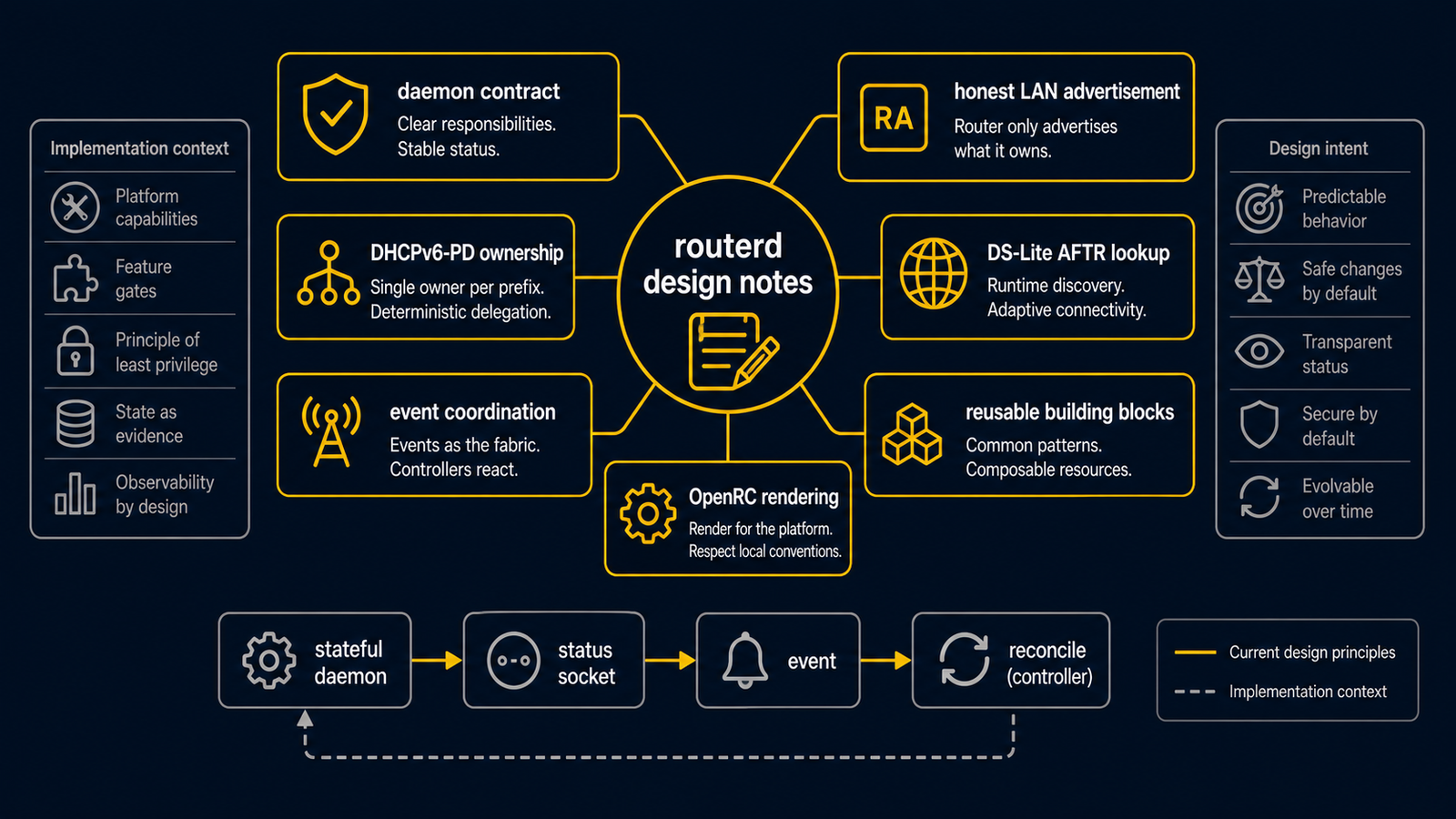
本文件記錄 routerd 中值得保留的設計決策。 內容僅保留現行程式碼所遵循的原則,以及未來變更時應恪守的方針,而非過往試錯的時序日誌。
1. 常駐程式契約(Daemon contract)
具有狀態的處理由專用常駐程式負責。 為使工具端能夠統一處理,所有常駐程式均公開相同的介面:
- Unix domain socket 上的 HTTP+JSON API
/v1/status/v1/healthz/v1/events/v1/commands/reload/v1/commands/renew/v1/commands/stop- 狀態或租約檔案
events.jsonl(僅追加)
此契約適用於 routerd-dhcpv6-client、routerd-dhcpv4-client、routerd-pppoe-client、routerd-healthcheck。
2. DHCPv6-PD
DHCPv6-PD 由 routerd-dhcpv6-client 負責擁有。不再有為 OS 內建客戶端產生設定的路徑。
在一般的 residential gateway 環境中,標準的 solicit / advertise / request / renew 加上租約持久化與 T1 renew 即已足夠。 依照現行方針,不使用為迴避損壞環境而設計的過度重傳機制。
3. 誠實的 LAN 廣告
DHCPv6-PD 若未處於 Bound 狀態,routerd 不會向 LAN 輸出過時的 IPv6 資訊。
這適用於 RA、DHCPv6 server、AAAA 記錄,以及從前綴衍生的 LAN 位址。
原則是「損壞的狀態,就如實呈現損壞」。不會持續散佈無法到達的前綴。
4. DS-Lite
部分接取網路的 DHCPv6 information-request 不會回傳 AFTR 選項。
因此 DSLiteTunnel 將 aftrFQDN 或 aftrIPv6 的靜態指定視為正規路徑,而非退回選項。
AFTR 的 FQDN 在公眾 DNS 上往往無法解析。請使用 AFTR domain 專用的 DNSForwarder,並搭配從 DHCPv6 information status 讀取電信業者內部解析器的 DNSUpstream.addressFrom 進行轉送。
5. 事件整合
routerd 具有程序內事件匯流排。控制器收到事件後,僅重新評估受影響的資源。
高層次的整合使用以下 Kind:
EgressRoutePolicyEventRuleDerivedEventHealthCheck
EventRule 以事件串流為輸入,產生另一個事件串流。
DerivedEvent 從觀測到的狀態合成 asserted / retracted 的虛擬事件。
6. CloudEdge SAM capture completion
Provider-secondary-IP capture 的 completion 來自 provider action journal 的事實, 而不是 provider-capture BGP 廣告。#707/#740 只建立了 source-capture path 的觀測側腳手架; 生產廣告路徑從未存在。
僅當 fabric 內部確有 capture /32 路由需求時,才重新引入 fabric 廣告的 capture /32。
屆時應從可達性契約重新設計:誰發出路由、哪個 RIB 觀測它,以及什麼條件算作 complete。
7. Tier S 構成要素
WireGuard、Tailscale、IPsec、VRF、VXLAN 是 Tier S(SOHO / 分支機構)的構成要素。
WireGuard 與 VXLAN-over-WireGuard 已確認可在支援的 OS 之間互通。
TailscaleNode 負責處理 exit node 與 subnet router 的廣告。
這樣設計是為了避免將所有 VPN 硬塞進同一種抽象形式。
不建立抽象的 VPNTunnel 資源。
WireGuard、Tailscale、IPsec,以及未來的 SoftEther 整合,分別以獨立的 Kind 新增。
原因是各自的狀態機差異甚大,若強行合併為多態的單一 Kind,將喪失語義清晰性。
8. 待解事項
- 具狀態防火牆的正式生產運用。
FirewallRule支援 ICMP type 比對、 多個埠、nftables rate limit、每個來源的連線數限制。 今後將著重改善規則群組與上層政策的易用性, 而非追求基本表達式的全面覆蓋。 - LAN 端的 DoH 代理。
- 面向 Tier C 的 OSPF 等動態路由整合。
- 高可用性(leader 選舉、容錯控制平面)。
- 生產環境的可觀測性(OpenTelemetry 收集器與遠端日誌接收端)。
- 在家用線路上以 routerd 作為唯一 WAN 路由器長期運行的驗證。