主機清單
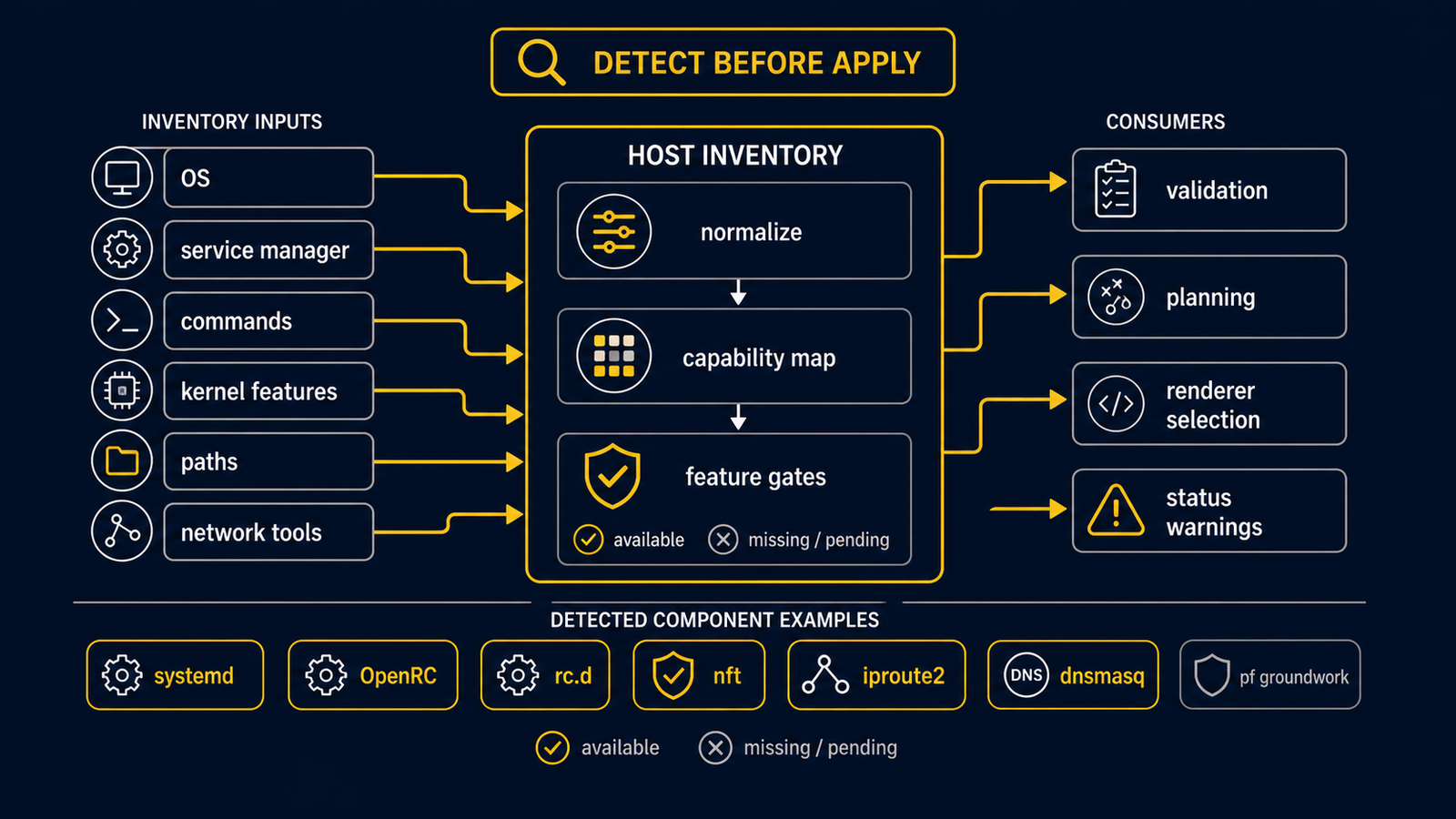
routerd 會調查主機的 OS、可用指令及網路功能。 此清單供產生器與套用處理在驗證或計畫階段,明確標示各 OS 特定的判斷。
routerd 確認的項目
- OS 與發行版本
- 服務管理方式(systemd、rc.d)
- 可用指令(iproute2、nftables、conntrack、dnsmasq、radvd、pppd、WireGuard、strongSwan 等)
- 核心功能(IPv6、VRF、VXLAN、WireGuard)
/run/routerd與/var/lib/routerd的可用性
對行為的影響
- 在 Ubuntu 上,以 systemd 與 Linux 網路堆疊為目標。
- 在 FreeBSD 上,以
daemon(8)與 rc.d 控制服務。
依賴主機未提供功能的設定,會在驗證或計畫階段明確標示,而不是在 apply 中途失敗。
routerd 搜尋的代表性指令
| 指令 | 用途 |
|---|---|
ip, bridge | 位址、路由、DS-Lite、VRF、VXLAN |
nft | NAT、防火牆、route mark |
dnsmasq | DHCPv4、DHCPv6、RA |
conntrack | IPv4/IPv6 連線觀測 |
pppd, ppp | PPPoE |
wg | WireGuard |
tailscale | Tailscale exit node 與 subnet router 廣播 |
swanctl | IPsec |
radvd | 透過 radvd 的 RA(選用) |
sysctl | 核心設定 |
systemctl, resolvectl, networkctl, journalctl | systemd 環境管理 |
service, sysrc, pfctl | FreeBSD 環境管理 |
dig, ping, ping6, tcpdump, tracepath, traceroute, netstat, sockstat | 疑難排解 |