DNS 解析器
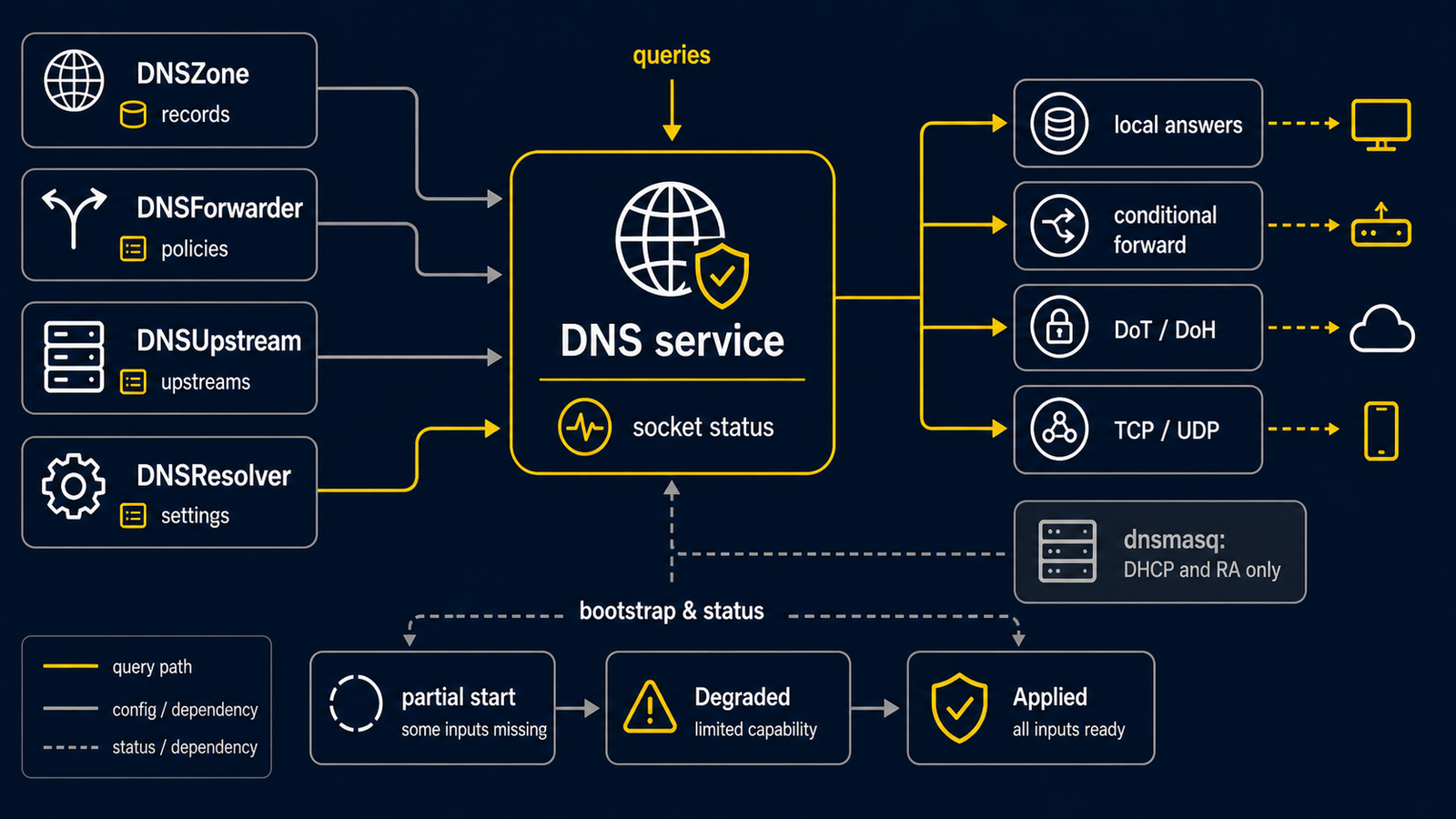
routerd 的 DNS 將權威資料、解析器程序、轉發規則與上游端點,分別以小型資源表達。
DNSZone 保存本地的權威資料,包含手動輸入的記錄,以及從 DHCP 租約衍生的記錄。
DNSResolver 管理常駐程式實例,定義監聽位址、快取、metrics 及查詢紀錄。一個 DNSResolver 資源啟動一個 routerd-dns-resolver 程序。
DNSForwarder 是隸屬於解析器的一條 match 規則,可從 DNSZone 回應,或將符合的查詢轉發至 DNSUpstream。
DNSUpstream 是一個上游端點,可表示純文字的 UDP/TCP DNS、DoT 及 DoH。
啟動與部分拉起
DNSResolver 不會等到所有相依關係都就緒才開始服務。啟動時,它會使用當時已解析出的監聽位址與
source 拉起常駐程式,並在其餘相依關係就緒後收斂:
- listen entry 會綁定目前已解析出的位址;若某個位址的
*Fromsource 尚未就緒 (例如仍在等待 DHCPv6 prefix delegation 的 delegated-prefix address),會在後續 reconcile 中加入。 - 若某個 forward/upstream source 的動態上游尚未解析(例如上游來自
DHCPv6Informationserver 的 AFTR forwarder),會先省略該 source,直到該上游出現。 zone source 以及使用靜態或已解析上游的 source 會立即提供服務。
當仍有部分內容在等待時,資源會回報 phase: Degraded,並帶有 waiting list,列出每個
listen/source 正在等待什麼。這是正常的 bootstrap 狀態,不是故障:通用 DNS 已經可以回應。
相依資源發佈 status 後,controller 會重新 reconcile,並以完整設定收斂到
phase: Applied(與一開始就全部解析完成的啟動結果相同)。只有在完全沒有監聽位址可解析,
或沒有任何可用 source 保留時,解析器才會回報 phase: Pending(不提供任何服務)。
這消除了等待 DHCPv6 prefix delegation 時 DNS 被拒絕的啟動窗口(在生產路由器上的實測:
AFTR forwarder 顯示 Degraded 時,通用 DNS 從第一秒起即可回應;delegated prefix 抵達後
收斂到 Applied)。解析器作為獨立的服務單元運行,因此主動重新啟動 routerd 不會重新啟動 DNS;需要重新啟動程序時請明確重新啟動解析器單元。
回應來源的評估順序
參照解析器的 DNSForwarder 依設定中的順序評估。
具有 zoneRefs 的轉發器從 DNSZone 回應。
具有 upstreams 的轉發器將符合的查詢轉發至上游。
match: ["."] 是預設的遞迴查詢路徑。
解析器支援 DoH、DoT、TCP DNS 及純文字 UDP DNS。 上游依優先順序嘗試。 優先度高的上游失敗時,切換至下一個上游。
多監聽設定檔
spec.listen 是陣列。
每個監聽可選擇要使用的回應來源名稱子集合。
這讓 LAN 用與 VPN 用的監聽可有不同的行為,
同時仍共用一個解析器資源。
listen[].sources 中的名稱參照 DNSForwarder。省略時,使用該解析器所屬的所有轉發器。
若監聽位址需從其他資源狀態取得,請使用 listen[].addressFrom。
由於明確表達了相依關係,當來源資源變更時,可重新設定常駐程式。
listen:
  - name: lan
    addresses:
      - 192.0.2.1
    addressFrom:
      - resource: IPv6DelegatedAddress/lan-base
        field: address
    port: 53
若所需位址尚無法解析,解析器不會以舊位址啟動,
而是保持 Pending(AddressUnresolved) 狀態等待。
動態區域記錄
DNSZone.spec.records[].ipv4 與 ipv6 為固定值。
若記錄的位址需從其他資源狀態取得,請使用 ipv4From 或
ipv6From。
records:
  - hostname: router
    ipv4From:
      resource: IPv4StaticAddress/lan-base
      field: address
    ipv6From:
      resource: IPv6DelegatedAddress/lan-base
      field: address
若所需的參照來源尚無法解析,該記錄會記錄至 DNSZone.status.pendingRecords。
來源資源變更時,解析器會重新產生,並在成功解析後發佈記錄。
限定網路的上游
DNSUpstream.spec.sourceInterface 在 Linux 上綁定送出介面。
以固定值指定 ens18 或 wg0 等 OS 介面名稱。
若隧道或 VRF 資源負責建立該介面,請透過資源的擁有權或順序明確表達相依關係,
讓解析器等待介面就緒後再啟動。
DNSUpstream.spec.bootstrap 是用於解析 DoH 或 DoT 連線目標名稱的輔助 DNS 伺服器,
適用於連線目標名稱只能在接入網路內部解析的情境。
若上游伺服器清單需從其他資源狀態取得,請使用 addressFrom。
apiVersion: net.routerd.net/v1alpha1
kind: DNSForwarder
metadata:
  name: ngn-aftr
spec:
  resolver: DNSResolver/lan-resolver
  match:
    - transix.jp
  upstreams:
    - DNSUpstream/wan-dns
---
apiVersion: net.routerd.net/v1alpha1
kind: DNSUpstream
metadata:
  name: wan-dns
spec:
  protocol: udp
  addressFrom:
    - resource: DHCPv6Information/wan-info
      field: dnsServers
使用者撰寫的 YAML 不接受 DNSResolver.spec.sources。請將舊式的內嵌 source 拆分為 DNSForwarder 與 DNSUpstream。
apiVersion: net.routerd.net/v1alpha1
kind: DNSForwarder
metadata:
  name: default
spec:
  resolver: DNSResolver/lan-resolver
  match:
    - "."
  upstreams:
    - DNSUpstream/cloudflare
---
apiVersion: net.routerd.net/v1alpha1
kind: DNSUpstream
metadata:
  name: cloudflare
spec:
  protocol: doh
  address: cloudflare-dns.com
  path: /dns-query
與 dnsmasq 的界線
dnsmasq 僅負責 DHCPv4、DHCPv6、DHCP 中繼及 RA。
不產生 server=、local=、host-record=。
DNS 的回應與轉發全部由 routerd-dns-resolver 負責。