觀測管線
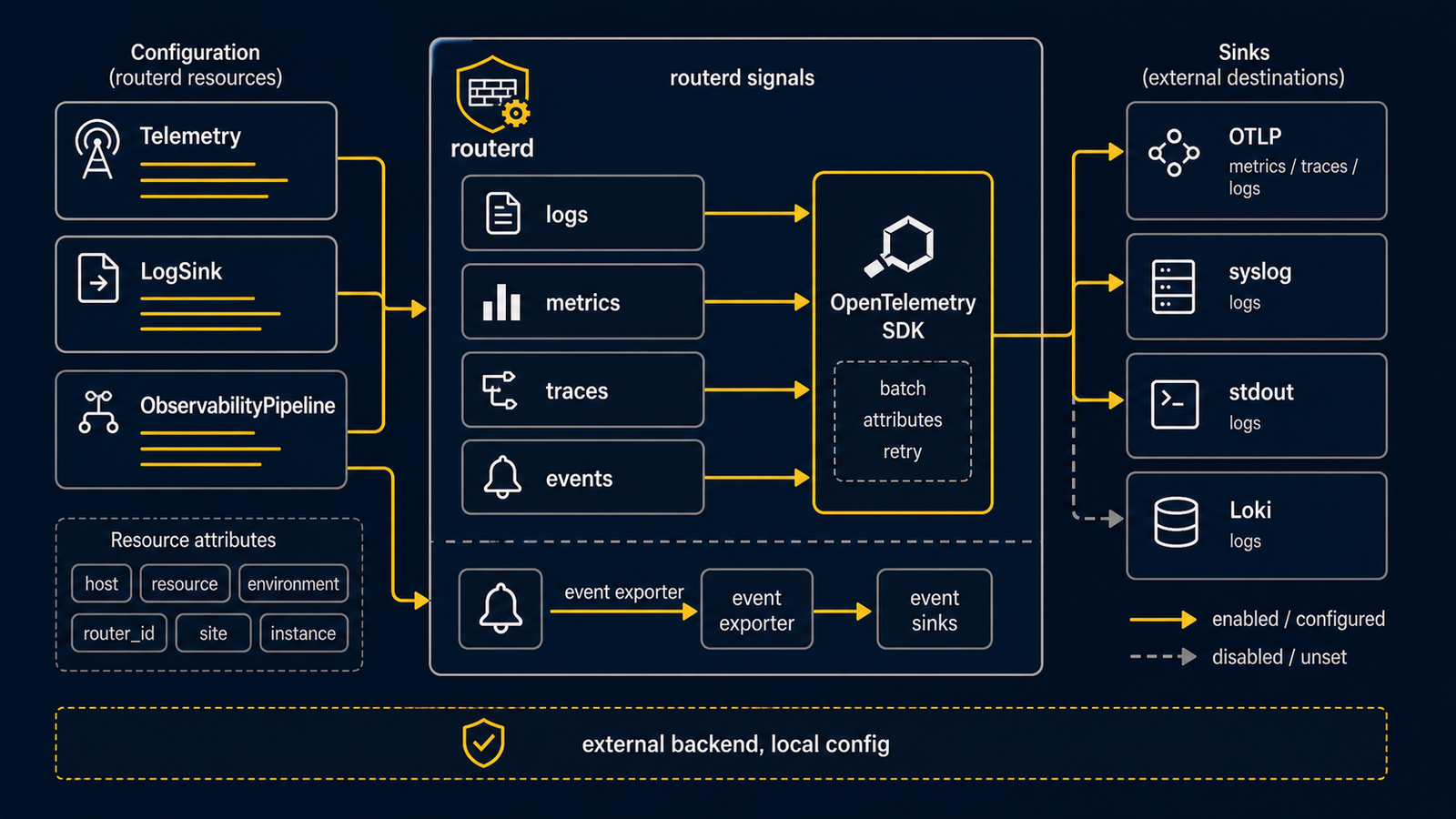
Telemetry 是一個小型資源,用於將 routerd 自身的指標、追蹤與日誌輸出至 OTLP。LogSink 代表運維事件與觀測日誌的轉發路徑。OTLP 類型的 LogSink 透過參照 Telemetry 資源來避免重複填寫收集器端點。若需將 routerd 的事件日誌傳送至 Loki 等管線型遠端 sink,請使用 ObservabilityPipeline。
ObservabilityPipeline 是 routerd 內建的管線,而非隨附的 otelcol 程序。OTLP 的日誌、指標與追蹤使用標準 OpenTelemetry SDK 送出,設定的日誌 sink 則由輕量事件匯出器負責傳送。
目前支援的日誌 sink 如下:
stdout:JSON 格式的事件行。syslog:與現有LogSink相同的 syslog 格式。loki:透過 HTTP push 至/loki/api/v1/push。
kafka 作為中繼資料接受,以便在設定中保留預期的外部管線意圖。
routerd 目前尚未直接發布至 Kafka。
apiVersion: system.routerd.net/v1alpha1
kind: ObservabilityPipeline
metadata:
  name: remote-observability
spec:
  otlp:
    endpoint: http://otel-collector.lan:4317
    insecure: true
  serviceNamespace: routerd
  attributes:
    site: edge
  signals: [logs, metrics, traces]
  sampling:
    rate: 1
  logs:
    sinks:
      - name: loki
        type: loki
        minLevel: info
        loki:
          url: http://loki.lan:3100/loki/api/v1/push
          tenant: routerd
OTLP 欄位會展開為 routerd 所管理單元的標準 OpenTelemetry 環境變數。日誌 sink 的匯出器會訂閱程序內匯流排的 routerd.** 事件,因此無需 scrape journalctl,即可轉發控制器狀態變更與常駐程式事件。
完整範例請參閱 examples/observability-loki.yaml。