帶有 BGP 的 Kubernetes API VIP
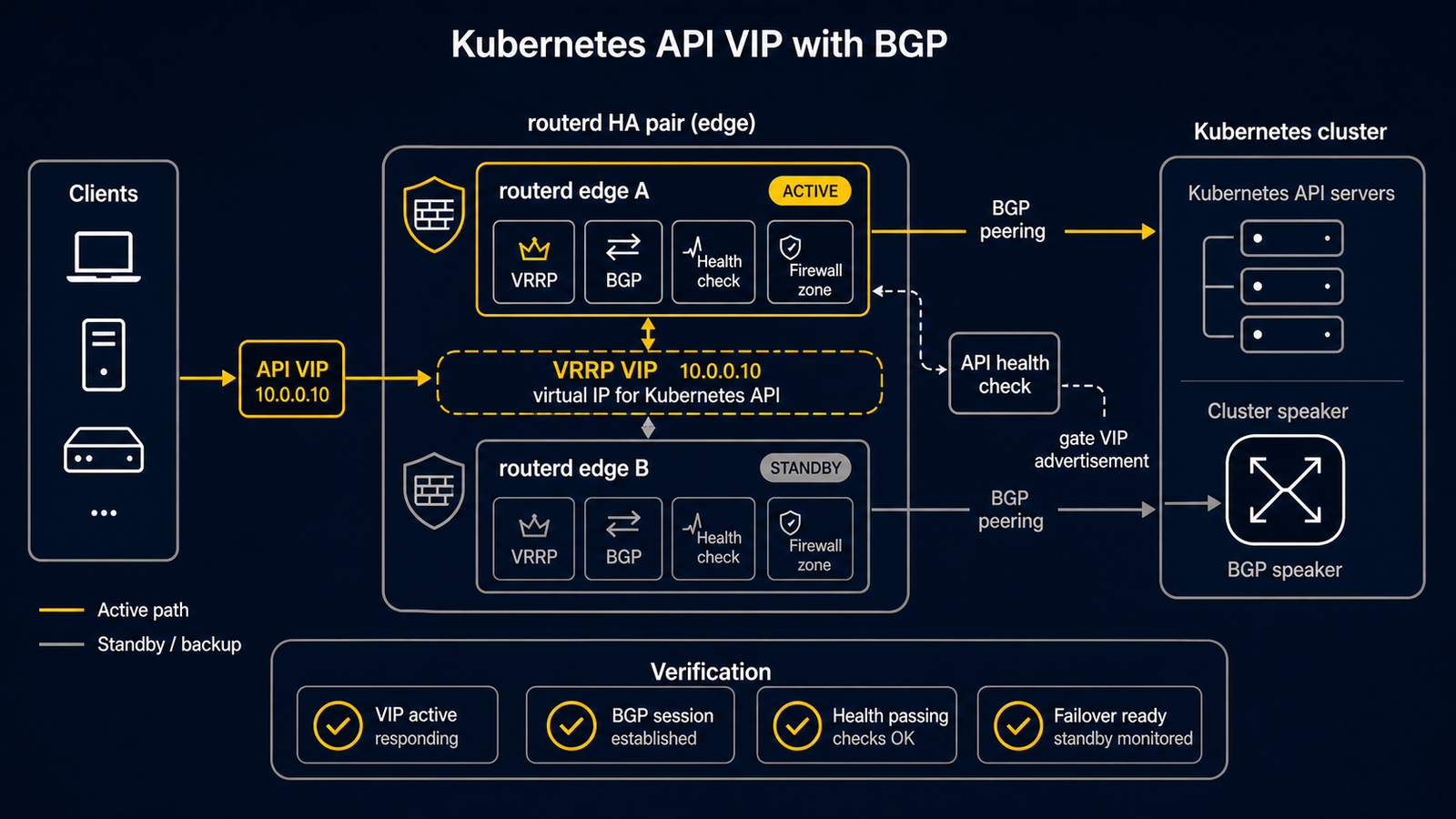
本範例說明如何不將 Kubernetes API 的 endpoint 放在 cluster 內部,
而是透過 routerd 的 edge pair 進行啟動設定(bootstrap)。
路由器持有 VRRP VIP,將 k8s-api.cluster.example:6443 轉送至 3 台 control-plane backend,
確認 HTTPS 的 /readyz,並與 Kubernetes 的 BGP speaker 建立 peer 連線以接收 Service 前綴。
作為出發點,先在 daemon 尚未啟動時進行獨立檢查。下列指令需要具有 sudo 權限的本機使用者,但不會套用網路變更:
LAB_DIR="$(mktemp -d)"
sudo routerd validate --config examples/kubernetes-api-vip.yaml
sudo routerd apply --config examples/kubernetes-api-vip.yaml --once --dry-run --skip-service-manager \
  --state-file "$LAB_DIR/state.db" \
  --ledger-file "$LAB_DIR/ledger.db" \
  --status-file "$LAB_DIR/status.json"
rm -rf "$LAB_DIR"
構成:
routerd-01/02  VRRP VIP 192.168.70.10
       |
       +-- k8s-cp-01..03 :6443  HTTPS /readyz
       |
       +-- k8s-wk-01..04  BGP ASN 64513
重要設定:
| 資源 | 設定 |
|---|---|
VirtualAddress/k8s-api-vip | VRRP 的 preempt 設定、API 健康狀態與 BGP 健康狀態的追蹤。 |
IngressService/kubernetes-api | 對 /readyz 的 HTTPS 健康檢查、用於 kubeadm 啟動設定(bootstrap)時自簽憑證的 tlsSkipVerify: true、故障切換的選擇、無健康 backend 時拒絕連線、VIP 與所選 control-plane backend 位於相同 LAN 前綴或相同私有 /24 時自動產生(render)同介面 hairpin SNAT。 |
BGPRouter/lan | convergenceProfile: fast、BGP timers 3s/9s/5s、預設停用 graceful restart、僅接受 Kubernetes Service 前綴的匯入 allow-list。 |
DNSResolver/lan | 從 VIP 的 hostname 欄位自動回應 k8s-api.cluster.example,同時提供 control plane 與 worker 的靜態記錄。 |
DHCP 位址池請確保不與 VIP、control-plane 位址、worker 位址及 LoadBalancer / Service 廣播範圍重疊。
服務運行後,才可使用 sudo routerctl get BGPRouter、sudo routerctl get VirtualAddress、
sudo routerctl get IngressService 以表格形式(而非原始 status JSON)確認 peer 狀態、VIP 角色及 backend 健康狀況。
若需偵錯 live dataplane,請以 sudo ip、sudo nft 與 sudo conntrack 檢查主機狀態。