WireGuard Hub & Spoke 範本
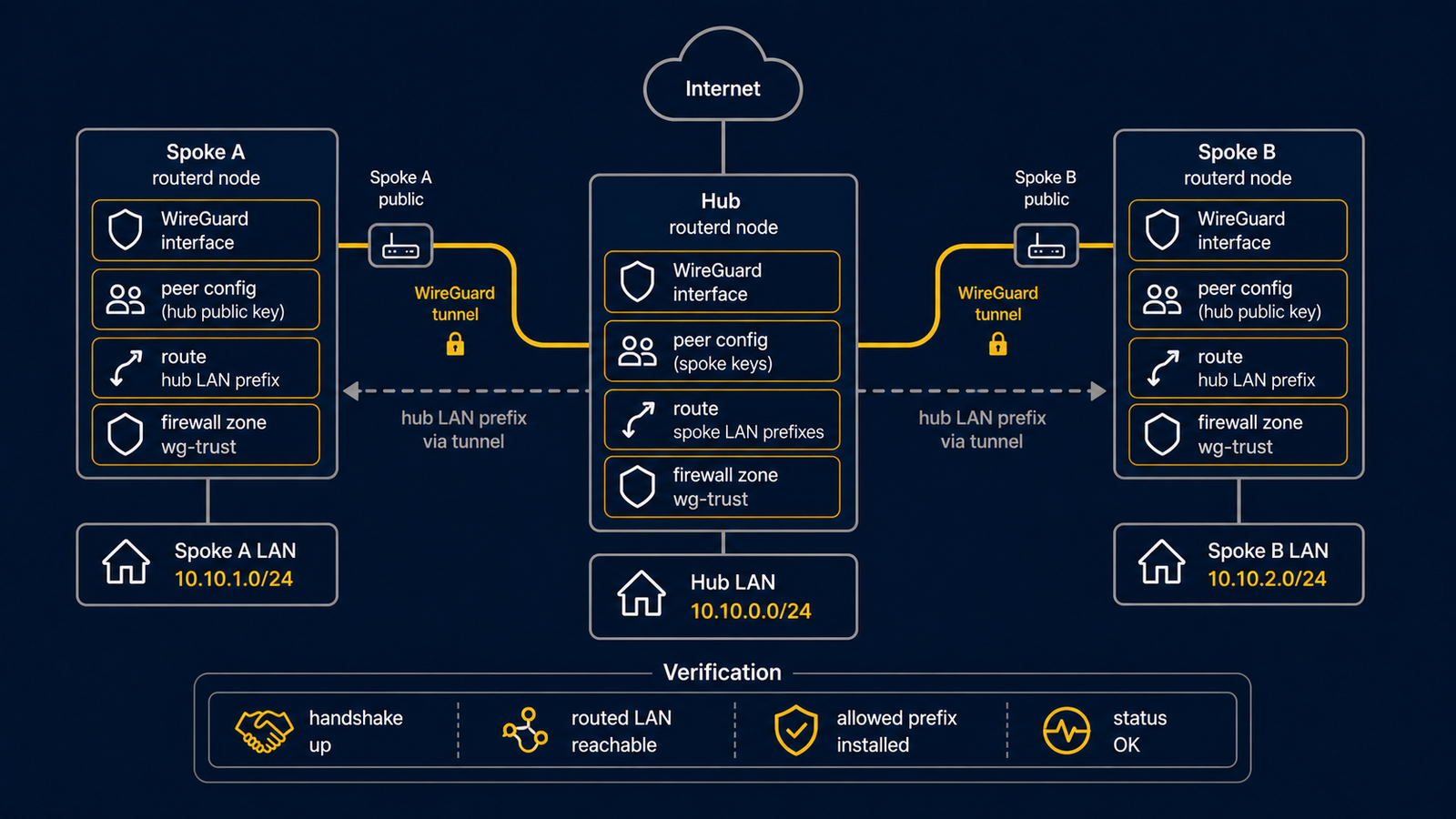
此為具備兩個 spoke 的 routed WireGuard hub 範本。 實際使用前,請替換金鑰、endpoint 及要廣告的前綴。
完整的 YAML 位於 examples/wireguard-hub-spoke.yaml。
架構圖
圖示對照表
| 編號 | 說明 | 主要資源 |
|---|---|---|
| [1] | spoke A 的 tunnel 位址與 routed LAN 前綴。 | WireGuardPeer/spoke-a |
| [2] | spoke B 的 tunnel 位址與 routed LAN 前綴。 | WireGuardPeer/spoke-b |
| [3] | hub 端的 WireGuard 介面與位址。 | WireGuardInterface/wg-hub, IPv4StaticAddress/wg-hub-ipv4 |
重點說明
# [3] hub 端 WireGuard 介面與監聽埠。
- kind: WireGuardInterface
  metadata:
    name: wg-hub
  spec:
    privateKeyFile: /usr/local/etc/routerd/secrets/wg-hub.key
    listenPort: 51820
    mtu: 1420

# [1] spoke A 的 tunnel 位址與 routed LAN 前綴。
- kind: WireGuardPeer
  metadata:
    name: spoke-a
  spec:
    interface: wg-hub
    publicKey: REPLACE_WITH_SPOKE_A_PUBLIC_KEY
    allowedIPs:
      - 10.44.0.11/32
      - 172.30.11.0/24
確認步驟
先在 daemon 尚未啟動時進行獨立檢查。下列指令需要具有 sudo 權限的本機使用者,但不會套用網路變更。
LAB_DIR="$(mktemp -d)"
sudo routerd validate --config examples/wireguard-hub-spoke.yaml
sudo routerd apply --config examples/wireguard-hub-spoke.yaml --once --dry-run --skip-service-manager \
  --state-file "$LAB_DIR/state.db" \
  --ledger-file "$LAB_DIR/ledger.db" \
  --status-file "$LAB_DIR/status.json"
rm -rf "$LAB_DIR"
服務運行後,才在路由器上執行 sudo routerctl describe WireGuardInterface/wg-hub
與 sudo wg show。
常見調整項目
- 私鑰請存放於限制存取權限的檔案中。
- 每個 peer 須明確指定 tunnel 位址
/32與 routed LAN 前綴。 - 若使用 routerd 管理 WAN 端防火牆,請一併新增 UDP 監聽埠的放行規則。