Event Federation 參考
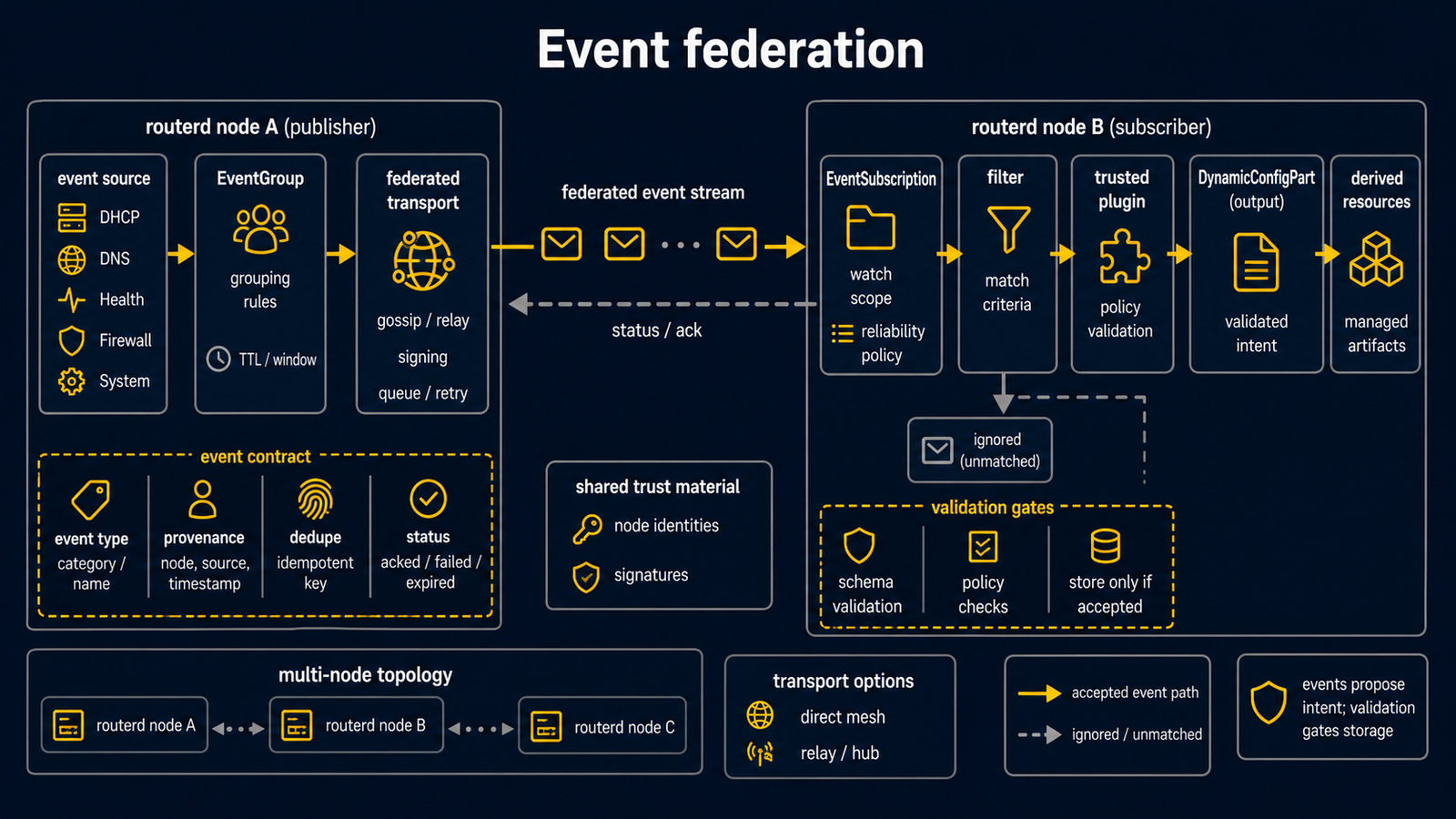
實驗性(CloudEdge)。關於設計和不變條件,請參見 ADR 0006: CloudEdge Event Federation; 關於實踐範例,請參見 how-to 的 CloudEdge mobility demo。
Event Federation 是一種機制,透過 overlay 在 routerd 節點之間交換類型化的觀測事實
(例如:「此用戶端 IPv4 已被觀測到」、「此位址已過期」),訂閱者將比對的事件透過 plugin
轉換為衍生設定。它是選擇性位址移動性下的控制平面基礎設施,
一個節點上觀測到的位址會成為另一個節點 MobilityPool 計畫使用的型別化 ownership fact。
模型是冪等觀測事實事件的 at-least-once 分發。事件是關於世界的不可變描述 ("observed"),而非命令式指令。對於從同一事件重新導出相同狀態的接收者來說是 no-op。
Kind
EventGroup
節點參加的匯流排。每個節點在每個群組中擁有一個 identity。
| 欄位 | 含義 |
|---|---|
nodeName | 此節點在群組內的 identity。作為 sourceNode 印刻在發佈的事件上。 |
retention | 本機儲存保留事件的數量/時長上限。空/零 = 無限制。 |
auth | 對等分發(push)用的 HMAC 金鑰材料。 |
listen | 入站對等 push 的接收器繫結(address)。空 = 僅 push(無接收器)。 |
replayWindow | 用於重放保護而接受的訊息時間戳偏差上限的 Go duration(預設 5m)。 |
EventPeer
此節點向其 push 事件的遠端節點。
| 欄位 | 含義 |
|---|---|
groupRef | 此對等方所屬的 EventGroup(必要)。 |
nodeName | 遠端對等方的節點 identity(必要)。 |
endpoint | push 目標的基礎 URL。例:http://10.99.0.7:8787(push 時必要)。 |
direction | 分發方向。僅支援 push。為空時預設 push。 |
types | 選用的事件類型允許清單。為空時全部分發。 |
subjectPrefixes | 選用的主題前綴允許清單。為空時全部分發。 |
EventSubscription
將比對的事件轉換為發出 DynamicConfigPart 的 plugin 呼叫。
| 欄位 | 含義 |
|---|---|
groupRef | 消費的 EventGroup。 |
match | 按類型/主題比對事件的條件。 |
trigger.pluginRef | 比對事件時呼叫的 Plugin。 |
trigger.batchWindow | 將比對事件彙總為一次呼叫的 Go duration。 |
trigger.debounce | 在最後一個比對事件之後延遲呼叫的 Go duration。 |
routerctl federation CLI
routerctl federation event emit  --group <g> --type <topic> --subject <entity> [--source-node <n>] [--ttl <dur>] [--payload k=v ...]
routerctl federation event list  --group <g>
routerctl federation event deliveries --group <g>
emit 將觀測事實記錄到本機儲存(例如:
--type routerd.client.ipv4.observed --subject 10.88.60.9/32)。list 顯示已記錄的
事件,deliveries 顯示每個對等方的 push 分發狀態。
自我擷取保護(ADR 0006 的 no-feedback-loop 不變條件):節點不得為自身透過本機
MobilityPool計畫已 capture 的位址發出routerd.client.ipv4.observed。否則, 已分發的 capture 位址將作為新觀測回圈。
傳輸 — routerd-eventd
routerd-eventd@<group> 是每組一個的長壽命常駐程式(Linux 上由產生的 systemd unit
管理,FreeBSD 上由 rc.d 管理),執行以下操作:
- 將本機記錄的事件透過 HTTP push 到每個
EventPeer,並使用群組 HMAC 簽章。 接收方驗證簽章並拒絕replayWindow之外的訊息。 - 按對等方/事件記錄分發狀態,限制 at-least-once 重試的範圍並使其可觀測。
- 根據群組的
retention修剪本機事件儲存。
outbox 具有 sourceNode 保護,接收到的事件不會被轉發回發起方(無分發迴圈)。
Subscription -> plugin -> DynamicConfigPart 流程
- 節點發出觀測事實(
routerctl federation event emit,或未來的 observer)。 routerd-eventd向對等方分發,各對等方記錄到自身的事件儲存。- 對等方的
EventSubscription比對事件並呼叫trigger.pluginRef(透過batchWindow/debounce彙總)。 - plugin 回傳觀測事實或一般 dynamic resource,Mobility controller 持久化型別化的 local capture plan 並將其 reconcile 到資料平面。
這樣維運人員編寫的 intent 保持宣告式。維運人員宣告 group/peers/subscription, capture 與 action plan 均為衍生產物。