以 MAC 位址隔離訪客裝置
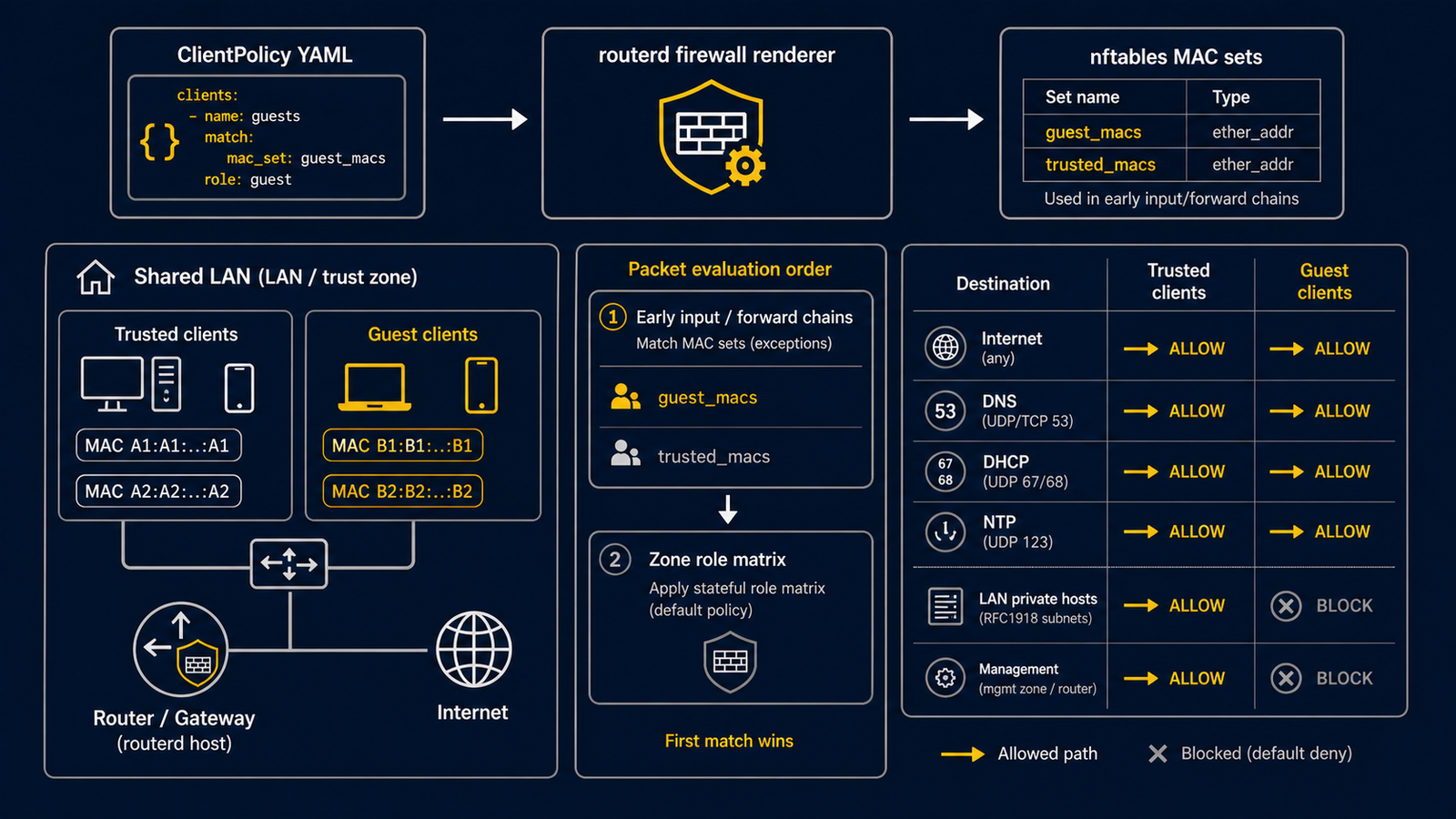
ClientPolicy 是 routerd 的訪客模式。
它依 MAC 位址對同一 LAN 上的裝置進行分類,並在一般區域間防火牆矩陣之前,優先套用更嚴格的轉送策略。
即使尚未劃分 VLAN,也能在受信任的裝置與僅需使用網際網路的裝置之間,建立明確的界線。
使用案例
常見用途如下:
- 在家庭環境中,不希望來訪者的智慧型手機、遊戲機、家電或外帶筆電能存取管理網路或家用伺服器。
- 在集合住宅或共用住宅中,預設將所有裝置視為訪客,只有明確指定的裝置才視為受信任。
- 隔離攝影機、HEMS、電視、喇叭等 IoT 裝置。允許其使用 DNS、DHCP、NTP 及網際網路,但阻止橫向通訊。
- 在小型辦公室的訪客網路中,共用物理 LAN,但封鎖 RFC 1918 及 ULA 目的地的流量。
完整範例請參閱 examples/guest-mode.yaml。
運作原理
在 Linux 上,routerd 將 ClientPolicy 產生至 nftables 的 inet routerd_filter 資料表。
每條策略會產生以下規則:
- 類似
client_policy_guest_devices的 nftablesether_addrset。 mode: include使用ether saddr @set比對。mode: exclude使用ether saddr != @set比對。- 允許訪客裝置存取路由器上特定服務的 self 向許可規則。
- 封鎖私有 IPv4 及 ULA IPv6 目的地的轉送拒絕規則。
- 優先於拒絕規則的可選許可規則。
產生的規則會插入 input 鏈與 forward 鏈的較前位置。
因此,即使在角色矩陣下本可被 trust -> self 或 trust -> trust 允許的通訊,訪客裝置的流量也會更早被篩選。
ClientPolicy 並非 FirewallZone 的替代方案,一般模型照常使用:
FirewallZone決定介面的一般角色。FirewallPolicy決定拒絕記錄等共通行為。FirewallRule新增明確的例外。ClientPolicy在 LAN 內疊加以裝置為單位的限制。
MAC 比對直接查看 Ethernet 來源位址,因此不需要 DHCP 租約。
不過,搭配 DHCPv4Reservation 使用,可讓裝置的 IPv4 位址、名稱及 Web 管理介面中的顯示更加穩定。
規格說明
ClientPolicy 屬於 firewall.routerd.net/v1alpha1。
- apiVersion: firewall.routerd.net/v1alpha1
  kind: ClientPolicy
  metadata:
    name: guest-devices
  spec:
    mode: include
    macs:
      - "18:ec:e7:33:12:6c"
    isolation:
      lanInternet: allow
      lanLAN: deny
      lanMgmt: deny
      mDNSBroadcast: deny
| 欄位 | 必填 | 說明 |
|---|---|---|
mode | 是 | include 或 exclude。 |
interfaces | 否 | 套用策略的 LAN 側 Interface 參照。Interface/lan 與 lan 指向相同介面。省略時套用至所有屬於 trust FirewallZone 的介面。 |
macs | 否 | 縮短格式的 MAC 清單。include 模式視為訪客,exclude 模式視為受信任。 |
isolation | 否 | 表達訪客的意圖。可在 lanInternet、lanLAN、lanMgmt、mDNSBroadcast 指定 allow 或 deny。 |
classification | 否 | 結構化的用戶端分類條目。 |
classification[].mode | 是 | trusted、guest 或 isolated 之一。 |
classification[].match.macs | 否 | 裝置的 MAC 位址,routerd 在產生前會進行正規化。 |
classification[].match.ouiPrefixes | 否 | 廠商 OUI 前綴,例如 18:ec:e7。 |
classification[].match.hostnamePatterns | 否 | 針對觀測到的 DHCP 主機名稱的 glob 模式。 |
classification[].match.dhcpFingerprints | 否 | routerd 觀測到的 DHCP 指紋標籤。 |
classification[].name | 否 | 供人閱讀的裝置名稱,目前為說明用途。 |
classification[].ipv4Reservation | 否 | DHCPv4Reservation 的名稱,寫 aiseg2 而非 DHCPv4Reservation/aiseg2。 |
guestServices | 否 | 允許訪客裝置存取的路由器服務。預設為 dhcp、dns、ntp。可指定 dhcp、dns、ntp、mdns、ssdp。 |
guestEgressDeny | 否 | 封鎖訪客裝置轉送目的地的 CIDR。省略時封鎖 RFC 1918 與 ULA。 |
guestEgressAllow | 否 | 優先於拒絕規則的許可 CIDR。 |
預設的 guestEgressDeny 如下:
10.0.0.0/8172.16.0.0/12192.168.0.0/16fc00::/7
指定 isolation.mDNSBroadcast: deny 時,也會拒絕訪客發出的 mDNS、SSDP、NetBIOS 探索封包的轉送,防止訪客裝置透過多播或廣播探索 LAN 內的其他裝置。
許可規則在拒絕規則之前產生,適合為印表機或 captive portal 輔助伺服器等建立窄範圍的例外。
範例 1:最小 include 模式
將單一 MAC 位址視為訪客。
- apiVersion: firewall.routerd.net/v1alpha1
  kind: ClientPolicy
  metadata:
    name: guest-devices
  spec:
    mode: include
    interfaces:
      - Interface/lan
    classification:
      - mode: guest
        match:
          macs:
            - "18:ec:e7:33:12:6c"
        name: aiseg2
範例 2:多裝置 include 模式
可將多台裝置套用相同的訪客規則。
- apiVersion: firewall.routerd.net/v1alpha1
  kind: ClientPolicy
  metadata:
    name: household-guests
  spec:
    mode: include
    interfaces:
      - Interface/lan
    classification:
      - mode: guest
        match:
          macs:
            - "18:ec:e7:33:12:6c"
        name: aiseg2
        ipv4Reservation: aiseg2
      - mode: guest
        match:
          macs:
            - "7c:2f:80:11:22:33"
        name: guest-phone
      - mode: guest
        match:
          macs:
            - "90:09:d0:44:55:66"
        name: smart-tv
範例 3:BYOD 用的 exclude 模式
將目標介面上的所有裝置預設視為訪客,僅將清單中的 MAC 位址視為受信任。
- apiVersion: firewall.routerd.net/v1alpha1
  kind: ClientPolicy
  metadata:
    name: byod-default-guest
  spec:
    mode: exclude
    interfaces:
      - Interface/lan
    classification:
      - mode: trusted
        match:
          macs:
            - "bc:24:11:e0:8e:3a"
        name: admin-laptop
      - mode: trusted
        match:
          macs:
            - "4e:20:15:aa:e0:67"
        name: owner-phone
範例 4:自訂拒絕與許可 CIDR
保留預設的私有目的地封鎖,同時允許單台印表機。
- apiVersion: firewall.routerd.net/v1alpha1
  kind: ClientPolicy
  metadata:
    name: guest-with-printer
  spec:
    mode: include
    interfaces:
      - Interface/lan
    guestEgressAllow:
      - 172.18.20.10/32
    guestEgressDeny:
      - 10.0.0.0/8
      - 172.16.0.0/12
      - 192.168.0.0/16
      - fc00::/7
    classification:
      - mode: guest
        match:
          macs:
            - "7c:2f:80:11:22:33"
        name: guest-phone
範例 5:本機探索服務
預設允許訪客裝置使用 DHCP、DNS、NTP。
若路由器上有執行本機探索的 proxy 或中繼,可明確新增 mdns 或 ssdp。
- apiVersion: firewall.routerd.net/v1alpha1
  kind: ClientPolicy
  metadata:
    name: media-guests
  spec:
    mode: include
    interfaces:
      - Interface/lan
    guestServices:
      - dhcp
      - dns
      - ntp
      - mdns
      - ssdp
    classification:
      - mode: guest
        match:
          macs:
            - "90:09:d0:44:55:66"
        name: smart-tv
啟用探索服務前,請先了解所公開的資訊範圍。 mDNS 與 SSDP 雖然便利,但可能揭露裝置名稱與服務資訊。
範例 6:IoT 隔離與固定分配
固定分配可讓排查問題更容易,也能讓 Web 管理介面的裝置清單及 DNS 記錄更清晰。
- apiVersion: net.routerd.net/v1alpha1
  kind: DHCPv4Reservation
  metadata:
    name: thermostat
  spec:
    server: lan-v4
    macAddress: "02:11:22:33:44:55"
    hostname: thermostat
    ipAddress: 172.18.0.151

- apiVersion: firewall.routerd.net/v1alpha1
  kind: ClientPolicy
  metadata:
    name: iot-isolation
  spec:
    mode: include
    interfaces:
      - Interface/lan
    classification:
      - mode: guest
        match:
          macs:
            - "02:11:22:33:44:55"
        name: thermostat
        ipv4Reservation: thermostat
與 DHCPv4Reservation 的搭配
classification[].ipv4Reservation 用於驗證參照。
routerd 會確認指定的 DHCPv4Reservation 存在。
防火牆比對使用 MAC 位址,而非租約的 IP 位址。
此分離是刻意設計的:
- MAC 比對讓裝置分類在 IP 層判斷之前進行。
- IPv4 固定租約讓 DNS 與 Web 管理介面的顯示更穩定。
- 即使裝置的 IP 位址改變,訪客隔離仍會追蹤 MAC 位址。
若裝置使用隨機 MAC 位址,請登錄該 SSID 或有線區段中路由器實際觀測到的 MAC 位址。
確認產生的規則
產生設定,或確認執行中的 nftables 資料表:
routerd render nftables --config /usr/local/etc/routerd/router.yaml
sudo nft list table inet routerd_filter
確認是否有類似以下的規則:
set client_policy_guest_devices {
  type ether_addr
  elements = { 18:ec:e7:33:12:6c }
}

iifname "ens19" ether saddr @client_policy_guest_devices udp dport 53 counter accept
iifname "ens19" ether saddr @client_policy_guest_devices ip daddr 10.0.0.0/8 counter log prefix "routerd client-policy guest-devices deny " drop
從訪客裝置驗證
從訪客裝置執行以下確認:
curl -4 https://www.google.com/generate_204
curl -4 --connect-timeout 3 http://192.168.1.1/
curl -4 --connect-timeout 3 http://172.18.0.1:8080/
預期結果如下:
- 網際網路通訊成功。
- 私有目的地超時或失敗。
- DNS、DHCP、NTP 繼續正常運作。
在路由器側,使用 tcpdump 確認封包路徑:
sudo tcpdump -ni ens19 ether host 18:ec:e7:33:12:6c
sudo nft list chain inet routerd_filter forward
當私有目的地被拒絕時,產生的 ClientPolicy 規則計數器會增加。
疑難排解
MAC 位址不相符
確認路由器所看到的 MAC 位址:
ip neigh show dev ens19
sudo tcpdump -eni ens19
無線裝置可能在不同 SSID 使用不同的 MAC 位址。 智慧型手機與筆電也可能使用隨機 MAC 位址。 請使用路由器在 LAN 側實際觀測到的位址,而非印在裝置上的位址。
訪客裝置仍能存取私有網路
請確認以下幾點:
- 策略是否參照了正確的
Interface。 - 封包是否確實從該介面進入。
routerctl apply是否已套用最新的 nftables 資料表。guestEgressAllow中是否包含了寬範圍的私有前綴。- 裝置側是否有 VPN 用戶端等繞過路由器的路徑。
訪客裝置無法連上網際網路
ClientPolicy 只限制私有目的地與 self 目的地的存取。
若網際網路連線失敗,請檢查路由策略、NAT44、DS-Lite、DNS 及 IP forwarding:
routerctl get status
sysctl net.ipv4.ip_forward
sudo nft list table ip routerd_nat
guestServices 的作用
guestServices 僅控制對路由器本機服務的存取,並非允許轉送至私有子網路。
轉送的例外請透過 guestEgressAllow 表達。
安全注意事項
以 MAC 位址進行隔離是實用的方式,但並非密碼學意義上的識別。 惡意使用者若能控制裝置,即可偽造受信任的 MAC 位址。
ClientPolicy 適合作為家庭或小型辦公室的實用管控手段,
不應作為對抗惡意使用者的唯一防線。
更強固的設計包括:
- VLAN 或 SSID 隔離。
- WPA3 Enterprise 或 802.1X。
- 交換器的 port 隔離。
- 各裝置的專屬憑證。
- 專用的訪客 bridge 或 VRF。
即使結合上述措施,ClientPolicy 仍有其價值,
因為它能在 routerd 的資源模型中保留裝置分類的意圖。
OS 支援
支援 Linux 的 nftables。
FreeBSD 的 pf 在 routerd 用於 FirewallZone 與 FirewallRule 的路由式過濾路徑中,
沒有等效的 MAC 式分類模型,因此 routerd 在 FreeBSD 上明確將 ClientPolicy 標示為不支援,
不會以無作用的 no-op 策略靜默套用。
未來 FreeBSD 的支援方向可能是 bridge 層級的過濾器或專用的第二層隔離資源, 但由於與路由式 pf 規則不等價,應視為獨立設計。
相關資源
FirewallZone:將介面分配至trust、untrust、mgmt。FirewallPolicy:啟用拒絕記錄等共通行為。FirewallRule:表達與 MAC 分類無關的例外。DHCPv4Reservation:為已分類的裝置提供穩定的 IPv4 位址與主機名稱。- 從隧道自動推導的 TCP MSS clamp,也適用於防火牆區域與隧道路徑相符的訪客轉送。訪客隔離不會繞過 MSS clamp。