フェデレーションイベントを RemoteAddressClaim に変換する
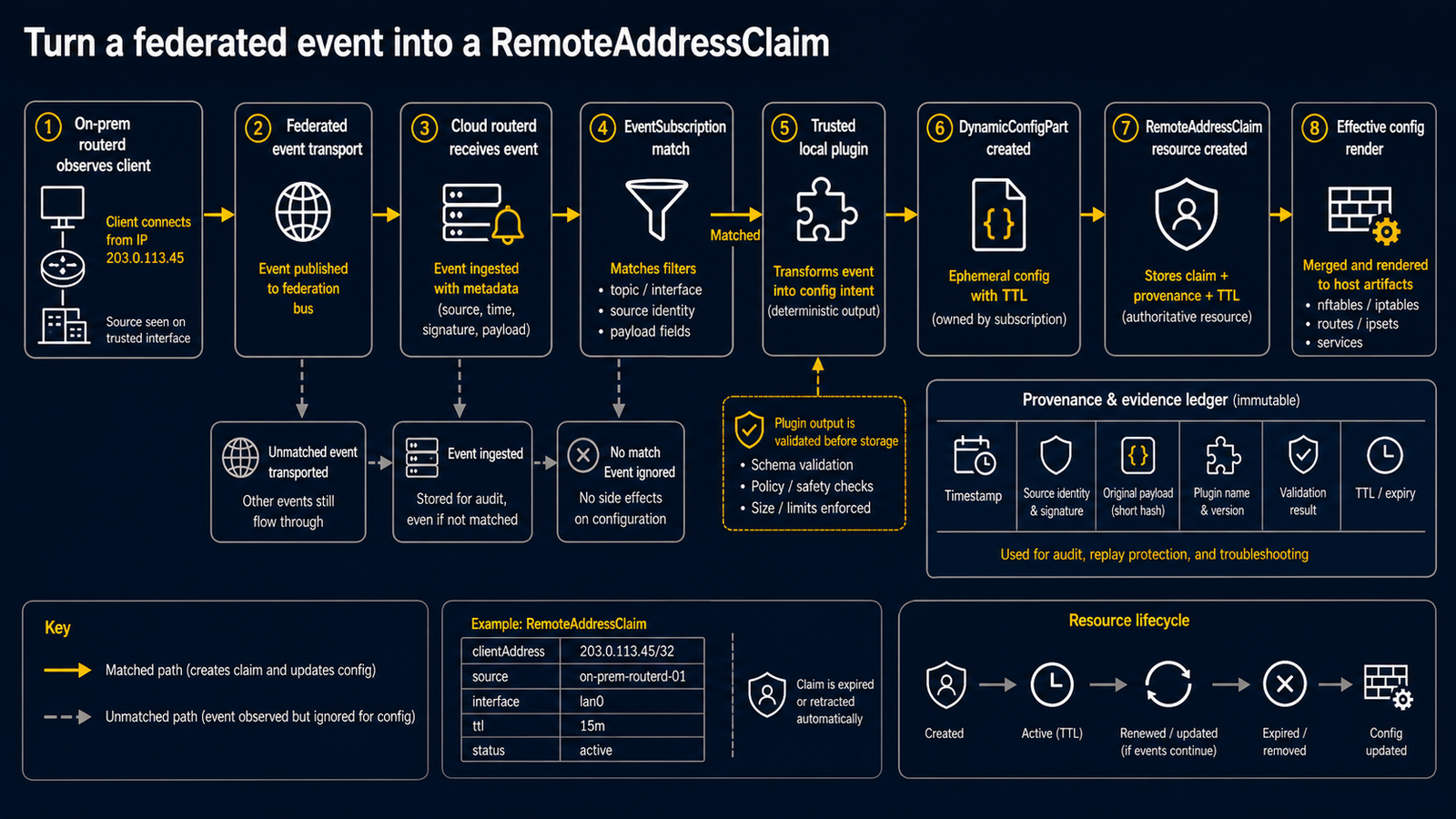
CloudEdge Event Federation(ADR 0006)は、ある routerd ノードが観測したファクトに対して別のノードが宣言的に反応できる仕組みです。Phase 3 は受信側のループを閉じます: 受信したイベントが EventSubscription にマッチし、信頼されたローカルプラグインが実行され、その出力が routerctl dynamic render で確認できる DynamicConfigPart になります。
このガイドでは、同梱されているプロバイダー非依存のサンプルプラグイン event-to-remote-claim を使用します。
フロー
on-prem routerd                         cloud routerd
---------------                         -------------
LAN クライアントを観測
  -> フェデレーションイベント発行 --push-->  イベント受信 (EventGroup)
     routerd.client.ipv4.observed         |
                                          v
                                   EventSubscription マッチ
                                          |
                                          v
                                   Plugin 実行 (event-to-remote-claim)
                                          |
                                          v
                                   PluginResult -> DynamicConfigPart
                                          |
                                          v
                                   routerctl dynamic render
                                     RemoteAddressClaim が表示される
- 発行 — on-prem ノードがクライアントを観測し、共有
EventGroupにrouterd.client.ipv4.observedイベントを発行します。 - トランスポート(Phase 2) — イベントはオーバーレイ経由でクラウドノードの
EventGroup受信側にプッシュされます。 - マッチ — クラウドノードの
EventSubscriptionが、タイプ(およびオプションで subject プレフィックス / ソースノード)でイベントにマッチします。 - プラグイン — サブスクリプションの
trigger.pluginRefPlugin がマッチしたイベントを stdin で受け取って実行され、PluginResultを返します。 - DynamicConfigPart — routerctl が結果を検証し、来歴アノテーション(
routerd.net/event-id、routerd.net/event-group、routerd.net/dynamic-source)が付与された動的設定パーツとして保存します。 - レンダー —
routerctl dynamic renderで、新しいRemoteAddressClaimを含む実効設定が表示されます。
サンプルリソース
- 受信側(クラウド)の配線:
examples/event-federation/receiver-cloud.yaml—EventGroup、EventSubscription、Plugin、および結果のRemoteAddressClaimが解決されるハイブリッドコンテキスト(OverlayPeer、AddressMobilityDomain、CloudProviderProfile)。 - 送信側(on-prem)の配線:
examples/event-federation/sender-onprem.yaml—EventGroup+EventPeerプッシュターゲット。 - サンプルプラグイン:
examples/plugins/event-to-remote-claim/。
試してみる
サンプルプラグインをビルドしてインストールします:
go build -o bin/event-to-remote-claim ./examples/plugins/event-to-remote-claim
install -D bin/event-to-remote-claim \
  /usr/local/libexec/routerd/plugins/event-to-remote-claim/bin/event-to-remote-claim
受信側の設定を適用し、テストイベントを発行します(通常は Phase 2 が on-prem ノードからイベントを配送します):
routerctl federation event emit \
  --state-file /var/lib/routerd/routerd.db \
  --group cloudedge --type routerd.client.ipv4.observed \
  --subject 10.88.60.9/32 --source-node onprem-router \
  --payload address=10.88.60.9/32 \
  --payload domain=cloudedge-same-subnet \
  --payload ownerSide=onprem \
  --payload peerRef=onprem-main \
  --payload providerRef=example-provider \
  --ttl 30m
EventSubscription コントローラーが reconcile した後、実効設定をレンダーします:
routerctl dynamic render \
  --config /usr/local/etc/routerd/router.yaml \
  --state-file /var/lib/routerd/routerd.db
10.88.60.9/32 の RemoteAddressClaim がイベントの来歴アノテーション付きで表示されます。
スコープと安全性
- サンプルプラグインはプロバイダー非依存であり、クラウドへの変更を行いません。
captureブロックは dry-run 意図のプレースホルダーです(configureOSAddress: false)。 - アドレスを実際にクレームするためのプロバイダーオペレーション(
actionPlan)の実行は Phase 4/5 であり、MVP ではアクションプランは実行しません。 - routerd は設定や秘密をプラグインに渡しません。渡すのは観測されたイベントのみです。
EventSubscription.match.typesは必須であるため、サブスクリプションがグループ内のすべてのイベントでプラグインを無差別にトリガーすることはできません。ループを防ぐためにはsubjectPrefixesとsourceNodesでさらに絞り込んでください。