跳到主要内容

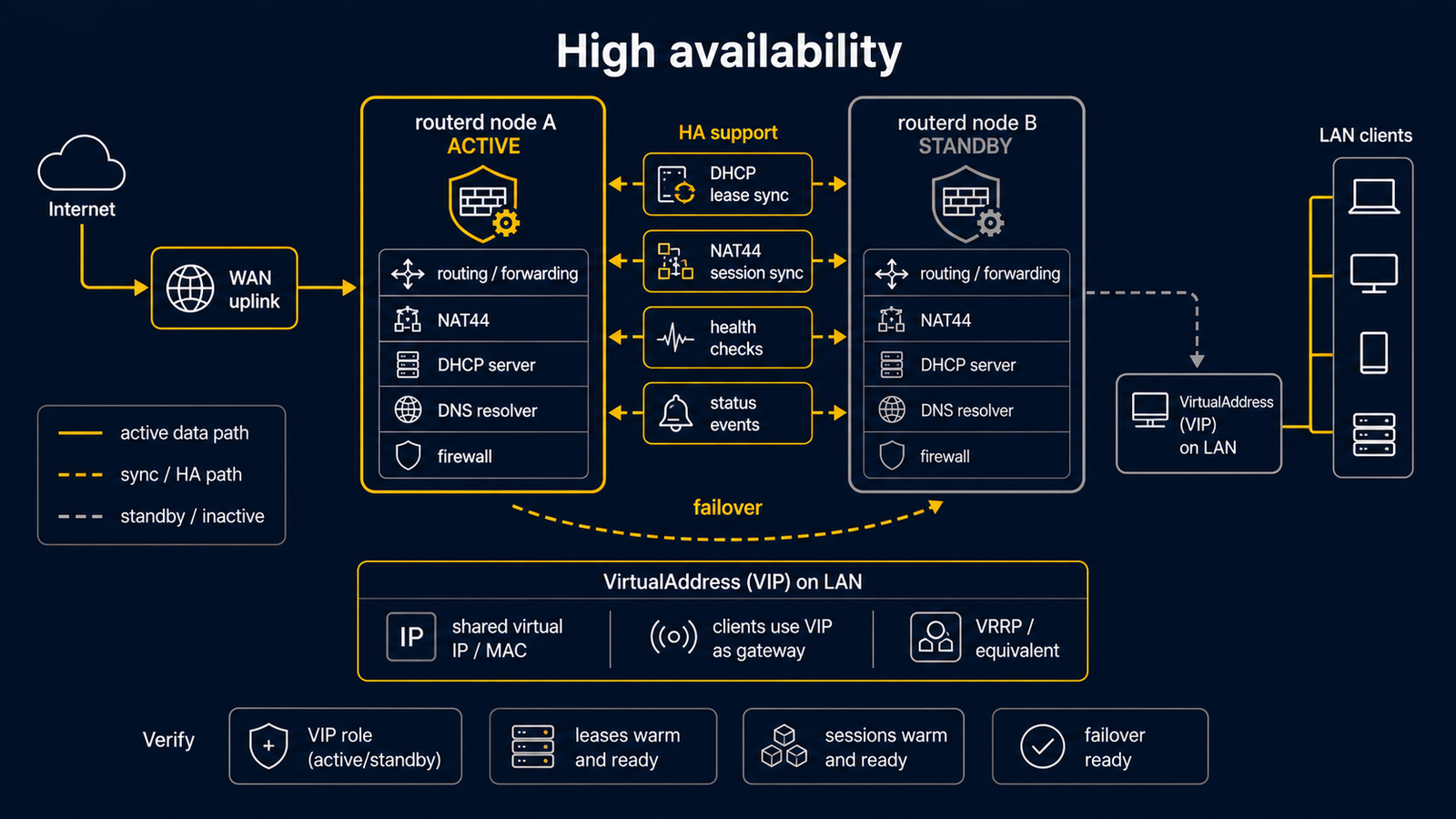
High availability

RouterdCluster gates renderer and applier work with a lightweight file-based lease. It is intentionally separate from VIP ownership: keepalived or CARP still decides which router owns a VIP, while routerd uses the lease to decide which node may mutate host configuration.

The leader holds an exclusive lock on spec.leasePath and refreshes the lease before spec.leaseTTL expires. Standby nodes keep the controller chain running for observation, but mutating controllers are forced into dry-run mode. In one-shot apply mode, a standby node plans normally, records cluster status, and skips apply.

Example:

apiVersion: system.routerd.net/v1alpha1
kind: RouterdCluster
metadata:
name: edge-ha
spec:
peers:
- routerd-01.lain.local
- routerd-02.lain.local
leaseTTL: 30s
leasePath: /var/lib/routerd/ha-lease

Use a local path when only one routerd process can run on the host. Use a shared filesystem path when multiple hosts must elect one applier. The filesystem must provide working advisory locks; otherwise use this resource only for status and keep the actual apply service enabled on one node.

Status fields:

FieldMeaning
phaseLeader or Standby
identityLocal routerd identity, defaulting to hostname
holderCurrent lease holder
expiresAtLease expiry timestamp
leasePathLease file path

See examples/ha-2-node.yaml for a minimal two-node shape.