NTT NGN 系存取網路的 DHCPv6-PD 與 AFTR
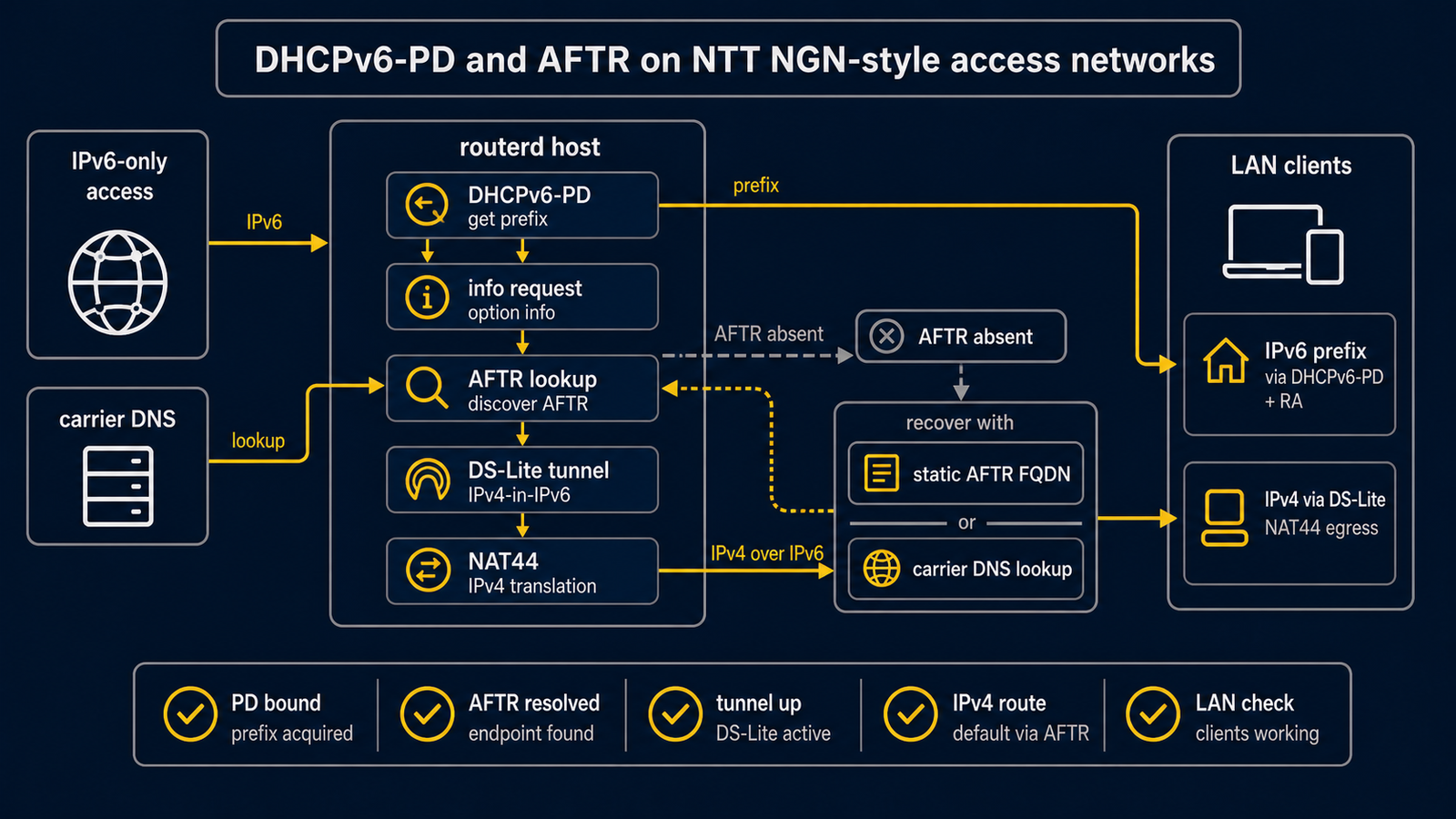
本文是在 NTT NGN(日本 IPv6 光纖線路)等 IPv6 存取網路的 HGW 下使用 routerd 的實地筆記。 同樣結合 DHCPv6-PD 與網路內 AFTR 進行 DS-Lite 的其他業者,也可套用相同模式。
DHCPv6-PD
routerd-dhcpv6-client 在這些 HGW 下可穩定取得 DHCPv6-PD。
無需過多重送或特殊取得程序,標準的 solicit / advertise / request / renew 即已足夠。
穩定運作時,可觀察到以下行為:
- 同一 HGW 下的多台路由器各自取得互不重疊的前綴。
- 依 T1 / T2 時序,Renew 持續成功。
- 重新啟動常駐程式後,可從
lease.json還原租約。
DHCPv6 information-request 可能不回傳 AFTR
部分 HGW / ONU 設定下,DHCPv6 的 information-request 會回傳 DNS、SNTP、domain-search, 但不回傳 AFTR 選項。AFTR 為空本身是正常現象。
此情況下,DS-Lite 需明確指定以下其中一項:
DSLiteTunnel.spec.aftrIPv6— 直接固定 AFTR 的 IPv6 位址。DSLiteTunnel.spec.aftrFQDN— 解析 FQDN。
AFTR 的 FQDN 通常需要條件式 DNS 轉送
業者管理的 AFTR FQDN(例如:gw.transix.jp),往往只能透過業者內部 DNS 解析,
公開解析器會回傳 NXDOMAIN。
在 routerd 中,透過 DNSResolver 的 forward source 來表達:
- apiVersion: net.routerd.net/v1alpha1
  kind: DNSResolver
  metadata:
    name: resolver
  spec:
    listen:
      - name: local
        addresses: [127.0.0.1]
        port: 53
    sources:
      - name: aftr
        kind: forward
        match: [transix.jp]
        upstreams:
          - udp://[2404:8e00::feed:101]:53
DS-Lite 控制器透過 routerd-dns-resolver 解析 AFTR 的 FQDN,不經過系統的 stub 解析器。
DS-Lite 端對端確認清單
DS-Lite 正常運作時,應可觀察到以下狀態:
- 條件式轉送能解析 AFTR 的 FQDN。
ip6tnl隧道裝置存在。- IPv4 預設路由指向隧道。
- nftables 的 NAT44 已為 LAN 往外的 IPv4 流量設定完畢。
- LAN 用戶端能成功連線至外部 IPv4(HTTP / ICMP)。
本筆記的定位
以上內容為在 routerd 評估環境中,使用業者出廠 HGW 所得到的觀測結果。 可作為類似部署的參考指引,但並非對國內所有 ISP 方案或 HGW 韌體版本的保證。 請將其作為自行驗證的起點。