本地 DNS 區域
適用情境
當您希望透過名稱解析內部主機,但又不想手動同步各裝置的 /etc/hosts 時,具體而言是希望實現以下目標:
- 擁有少量固定記錄(路由器、NAS、印表機)。
- 為取得 DHCP 租約的裝置自動產生 A / AAAA / PTR 記錄。
- 正向查詢與反向查詢均正常運作。
routerd 的解決方式
使用 DNSZone 管理單一 DNS 網域的本地權威記錄。
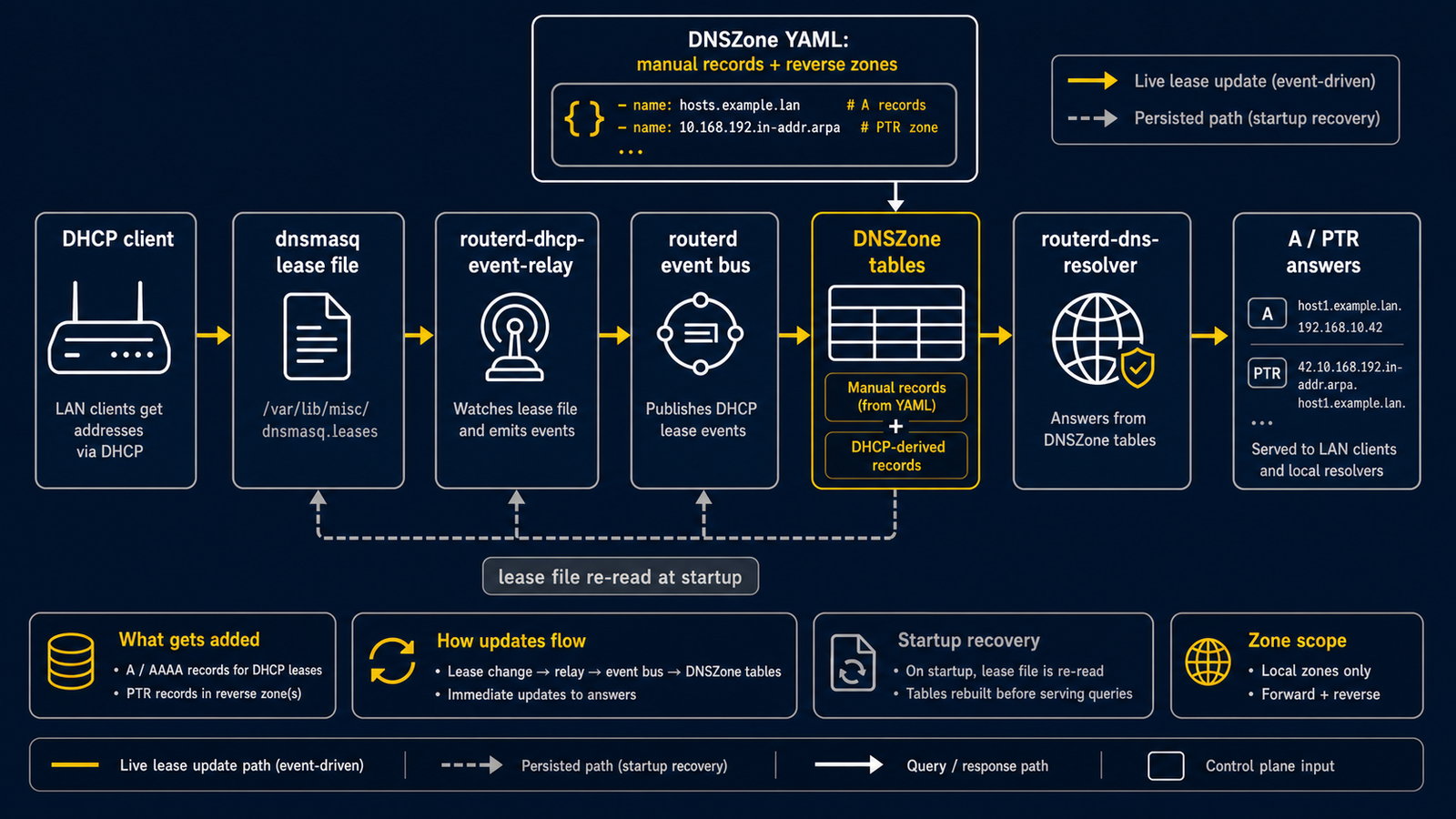
可以結合手動記錄(以 YAML 宣告)與來自 DHCP 的記錄(從租約資料庫建立)。
DNSResolver 將這些記錄作為回應來源之一載入,使內部查詢在本地回應,外部查詢則轉送至設定的上游解析器。
DHCP 衍生的記錄透過事件匯流排同步。dnsmasq 在租約變更時呼叫 routerd-dhcp-event-relay,relay 發布 routerd 事件,routerd-dns-resolver 則更新記憶體中的區域資料。
dnsmasq 的租約檔案在啟動時也會重新讀取,因此即使重啟常駐程式也不會遺失記錄。
範例
- apiVersion: net.routerd.net/v1alpha1
  kind: DNSZone
  metadata:
    name: lan
  spec:
    zone: lan.example.org
    ttl: 300
    dnssec:
      enabled: false
    records:
      - hostname: router
        ipv4: 192.0.2.1
        ipv6: 2001:db8:1::1
      - hostname: nas
        ipv4: 192.0.2.10
    dhcpDerived:
      sources:
        - DHCPv4Server/lan-dhcpv4
        - DHCPv6Server/lan-dhcpv6
      hostnameSuffix: lan.example.org
      ddns: true
      ttl: 60
      leaseFile: /run/routerd/dnsmasq.leases
    reverseZones:
      - name: 2.0.192.in-addr.arpa
套用後,nas.lan.example.org 及 <dhcp-client-name>.lan.example.org 將解析為本地位址,192.0.2.x 的 PTR 查詢也會回傳對應的名稱。
補充說明
- 請選擇您擁有管理權的網域,或為內部使用保留的網域(如
example.org、home.arpa)。請勿使用可能與公眾 DNS 衝突的 suffix,例如.lan。 - 啟用 DNSSEC(
dnssec.enabled: true)後,外部的 DNSSEC 驗證仍可正常運作。本地區域在設計上不簽署。 - 若有多個內部子網路,請為每個子網路分別撰寫一條
reverseZones條目,以確保雙向 PTR 查詢均可運作。