ADR 0009: プラガブルオーバーレイアンダーレイ(ipip / gre、次に fou / gue)
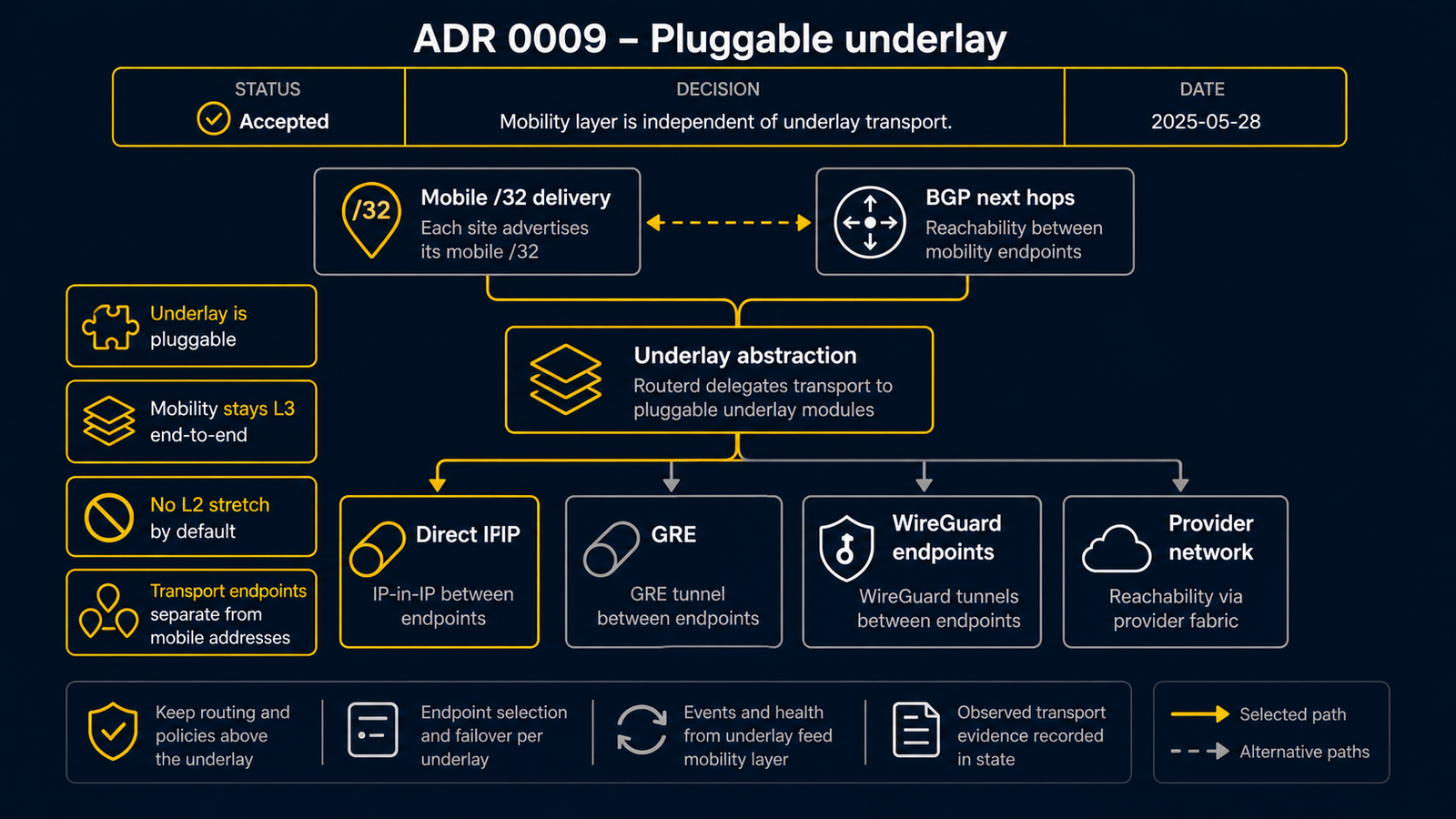
ステータス
提案済み。実験的実装として承認 — 2026-06-01。
CloudEdge オーバーレイ/SAM データプレーン(ADR 0006、 Selective Address Mobility)と ゾーン非依存の PMTU/MSS clamp(#53/#68)を土台とする。実験的。
背景
CloudEdge オーバーレイ(OverlayPeer)は現在、唯一の実装されたアンダーレイとして
WireGuard を使用している。信頼されたプライベートアンダーレイ — ExpressRoute、
DirectConnect、FastConnect、VPC/VNet ピアリング — 上では、WireGuard の暗号化は冗長であり、
約 80 バイトのオーバーヘッドは純粋なコストになる。アンダーレイが既に信頼されている場合に、
アドレスの配送方法を変えることなく、オペレーターがより軽量で低オーバーヘッドな
L3 トランスポートを選べるようにしたい。
オーバーレイは既に適切なシームで抽象化されている(コードで確認済み):
- 配送はアンダーレイ非依存。
hybrid.RouteTarget(peer)がOverlayPeer.Underlay.Typeを(device, gateway)にマップし、/32配送ルート (BGP が import した/32ルートとHybridRoute)がそのデバイスを指す。トランスポートの追加は 新しいswitchケース。 - MTU / MSS clamp はパラメーター化済み。
hybrid.EstimateMTU = underlayMTU(interface) − overheadFor(type)。ゾーン非依存の clamp はEstimateMTUに従う。新しいトランスポートは オーバーヘッド値とインターフェース MTU さえあれば、clamp は自動追従する。
唯一の実質的なギャップ:デバイス作成が WireGuard 固有(専用の
WireGuardInterface Kind + コントローラー)。新しい L3 トランスポートには、
「トンネルデバイスを作成する」同等のリソース + コントローラーが必要。
決定
新規 Kind TunnelInterface(hybrid.routerd.net/v1alpha1)
WireGuardInterface のミラー:1 つの OS トンネルデバイスの desired state を所有するリソース。
OverlayPeer.Underlay は配送選択の参照のまま。TunnelInterface は
デバイス desired state — クリーンな分離(OverlayPeer のインラインフィールドは
ピアごとにデバイス仕様を増殖させ、デバイスの所有権/冪等性/削除を曖昧にする)。
Phase 1 のフィールド:
mode:ipip | gre。local、remote: アンダーレイ(物理)エンドポイント IP(必須)。address: オーバーレイの内側アドレス(オプション。それ以外は WireGuard と同様にipv4-static-addressコントローラーが設定)。mtu(オプション)、ttl(オプション、デフォルト 64)、key(GRE のみ。設定時は +4 オーバーヘッド)。trustedUnderlay: true— 必須(安全性を参照)。
Phase 2 で同一 Kind を IPIP-over-UDP に拡張:
mode:fou | gueは Linux UDP カプセル化(encap fouまたはencap gue)付きのipipトンネルデバイスを意味する。encapSport、encapDport: ローカル UDP ソース/リッスンポートとピア宛先ポート。fou/gueでは両方必須。
OverlayPeer.Underlay.Type enum に ipip、gre、fou、gue を追加。
.Interface が TunnelInterface を名前で参照する。
新規コントローラー tunnel
TunnelInterface を reconcile する framework.FuncController(Phase 1 では Linux のみ。
他のプラットフォームではチェーンをエラーにするのではなく unsupported ステータスを報告):
- argv ベースの
ip呼び出し(文字列連結シェルではない)。ip link show→ add/modify/ip link delで冪等:ip link add <dev> type ipip|gre local <L> remote <R> ttl <t> [key <k>]fou/gueの場合:ip fou add port <sport> ipproto 4|gue、次にip link add <dev> type ipip local <L> remote <R> ttl <t> encap fou|gue encap-sport <sport> encap-dport <dport>ip link set <dev> mtu <m> up
- アドレスは既存の
ipv4-static-addressコントローラーが処理(WireGuard と同様)。 - ステータス: phase、device、mode、local、remote、mtu。
オーバーヘッド、配送、MTU
overheadFor:ipip = 20、gre = 24(外側 IPv4 20 + GRE base 4)、fou = 28(外側 IPv4 + UDP)、gue = 32(外側 IPv4 + UDP + 最小 4 バイト GUE ヘッダー)。 GREkeyで +4。RouteTarget:ipip、gre、fou、gue→(device, "")(/32ルートは WireGuard と同様にトンネルデバイスを指す)。EstimateMTUと PMTU/MSS clamp は自動追従。pathMTUResourceMTUフォールバックにTunnelInterfaceデフォルトを追加(またはspec.mtuが反映される)。
バリデーション
OverlayPeer.Underlay.Typeenum +=ipip、gre、fou、gue。TunnelInterface:mode ∈ {ipip, gre, fou, gue}。local/remote必須、有効な IP。trustedUnderlay == true必須(それ以外は明確なメッセージで拒否)。 MTU/TTL/key/encap ポートの範囲チェック。
安全性(ハードな不変条件)
ipip、gre、fou、gue は暗号化も認証もされない — WireGuard とは根本的に異なる。
既に信頼されたアンダーレイ上でのみ安全である。
- WireGuard がデフォルトのまま。
TunnelInterfaceはtrustedUnderlay: trueを設定しない限り拒否される — アンダーレイが平文であることのオペレーターによる明示的な確認。ドキュメント/doctor の 警告だけでは弱すぎる。これはバリデーションゲート。
フェーズ分割
- Phase 1:
TunnelInterfaceKind +tunnelコントローラー (Linuxipip/gre)+trustedUnderlayゲート +RouteTarget/オーバーヘッド/MTU + バリデーション + ユニット/fixture テスト + サンプル設定。テストには 削除順序の不変条件を含む:OverlayPeer/claim の削除で/32ルートが落ち、TunnelInterfaceの削除でデバイス削除プランが出力される。ルートインストールは デバイスが存在しない場合を許容する必要がある。 - Phase 2(実装済み):
fou/gue(IPIP-over-UDP)。GRE-over-FOU/GUE は 意図的に公開しない。inner-mode フィールドまたは複合タイプ文字列が必要になるため。ip fou addの encap-port セットアップを追加。最小ヘッダーオーバーヘッドの仮定を 既存の明示的mtuエスケープハッチとともにドキュメントする。 - Phase 3: FreeBSD(
giffor ipip、gre)— 設定/ステータスの表面が異なるため、 Linux コントローラーに詰め込まない。 - Phase 4: ファイアウォール自動穴あけ(raw
ipip= IP proto 4、gre= IP proto 47、fou/gue= UDP)+doctor hybridチェック。
結論
- オペレーターは信頼されたアンダーレイ向けに軽量なオーバーレイトランスポートを得る。 配送と MSS clamp は変更なく、新しいオーバーヘッドに自動追従する。
- 暗号化のトレードオフは明示的でゲート付き(
trustedUnderlay: true)であり、 信頼されていない経路上で軽量トランスポートが誤って選択されることはない。 TunnelInterfaceは汎用的なデバイス desired state リソースであり、 Phase 2-3 で配送/MTU のシームに触れることなく拡張(encap、FreeBSD)できる。- WireGuard の動作や既存デプロイメントへの変更はない(デフォルト不変)。