ADR 0009: 可插拔 overlay underlay(ipip / gre,然后 fou / gue)
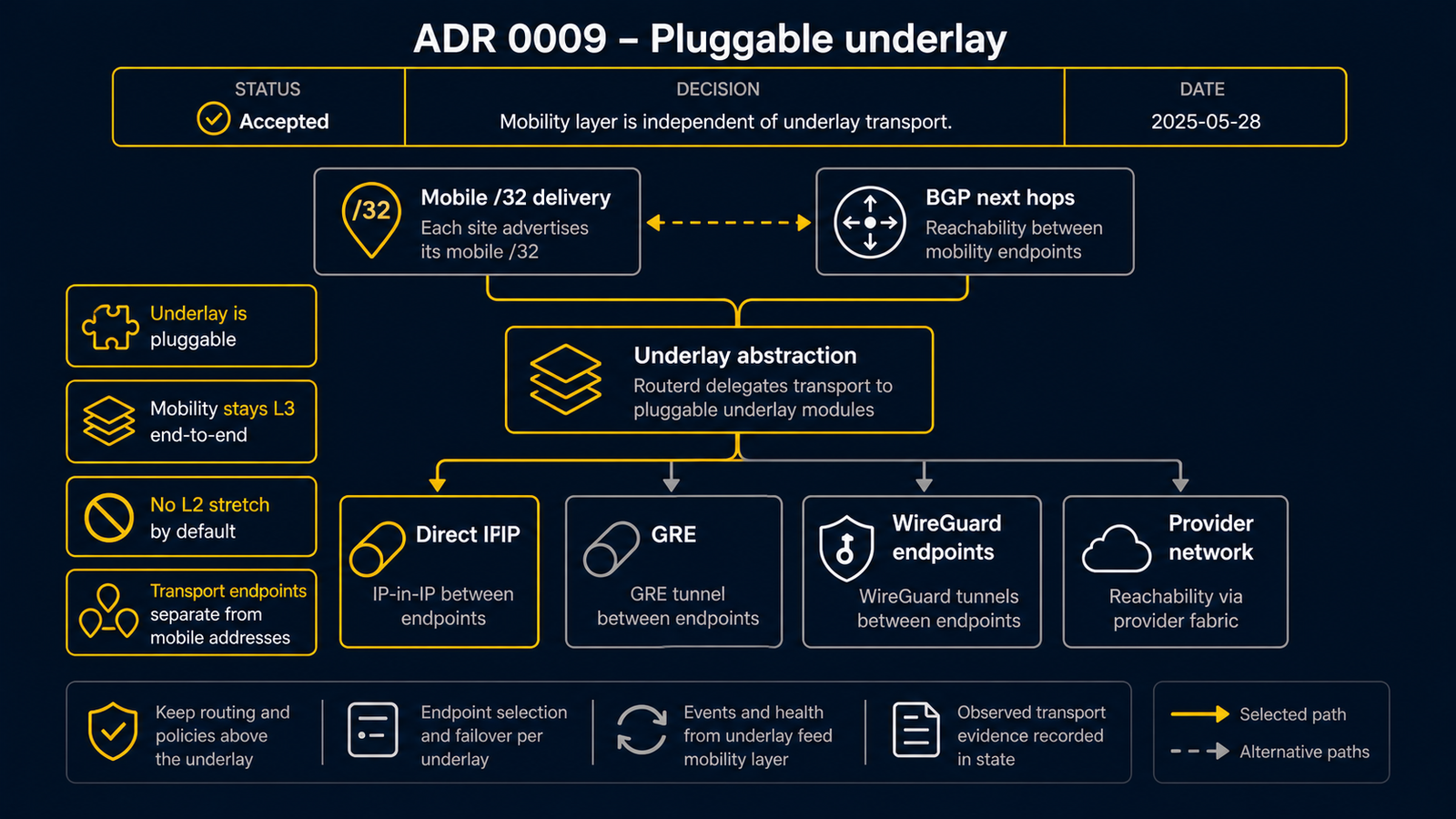
状态
已提议。批准为实验性实现 — 2026-06-01。
以 CloudEdge overlay/SAM 数据平面(ADR 0006、 Selective Address Mobility)和 zone 无关的 PMTU/MSS clamp(#53/#68)为基础。实验性。
背景
CloudEdge overlay(OverlayPeer)目前使用 WireGuard 作为唯一已实现的 underlay。
在可信的私有 underlay — ExpressRoute、DirectConnect、FastConnect、VPC/VNet 对等 —
上,WireGuard 的加密是冗余的,约 80 字节的开销纯粹是代价。当 underlay 已经可信时,
我们希望操作员能选择更轻量、低开销的 L3 传输,而不改变地址的投递方式。
Overlay 已在适当的接缝处抽象(代码中已确认):
- 投递与 underlay 无关。
hybrid.RouteTarget(peer)将OverlayPeer.Underlay.Type映射到(device, gateway),/32投递路由 (BGP 导入的/32路由与HybridRoute)指向该设备。新增传输只需 新增switch分支。 - MTU / MSS clamp 已参数化。
hybrid.EstimateMTU = underlayMTU(interface) − overheadFor(type)。zone 无关的 clamp 遵循EstimateMTU。新传输只需 开销值和接口 MTU,clamp 即自动跟随。
唯一实质的缺口:设备创建是 WireGuard 专有的(专用的
WireGuardInterface Kind + 控制器)。新的 L3 传输需要
"创建隧道设备"的等价资源 + 控制器。
决策
新 Kind TunnelInterface(hybrid.routerd.net/v1alpha1)
WireGuardInterface 的镜像:一个 OS 隧道设备的 desired state 资源。
OverlayPeer.Underlay 保持为投递选择的引用。TunnelInterface 是
设备 desired state — 清晰的分离(OverlayPeer 的内联字段会
为每个 peer 增殖设备规格,使设备的所有权/幂等性/删除变得模糊)。
Phase 1 字段:
mode:ipip | gre。local、remote: underlay(物理)端点 IP(必需)。address: overlay 内侧地址(可选。否则与 WireGuard 相同,由ipv4-static-address控制器设置)。mtu(可选)、ttl(可选,默认 64)、key(仅 GRE。设置时 +4 开销)。trustedUnderlay: true— 必需(参见安全性)。
Phase 2 在同一 Kind 上扩展 IPIP-over-UDP:
mode:fou | gue表示带 Linux UDP 封装(encap fou或encap gue)的ipip隧道设备。encapSport、encapDport: 本地 UDP 源/监听端口和 peer 目的端口。fou/gue时两者必需。
OverlayPeer.Underlay.Type 枚举增加 ipip、gre、fou、gue。
.Interface 按名称引用 TunnelInterface。
新控制器 tunnel
reconcile TunnelInterface 的 framework.FuncController(Phase 1 仅 Linux。
其他平台报告 unsupported 状态而非使链报错):
- 基于 argv 的
ip调用(非字符串拼接 shell)。ip link show→ add/modify/ip link del实现幂等:ip link add <dev> type ipip|gre local <L> remote <R> ttl <t> [key <k>]fou/gue时:ip fou add port <sport> ipproto 4|gue,然后ip link add <dev> type ipip local <L> remote <R> ttl <t> encap fou|gue encap-sport <sport> encap-dport <dport>ip link set <dev> mtu <m> up
- 地址由现有
ipv4-static-address控制器处理(与 WireGuard 相同)。 - 状态: phase、device、mode、local、remote、mtu。
开销、投递、MTU
overheadFor:ipip = 20、gre = 24(外层 IPv4 20 + GRE base 4)、fou = 28(外层 IPv4 + UDP)、gue = 32(外层 IPv4 + UDP + 最小 4 字节 GUE 头)。 GREkey时 +4。RouteTarget:ipip、gre、fou、gue→(device, "")(/32路由 与 WireGuard 相同指向隧道设备)。EstimateMTU和 PMTU/MSS clamp 自动跟随。pathMTUResourceMTU回退中 增加TunnelInterface默认值(或spec.mtu生效)。
验证
OverlayPeer.Underlay.Type枚举 +=ipip、gre、fou、gue。TunnelInterface:mode ∈ {ipip, gre, fou, gue}。local/remote必需,有效 IP。trustedUnderlay == true必需(否则以清晰消息拒绝)。 MTU/TTL/key/encap 端口的范围检查。
安全性(硬性不变量)
ipip、gre、fou、gue 既不加密也不认证 — 与 WireGuard 根本不同。
仅在已可信的 underlay 上才安全。
- WireGuard 保持为默认。
TunnelInterface除非设置trustedUnderlay: true否则被拒绝 — 操作员对 underlay 为明文的明确确认。仅靠文档/doctor 的 警告太弱。这是验证门控。
阶段划分
- Phase 1:
TunnelInterfaceKind +tunnel控制器 (Linuxipip/gre)+trustedUnderlay门控 +RouteTarget/开销/MTU + 验证 + 单元/fixture 测试 + 示例配置。测试包含 删除顺序不变量:OverlayPeer/claim 删除使/32路由下线,TunnelInterface删除输出设备删除计划。路由安装 需要容忍设备不存在的情况。 - Phase 2(已实现):
fou/gue(IPIP-over-UDP)。GRE-over-FOU/GUE 有意不公开。需要 inner-mode 字段或复合类型字符串。 增加ip fou add的 encap-port 设置。最小头开销假设 连同现有的显式mtu逃逸舱口一起记录。 - Phase 3: FreeBSD(
giffor ipip、gre)— 配置/状态界面不同, 不塞入 Linux 控制器。 - Phase 4: 防火墙自动打洞(raw
ipip= IP proto 4、gre= IP proto 47、fou/gue= UDP)+doctor hybrid检查。
结论
- 操作员为可信 underlay 获得轻量的 overlay 传输。 投递和 MSS clamp 无需更改,自动跟随新的开销。
- 加密的权衡是明确的且有门控(
trustedUnderlay: true), 不会在不可信路径上误选轻量传输。 TunnelInterface是通用的设备 desired state 资源, Phase 2-3 可扩展(encap、FreeBSD)而无需触及投递/MTU 接缝。- WireGuard 的行为和现有部署不受影响(默认不变)。