CloudEdge Selective Address Mobility Phase G — 詳細實作指南
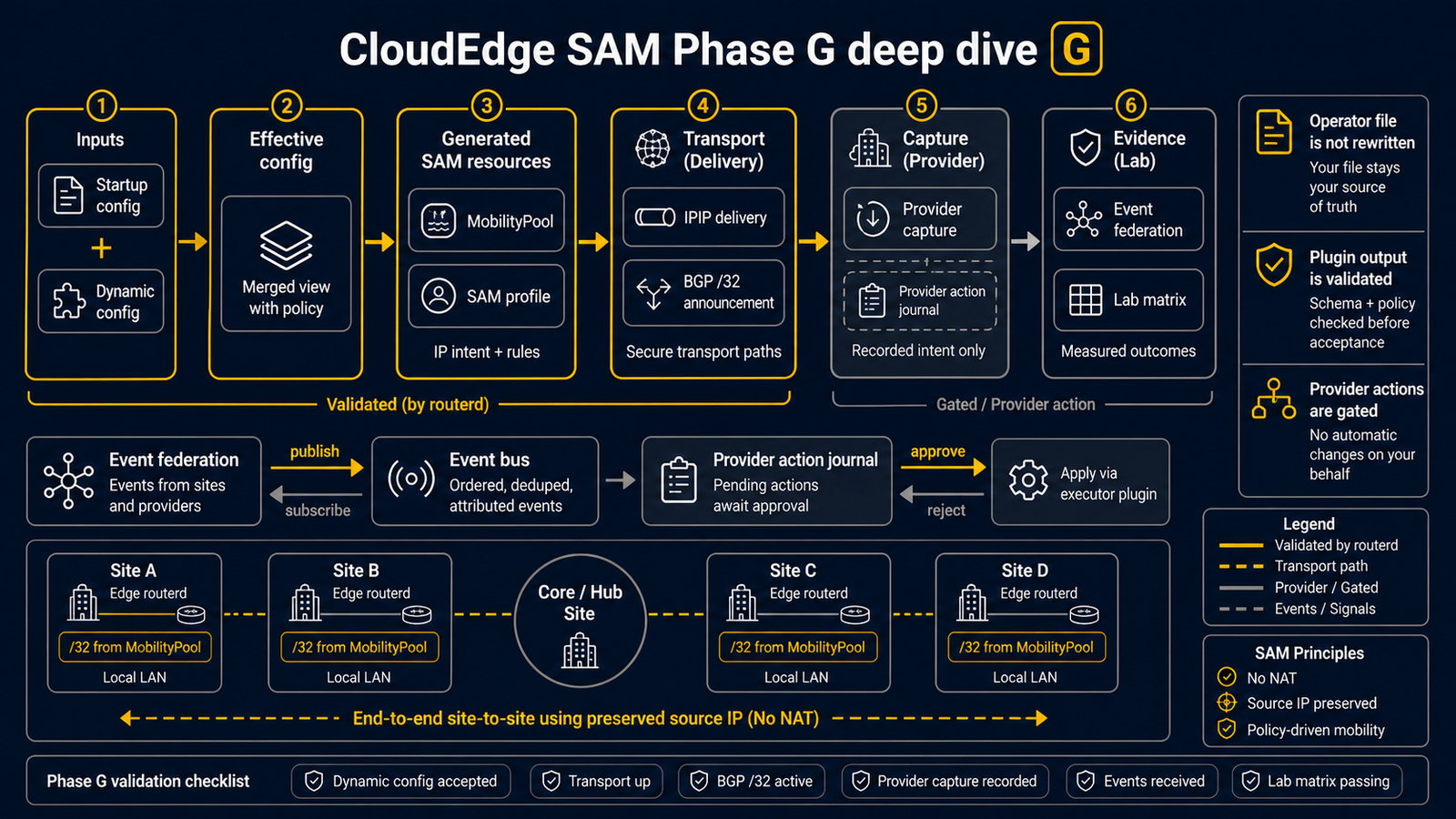
本指南補充 Phase G 的概覽,涵蓋運維人員在解釋和排查 CloudEdge SAM 時 需要的低層細節。
- underlay / transport / overlay 的術語梳理
- WireGuard 或
TunnelInterface的封裝與實際 inner/outer 封包檢視 - iBGP peer、Route Reflector 動作、BGP
/32所有權、liveness marker - RIB 驅動的 trap 與 provider/on-prem capture 實現
- AWS / Azure / OCI / on-prem 的實作差異
- 常規資料平面流程、故障切換、端點的新增和刪除動作
目前 Phase G 設計是 clean Option B。BGP 是 mobility 的唯一真實源。
之前的 mobility 專有 AddressLease、ownershipEpoch、captureEpoch、heartbeat、
route-lowering planner 狀態已從主線刪除。這些可能仍留在歷史 ADR 或 Phase G
之前的討論中,但不是描述目前 CloudEdge SAM 的主要路徑。
1. 層次術語
CloudEdge 文件中有時將「underlay」用作 SAM/BGP mobility overlay 下層 transport 的簡稱。與運維人員溝通時,區分 3 個層次會很有幫助。
| 層次 | 含義 | CloudEdge SAM 中的例子 |
|---|---|---|
| 實體/provider 網路 | 實際承載 outer packet 的網路。 | AWS VPC、Azure VNet、OCI VCN、on-prem WAN、Internet、DirectConnect、ExpressRoute、FastConnect。 |
| overlay transport / underlay | routerd 節點用於在實體/provider 網路上傳輸 BGP 和工作負載封包的隧道或 transport。 | 預設 WireGuard。受信任 underlay 上可用 TunnelInterface mode ipip、gre、fou、gue。 |
| SAM/BGP mobility overlay | 邏輯的 /32 可達性平面。 | BGP best-path 所有權、liveness marker route、RIB trap、後台 provider capture。 |
| 工作負載封包 | transport 內部的實際用戶端/服務流量。 | src=10.77.60.11、dst=10.77.60.12、協定 TCP/UDP/NFS/RPC 等。 |
CloudEdge 文件中說「WireGuard underlay」時,請讀作「SAM/BGP mobility overlay 下層的預設 transport」。不是實體 provider 網路本身。
2. 全域拓撲
已驗證的 Phase G 展示使用 4 站點構型。
- on-prem 作為 iBGP Route Reflector hub
- AWS、Azure、OCI 的 Cloud Edge Router 透過 transport 網路與 on-prem RR 建立 peer
- 每個站點有用於本機故障切換的 active/standby 路由器
- 邏輯池內的選定位址(例如
10.77.60.10/32到10.77.60.13/32)作為 BGP/32path 廣告和學習
3. BGP ownership plane
mobile /32 的擁有者是該前綴目前的 BGP best path。
運維人員無需手動記述 lease、每位址 ownership record 或 provider action。
routerd 將 MobilityPool 的意圖投影為 BGP 廣告,觀測 RIB 來判斷本機
應實現什麼。
要點:
- 所擁有的服務/用戶端位址是普通 IPv4 unicast
/32廣告 - marker route 表示節點的 liveness,與所有
/32分開 - route policy 和 community 表達優先順序與身分
- BGP RIB/FIB 狀態是資料平面使用的擁有者檢視
- provider capture action 以目前 BGP mobility path signature 圍欄
4. 封裝: 實際封包檢視
當某站點向遠端 owner /32 傳送流量時,用戶端封包
不做 NAT。它成為 transport 承載的 inner packet。
例: AWS 用戶端 .11 與 Azure owner .12 通訊。
inner 工作負載封包:
  src = 10.77.60.11
  dst = 10.77.60.12
  proto = TCP/22, NFS, RPC, FTP, bulk TCP 等

transport 封裝:
  WireGuard / GRE / IPIP / FOU / GUE 包裹 inner packet。

outer transport 封包:
  src = AWS CER 的 transport/underlay IP
  dst = Azure CER 的 transport/underlay IP
  proto = WireGuard 為 UDP/51820、GRE、IPIP、UDP-encap 等

實體/provider 網路:
  AWS VPC / WAN / Azure VNet 投遞 outer packet。
接收端 CER:
- transport 封包被解封裝。
- inner packet 仍為
src=10.77.60.11、dst=10.77.60.12。 - 目標站點透過 capture 的
/32path 本機投遞。 - 回應流量沿相同 overlay/BGP 決策路徑反向行進。
5. 各環境的 capture 實現
BGP 決定可達性。provider 或 on-prem capture 使選定的 /32
在正確的邊緣實體或本機可達。
| 環境 | capture 方法 | 控制/API | 故障切換動作 | 注意 |
|---|---|---|---|---|
| AWS | ENI secondary private IP | allow-reassignment 動作的 assign-private-ip-addresses | active 的 marker/path 消失後 standby 奪取 secondary IP。 | 確保 ENI 權限和 source/dest check 行為一致。 |
| Azure | NIC secondary IP(via ipConfig) | 刪除舊持有者的 ipConfig,建立新持有者的 ipConfig | 2 步 remove/add。重試需處理部分故障。 | IP 持有 NIC 暫時不存在的短視窗。executor 需冪等。 |
| OCI | VNIC secondary private IP | assign-private-ip --unassign-if-already-assigned | standby 將 private IP 再配置到自身 VNIC。 | 驗證 VNIC/private-IP 狀態、forwarding 和本機防火牆。 |
| On-prem | proxy ARP + GARP | 由 VRRP/CARP 樣的 mastership 閘門控制的 OS 網路,或對單站點/單路由器/單 owner 的 lab 使用 capture.activeWhen.type: single-router | HA 對使用 VRRP master 閘門。單路由器站點可選無 VRRP 的常時 active capture。 | 防止重複 ARP 回應。split-brain doctor 必須大聲失敗。 |
provider secondary IP 的 reconciliation 是後台 fabric-ingress 實現。 對雲原生入口路徑很重要,但不得成為 overlay 可達性的真實源。
6. 常規通訊序列
應透過封包擷取證明的不變量:
- 用戶端的預設閘道未變化
- 伺服端能看到原始來源
/32 - 不出現 NAT 變換簽章
- 僅選定的
/32目標被 CloudEdge SAM 吸收 - bulk/protocol 測試不因 MTU/PMTU 產生黑洞
7. 雲端故障切換序列
各 provider 動作:
- AWS: 將 secondary private IP 再配置到 standby ENI。
- Azure: 刪除舊 ipConfig,在 standby NIC 建立新 ipConfig。
- OCI:
--unassign-if-already-assigned將 private IP 再配置到 standby VNIC。 - On-prem: VRRP master 轉換使僅新 master 啟用 proxy ARP/GARP。
8. On-prem 的 LAN capture 與 split-brain 安全性
BGP 能決定遠端 overlay 路徑,但僅靠它不能保護本機 L2 ARP 權限。 因此 on-prem capture 在本機閘門控制。
規則:
- 僅 master 對 capture 的
/32位址以 proxy ARP 回應 - backup 即使持有相同的宣告式意圖也保持 fail-closed
- master 轉換時傳送 GARP 以重新整理 LAN 快取
- 單站點/單路由器/單 owner 構型中,
capture.activeWhen.type: single-router是無 VRRP 閘門的顯式常時 active proxy-ARP capture 模式 - 重複 proxy ARP 持有者是硬性診斷失敗
9. 端點的新增/刪除與路由傳播
關鍵訊息傳播是 BGP 的 advertise/withdraw,而非 mobility 專有的 lease/heartbeat 傳播。
新增或恢復的 /32
- 本機 owner 變為 eligible,廣告所有
/32和 marker。 - RR 將路由反射到雲端/on-prem peer。
- peer 將 best path 匯入本機 FIB。
- RIB trap 按需觸發 provider/on-prem capture reconciliation。
- 資料平面開始向新 owner path 轉送。
刪除或移動的 /32
- 舊 owner withdraw
/32或 marker 消失。 - BGP best path 變化或消失。
- path-signature fencing 使 stale provider action 被跳過。
- 新持有者廣告並實現 capture。
- 所有 peer 收斂到新 FIB 路由或釋放狀態。
10. PMTU 與協定透明性
封裝增加了開銷。因此 CloudEdge 將 PMTU/MSS 視為 資料平面不變量,而非可選診斷項。
EstimateMTU跟隨 WireGuard 或TunnelInterface的開銷。routerd_mss鉗制 TCP MSS 以避免黑洞。- 受信任路徑上,當 DF 黑洞緩解比保持 DF 語意更重要時,可用 IPv4 force-fragment。
- 協定透明性 acceptance 應包含 ping 之外的 FTP active/passive、NFS、RPC/rpcbind、大容量 TCP bulk、DF/no-DF PMTU 探測。
11. 運維檢查清單
解釋或除錯 CloudEdge SAM 時,按此清單依次確認。
- 目前 BGP best path owner 持有哪些
/32? - 承載 iBGP 工作階段和工作負載封包的 transport 是什麼?
- 能否分別觀測 inner 和 outer 封包?
- non-owner CER 是否將
/32的 best path 匯入了 FIB? - provider/on-prem capture 是否以正確權限執行?
- stale provider action 是否被目前 BGP path signature 圍欄?
- on-prem backup 是否 fail-closed,split-brain doctor 是否乾淨?
- 封包擷取是否證明了 source 保持和 NAT 無?
- MSS/PMTU 探測和 bulk 協定是否通過?
12. 面向人類的簡短說明
CloudEdge SAM 是 BGP best-path 驅動的 /32 mobility。routerd 以 WireGuard 等
transport underlay 連接站點,透過 iBGP 學習和廣告選定 /32 的 owner,
trap RIB 變化,以 provider secondary IP 或 on-prem proxy ARP/GARP 實現 ingress,
以 NAT 無方式傳輸工作負載封包,因此來源 IP 和用戶端的
預設閘道行為不變。