ADR 0012: BGP /32 地址移动性
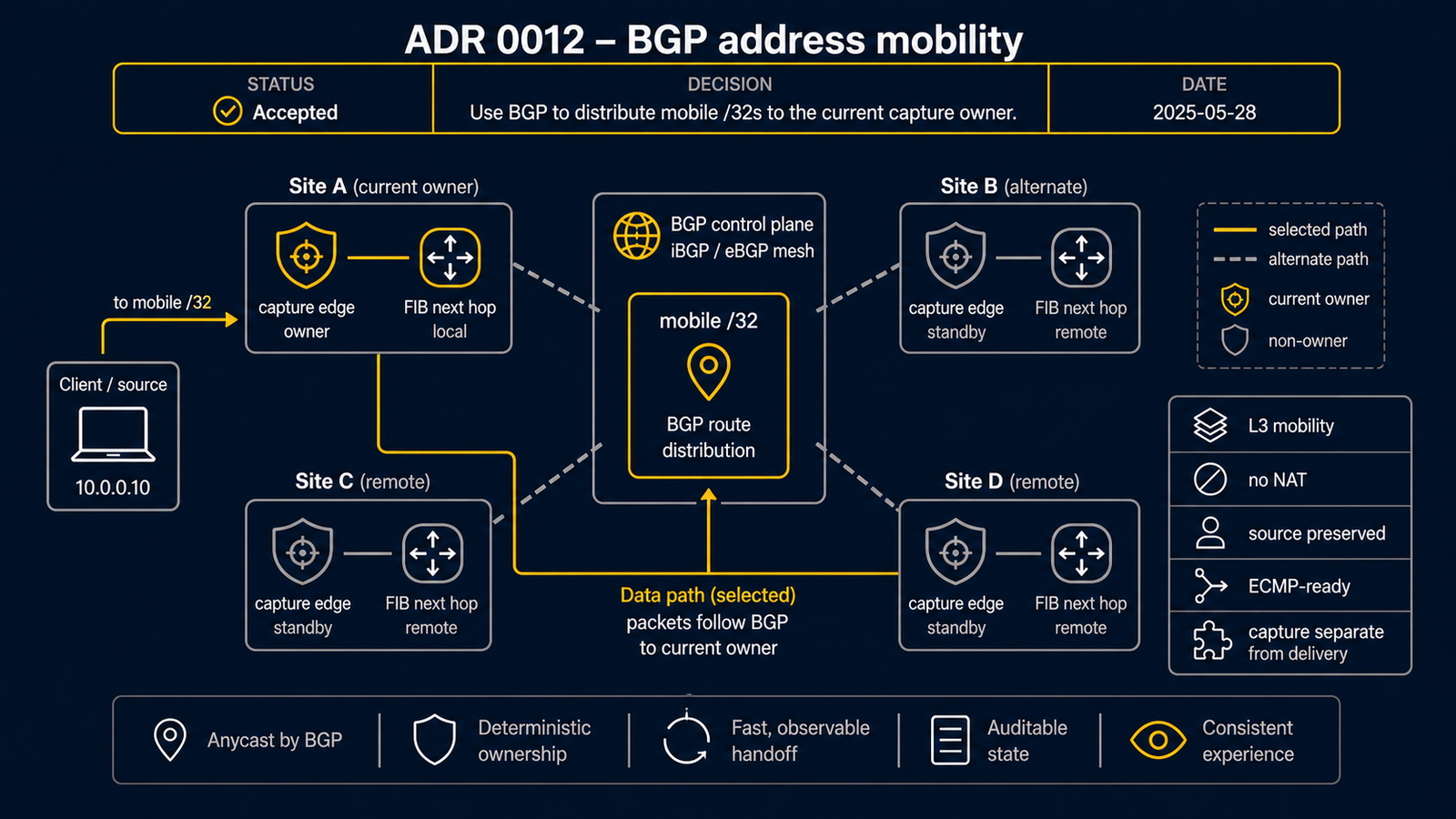
状态
已批准。Phase 1 的 Clean Option B 已实现至 B6/B7 — 2026-06-03。
ADR 0006、 ADR 0008、 ADR 0010、 ADR 0011 为 CloudEdge 移动性数据平面 引入的自定义 overlay 可达性正本被替换。旧有的 provider action、VRRP、 doctor 安全机制作为后台 reconciliation 和本地 capture 守卫保留在范围内。
背景
CloudEdge 的 Selective Address Mobility 最初从 routerd 专有控制平面 构建 overlay 可达性:
- Event Federation 传递 observed/expired/heartbeat 事实;
- mobility 控制器将这些事件投影为
AddressLease行; - planner 将 lease 下降为旧 mobility-domain/claim 资源图、
provider
ActionPlan、captureEpoch、ownershipEpoch状态; - SAM 将生成的 claim 下降为路由、proxy-ARP、provider secondary-IP action;
- provider action 控制器审批/执行云端 mutation。
这证明了产品路径,但也使故障切换依赖于一条长的 routerd 专有链。 实际 4-site 测试中,overlay/云端故障切换受限于 reconcile tick、 lease/epoch 投影、action 导入/自动执行、provider API 行为、 云端 fabric 传播。最近的冒烟结果显示 AWS/OCI 云端故障切换约需 120 秒, 而目标是 60 秒以下,overlay 流量最好在秒级。
routerd 已随附基于 GoBGP 的 routerd-bgp daemon 和 BGP 控制器。
现有接口可完成 GoBGP 启动、peer 和策略配置、通过 AddPath 通告
静态 IPv4/IPv6 unicast 前缀、通过 DeletePath 撤回、
观测 best path / 导入 Linux IPv4 FIB。GoBGP v3.37.0 也支持
EVPN Type-2/Type-5 和 MAC mobility 序列号,但 routerd
当前的 BGP 资源模型和 FIB syncer 仅公开 IPv4/IPv6 unicast。
最快的有用切入点是普通的 IPv4 unicast /32 移动性,而非 EVPN。
云 provider fabric 是另一个约束。AWS VPC 路由表、Azure UDR/Route Server、 OCI VCN 路由表不会自动跟随 VM 私有 GoBGP overlay 通告,除非 配置了显式的云端路由集成。provider 的 secondary-IP 分配、路由表目标变更、 Azure Route Server 等 provider 服务在云原生入口时可能仍然需要。 BGP 可以将 provider API 调用从 overlay 可达性的关键路径中移除, 但并不消除 provider 入口问题。
决策
将 CloudEdge 移动性的overlay 可达性正本迁移到 BGP RIB:
MobilityPool中的每个所拥有地址表示为 IPv4 unicast/32BGP 通告。- 地址的 owner 是在该
/32的 BGP best-path 选择中胜出的节点。 - 非 owner 从 BGP best path 学习远程所拥有地址,通过 BGP FIB importer 而非生成的 SAM 投递路由安装 overlay 投递路由。
- 移动性转移表示为 BGP withdraw/advertise 和路径优先级变更。
操作员意图通过
MobilityPool保持声明式。操作员无需 手动记述 lease、claim 或 provider action。 - best-path 仲裁优先使用标准 unicast 属性:
LOCAL_PREF/MED/communities + 确定性路由策略。可能添加 路由序列 community 以提高可观测性,但普通 BGP 不将 "新序列胜出"作为原生规则。 - EVPN 明确延后。EVPN Type-2 MAC/IP 移动性是未来的互操作选项, 不是 Phase 1 的机制。
Provider secondary-IP 和转发 action 降级为后台 reconciliation:
- 对通过 VPC/VNet/VCN 进入的云端 fabric 入口路径仍然需要。 作为已建立的 routerd overlay 路径的替代。
- 从相同的 BGP 移动性视图和 provider 清单/action 日志 进行 eventual reconcile。
- 不得成为 overlay 可达性的正本。
On-prem LAN capture 保持本地:
- VRRP master 门控、proxy-ARP、GARP、非 master 的 fail-closed 行为、 重复持有者 doctor 检查维持不变。
- BGP 决定远程 overlay 可达性。不替换本地 L2/ARP 权限守卫。
Clean Option B 的最终状态
预发布实现直接以 BGP 作为移动性的正本:
- 所有权: 移动
/32的 owner 是该前缀当前的 BGP best path。 没有单独的AddressLease、ownership epoch、capture epoch 注册表。 - 投递: 非 owner 将 BGP best path 导入本地 FIB,
通过 overlay next hop 路由
/32。MobilityPool 的 route-mode 规划和生成的 SAM 投递 claim 不在主线中。 - Capture/trap: 云端 provider secondary-IP action 从 BGP best-path 视图和 本地放置派生。不是 overlay 可达性的前提,而是 后台 fabric 入口 reconciliation。
- Fencing: provider action 携带当前移动性路径签名
(
mobilityPathSig)+ desired 持有者和 observed provider/日志转换。 当 desired BGP path 不再匹配时 stale action 被跳过。 旧有 ownership/capture epoch 表已删除。 - 活性: 移动性故障切换依赖 BGP withdrawal 和 best-path 收敛。
快速故障检测由渲染到 FRR
bfdd的BFD资源提供。 BGP hold 定时器作为 BFD 不稳定时路由 withdrawal 的非破坏性权威保留。 自定义移动性心跳/staleness 投影已删除。 - On-prem LAN 权限: VRRP master 门控、proxy-ARP、GARP、 非 master fail-closed 行为、重复 proxy-ARP doctor 检查作为本地安全机制维持。
- 删除的状态: B6 中物理删除了移动性 lease、ownership epoch、capture epoch、 deprovision 标记的表和 API。该阶段净减约 6,200 行。
非目标
- Phase 1 不实现 EVPN。
- Phase 1 不删除 provider executor。
- 不声称仅 BGP 即可解决云原生入口。
- 不添加共识、etcd、Raft、单写入者 lease 数据库。
- 不要求操作员为每个地址记述动态 BGP path 资源。
- 不全局删除 Event Federation。在 BGP path 证明后 仅退役移动性专有的使用。
模型
预期稳态映射:
| 现有概念 | BGP 移动性概念 |
|---|---|
AddressLease 活跃 owner | pool/address/32 的 BGP best path |
| observed owner 事件 | 本地 /32 advertise |
| expired/released 事件 | 本地 /32 withdraw |
staticOwnedAddresses | 所有成员的静态本地 /32 advertise |
| F3 交接 | release/withdraw 屏障,随后新 owner advertise |
| 旧 claim 投递路由 | 导入的 BGP /32 FIB 路由 |
| capture 放置的活跃成员 | 路径优先级 / origin 合格性 |
overlay 路由的 ownershipEpoch/captureEpoch | best-path 视图和可选路由元数据 |
| provider secondary-IP action | 后台 fabric 入口 reconciliation |
| on-prem proxy-ARP 权限 | 不变的 VRRP master 门控 |
Phase 1 范围
Phase 1 构建了 BGP unicast path,并在发布前删除了被替换的自定义 移动性 planner/状态路径。
- 为 routerd 生成的
/32通告添加源感知的动态 BGP path 管理。 - 将
MobilityPool的 owner 状态投影到 BGP 通告。 - 消费 BGP best path 作为远程地址投递视图。
- 将故障切换和静态交接的 overlay 可达性迁移到 BGP withdraw/advertise。
- 将 provider secondary-IP 处理转换为后台 reconciliation。
- 对等证明后删除旧有 lease/planner/epoch 路径。
结论
正面影响:
- Overlay 故障切换变成路由收敛问题,而非 routerd 专有的 lease/action/provider 串行工作流。
- 设计与 BGP 服务 VIP 和 pod/服务路由通告等 Kubernetes 边缘模式对齐。
- 最复杂的自定义状态(
AddressLease投影、capture 放置、 capture/ownership epoch 规划、deprovision 标记)可在 迁移后大幅精简。 - D3/D5/D6/D7 的 overlay 可达性可在云 provider secondary-IP reconciliation 仍挂起时收敛。
负面影响 / 风险:
- 普通 BGP 需要显式策略以避免相同前缀通告的歧义。 序列 community 不是原生 fencing token。
- 除非部署也配置了云端路由集成,否则在后台 provider 状态追上之前 provider fabric 入口可能不可用。
- 现有的实际演示和 acceptance 探针需要区分 overlay 可达性与 云原生入口。
- routerd 的 GoBGP 观测当前基于轮询。Phase 1 可能需要添加事件驱动的
WatchEvent路径,否则 BGP 路由安装循环会残留轮询延迟。 - 脑裂防止仍依赖 VRRP/provider fencing/doctor 检查。 BGP best path 选择一条转发路径,但仅靠它不能移除 stale 的本地 proxy-ARP 或 stale 的 provider 分配。
迁移规则
- 维持
MobilityPool作为操作员记述的唯一移动性意图。 - 将 MobilityPool 的默认投递设为 BGP。旧 MobilityPool route-mode planner 是迁移辅助,干净的预发布 API 不接受。
- 不在没有确定性优先级规则的情况下,对同一
(pool, address)同时运行 两个路由下降源。 - 在生成的 BGP path 上标记源元数据,使静态 BGP 通告不被 移动性 reconciliation 误撤回。
- 在 provider reconciliation 存续期间,维持 provider action 的幂等性和 path 签名 fencing。
退出条件
- 4-site 演示使用 BGP 学习的
/32overlay 路由通过定向 SSH 矩阵。 - 协调排空和 stale owner 故障切换通过 BGP 收敛,无需在 overlay 路径上 手动审批/执行 provider action。
- Provider secondary-IP action 的延迟或失败不破坏 overlay 可达性。
- VRRP/proxy-ARP on-prem 的 fail-closed 语义未改变。
- 旧有移动性 lease/planner 路径在测试和实际证据覆盖 BGP 路径后已删除。