ADR 0010: Capture 所有权仲裁(多实例所有权映射 + ownershipEpoch fencing)
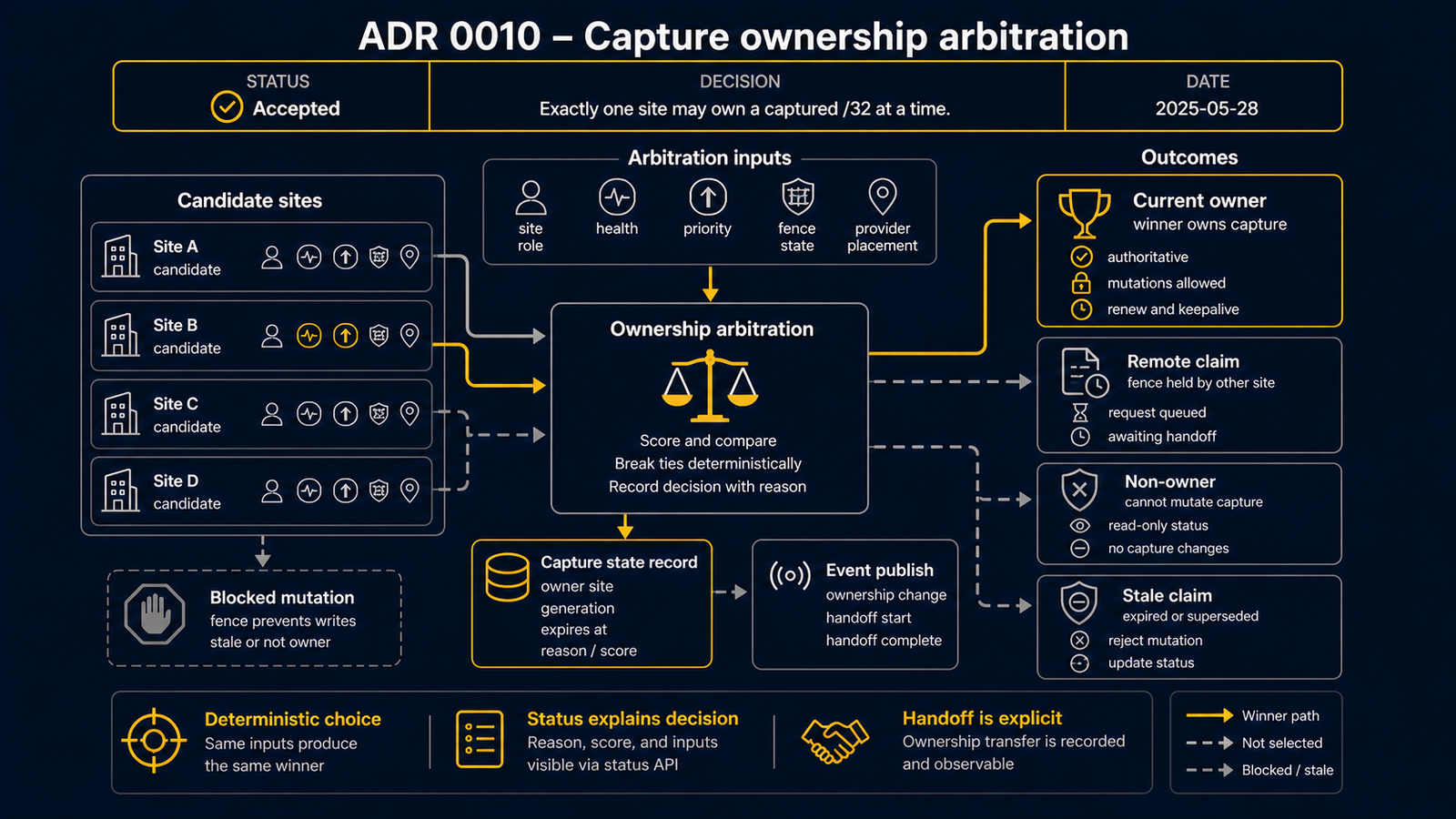
状态
已提议。批准为实验性实现 — 2026-06-01。
以 ADR 0008: 基于 fencing token 的 Capture 协调 和 Selective Address Mobility 数据平面为基础。 对应 issue #76。消费者为 ADR 0011: 通用故障切换(#74)。 实验性。
背景
规模化时,单一云端路由器无法持有所有 capture 的 secondary IP
(ENI/NIC/VNIC 槽位限制),因此 N+1 配置的同 provider 路由器需要
分散 capture 的地址。当前 routerd 没有跨节点所有权映射,
也没有互斥控制:
- 协调是单节点本地投影:每个节点从相同的 federation 事件流
独立投影到相同的
AddressLease状态 (pkg/controller/mobility/controller.go)。无分布式锁、无仲裁、无共识。 - "单一所有者"由每个成员的 capture 声明和确定性 placement 导出,而
captureEpoch(pkg/state/mobility_capture_epoch.go)是每节点、每 (pool, address, captureDomain) 的单调递增 token,在导入/执行门控处 围栏 stale 的 provider action(ADR 0008)。
#76 要求集中式所有权映射、竞争排除和脑裂防止。 ADR 0008 有意回避共识(Paxos/Raft/etcd), 从单调递增 fencing token + provider 的结构性单一分配 + 幂等收敛 构建安全性。此 ADR 延续该理念。
"所有权"在无共识下能保证什么、不能保证什么(诚实的范围)
这不是 linearizable 的分布式锁。事件顺序仲裁 + fencing + 云端的单一分配语义保证以下:
- 看到同一事件流的所有节点收敛到相同的 owner 映射;
- 看到 ownershipEpoch N+1 的节点不会执行 epoch-N 的 action (在门控处围栏);
- 云端 secondary IP 恰好属于一个 NIC,因此 provider 状态 收敛到单一分配。
不能保证的:从 federation 分区的(未看到 N+1 的) 旧 owner,如果仍然存活,通过 provider API 重新获取地址 — 排除这一点需要共识 / STONITH / provider 的条件式 fencing, 但不添加。因此属性为**"围栏式 eventual 所有权 + provider 强制的单一分配"**,而非"脑裂防止"。 On-prem 的 proxy-ARP 更弱(无 provider 单一分配): 上限为 VRRP master 权限 + fail-closed(遵循 ADR 0008)。
决策
ownershipEpoch — 每 (pool, address) 的集群围栏 token
引入 ownershipEpoch。比 captureEpoch 更高层次的概念:
每 (pool, address) 的单调递增 token,仅在确认的 owner 变更时递增
(lease 在 candidate/holding 阶段不递增)。跨云端 / on-prem /
provider / action 的围栏 token。captureEpoch
作为兼容性/派生注解保留。正本迁移到 ownershipEpoch。
所有权映射 — 无 leader 的确定性收敛
没有选举的 leader(leader 选举需要共识)。所有权映射是 每个节点从 federation 事件流确定性构建的收敛视图:
- 每个
(pool, address)的 owner 通过确定性仲裁选择: 放置优先级 → 稳定 tie-break 对合格成员应用 (合格性由 ADR 0011 定义:未排空、健康、存活、适用时 VRRP master)。 - 多实例分散:placement group 内每个地址仲裁到一个 owner。 地址集分散到合格成员(未来:最小负载)。1 IP → 同时 1 个 owner。
- 映射可视化(status DB + 指标 + control/
routerctl), 操作员可以看到"哪个 IP 被哪个节点所有" — 以收敛视图而非单一写入者存储实现 #76 要求的"集中式所有权映射"。
MobilityPool 意图
MobilityPool 没有全局 capture、authority 或 ownership-policy 开关。
成员声明本地 capture/discovery;placement、BGP 观测和 provider facts
确定性地导出 ownership。不会接受对运行中 controller 没有影响的配置。
Action 幂等性 key
provider action 的幂等性 key 至少包含 pool / address / ownerNode / ownershipEpoch / actionVerb / provider / nicRef。stale epoch 或
错误 owner 的 action 被确定性围栏。
阶段划分(此 ADR)
- Phase 1(此 ADR 的最小范围):
ownershipEpochtoken、 确定性所有权记录 + 仲裁(placement priority/tie-break)、 所有权映射的可视化(status + 指标 +routerctl)。无自动 seizure — Phase 1 仅 计算并发布 desired 所有权,用 ownershipEpoch 围栏 action。 现有静态放置继续驱动谁来执行。 - 活性驱动的故障切换/seize 在 ADR 0011。
结论
- routerd 获得了一个集群收敛、围栏式的所有权模型,用于在 N+1 同 provider 路由器间 分散 capture 的 IP,而无需添加共识存储。
- 安全性范围被诚实地陈述("围栏式 eventual 所有权",而非分布式锁)。 云端结构性地强,on-prem 是 VRRP 权限的尽力而为。
ownershipEpoch是单一的跨切面围栏 token,供 ADR 0011 的 seize 和 Phase 4 的云端清单/漂移检测构建其上。