定义防火墙区域
适用场景
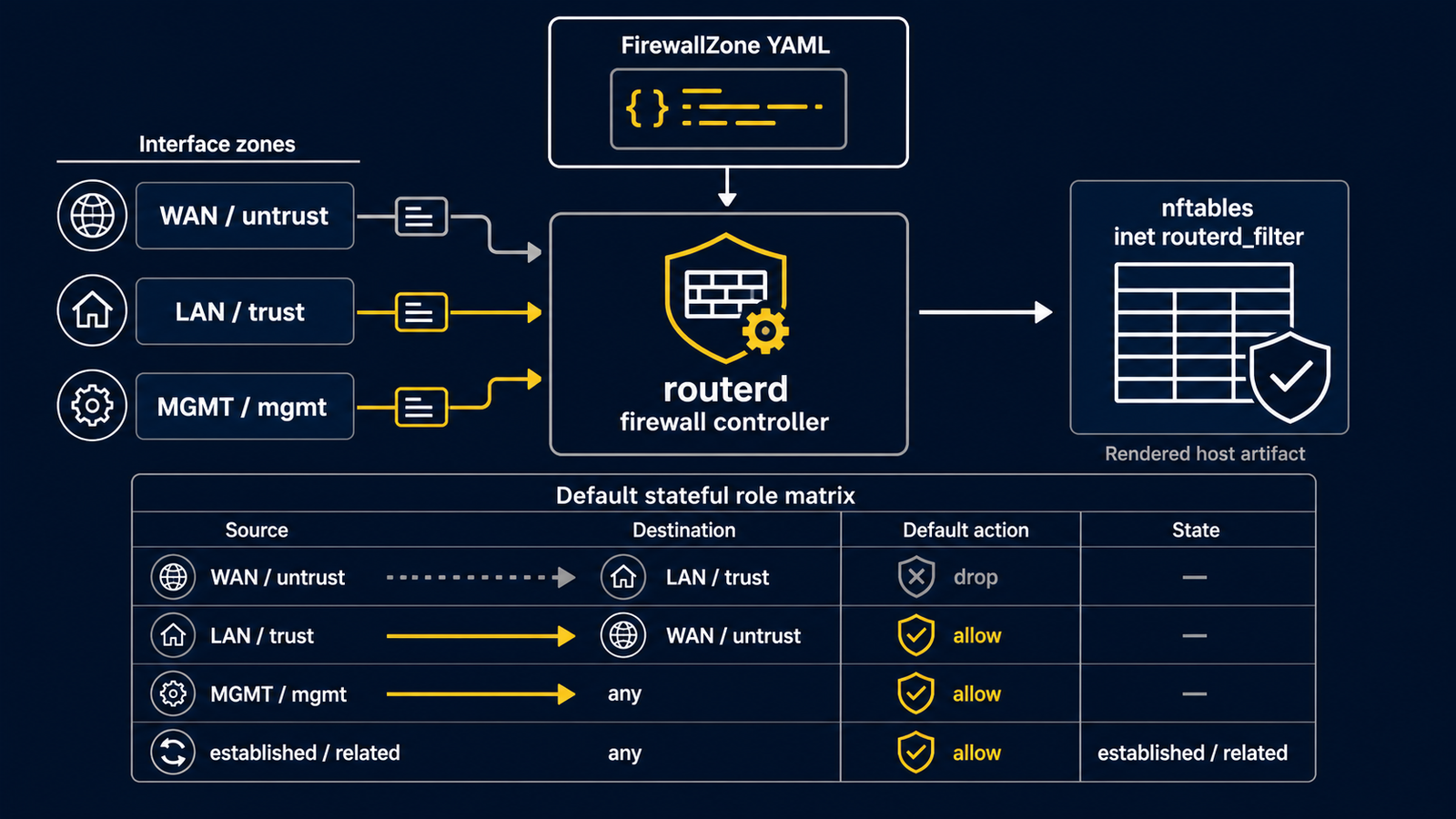
「WAN 无法到达 LAN、LAN 可以到达 WAN、管理路径可以到达所有地方」,这是家庭与 SOHO 路由器的基本策略矩阵。
若以单独的 accept / drop 规则来编写,不仅重复性高,也容易出错。
routerd 的解决方式
使用 FirewallZone 将接口与**角色(role)**绑定。
routerd 会根据内置的角色矩阵,自动推导各方向的默认动作,因此在典型配置下,甚至不需要编写任何 FirewallRule。
| role | 用途 |
|---|---|
untrust | WAN 侧(上游线路、DSLite 隧道、PPPoE 虚拟接口) |
trust | 一般 LAN 区段 |
mgmt | 带外管理网络 |
隐含的矩阵如下:
| from \ to | self | trust | mgmt | untrust |
|---|---|---|---|---|
mgmt | accept | accept | n/a | accept |
trust | accept | accept | drop | accept |
untrust | drop | drop | drop | n/a |
self | accept | accept | accept | accept |
established/related 的连接一律允许。
示例
- apiVersion: firewall.routerd.net/v1alpha1
  kind: FirewallZone
  metadata:
    name: wan
  spec:
    role: untrust
    interfaces:
      - Interface/wan
      - DSLiteTunnel/ds-lite-primary

- apiVersion: firewall.routerd.net/v1alpha1
  kind: FirewallZone
  metadata:
    name: lan
  spec:
    role: trust
    interfaces:
      - Interface/lan

- apiVersion: firewall.routerd.net/v1alpha1
  kind: FirewallZone
  metadata:
    name: management
  spec:
    role: mgmt
    interfaces:
      - Interface/mgmt
对于典型的家庭路由器,这样就已足够。FirewallRule 只在需要表达例外时才新增。