対応プラットフォーム
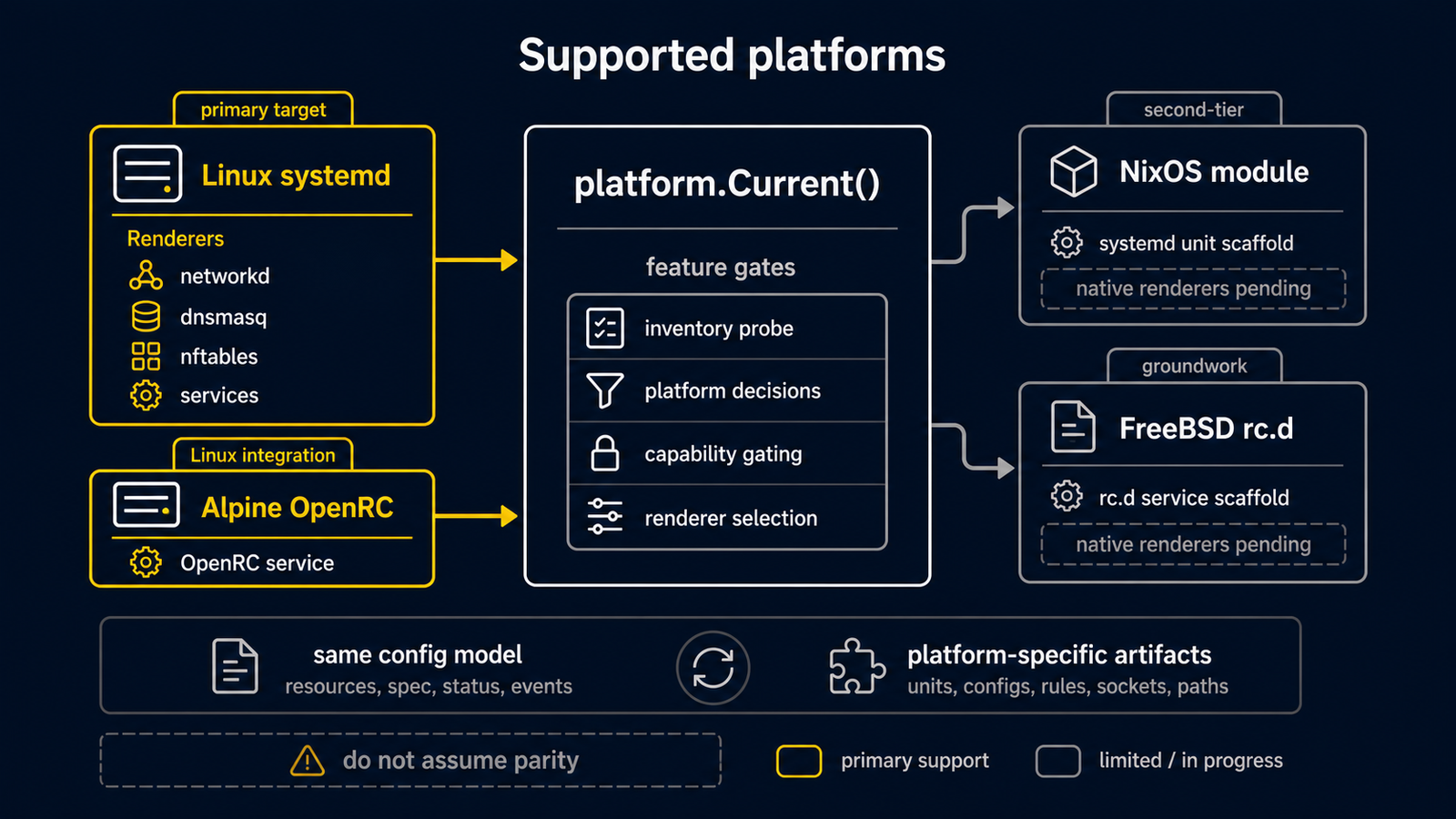
routerd は cross-OS を前提に設計されています。 利用するホスト側の機構は OS ごとに異なります。 このページでは、routerd が各プラットフォームで使う OS 機能を明示します。 適用する前に、生成されるファイルと、実行時の所有範囲を確認してください。
Linux (Ubuntu / Debian)
systemd を使う Linux が主対象です。
リリースインストーラーの配置先は、既定で /usr/local 配下です。
Linux 用のリリースアーカイブを展開し、sudo ./install.sh を実行します。
インストーラーは apt-get、dnf、pacman のいずれかで、ランタイムのパッケージを導入できます。
routerd が Linux 上で利用する OS 機能は次の通りです。
- systemd ユニット
/run/routerdと/var/lib/routerd(ランタイムと永続状態)- dnsmasq(DHCPv4 / DHCPv6 / DHCP relay / RA)
- nftables(フィルター + NAT)
- conntrack(コネクション観測)
- iproute2(interface + 経路)
- 長寿命の
routerd-bgpGoBGP デーモン(BGP ピアリングと経路投入) - keepalived(VRRP の VIP 管理)
- pppd / rp-pppoe(PPPoE)
- WireGuard、Tailscale、strongSwan、radvd
Ubuntu でも、パッケージが事前に導入されていることは前提にしません。
初回の準備では、install.sh が実用的な既定セットを導入します。
継続的な宣言管理では、Package リソースで依存関係を宣言してください。
参考までに、対象パッケージは次の通りです。
| 分類 | パッケージ |
|---|---|
| Runtime | dnsmasq-base, nftables, conntrack, iproute2, keepalived, ppp, wireguard-tools, tailscale, tailscale-archive-keyring, strongswan-swanctl, radvd |
| Diagnostics | dnsutils, iputils-ping, iputils-tracepath, tcpdump, traceroute, net-tools |
| OS 制御 | procps, systemd, kmod |
Linux では、長時間稼働する routerd serve が routerd-dhcpv6-client、
routerd-dhcpv4-client、routerd-pppoe-client を直接監視して起動します。
旧来のリソース単位の systemd ユニットを併用しないでください。
routerd-healthcheck は引き続き管理対象の systemd サービスとして動作します。
Ubuntu 26.04 LTS(resolute)は、managed dnsmasq、nftables、DHCPv6-PD、
委任された LAN IPv6 アドレス、control API について、Ubuntu 24.04 と同じ Linux
data-plane renderer で実機検証済みです。ただし host bootstrap 側では、OS の
ネットワーク設定に注意点があります。routerd が DHCPv6-PD や LAN RA/DHCPv6
を所有する interface では、OS 側の systemd-networkd が DHCPv6 client socket
を開かないようにしてください。そうしないと、routerd-dhcpv6-client より先に
systemd-networkd が UDP port 546 を bind することがあります。
Ubuntu 26.04 の lab router では、OS の DHCP は management interface にだけ残し、 routerd 所有の WAN/LAN interface は OS レイヤーでは link-local のみにします。
network:
  version: 2
  renderer: networkd
  ethernets:
    ens18:
      dhcp4: false
      dhcp6: false
      accept-ra: false
      link-local: [ipv6]
      optional: true
    ens19:
      dhcp4: false
      dhcp6: false
      accept-ra: false
      link-local: [ipv6]
      optional: true
    ens20:
      dhcp4: true
      dhcp6: false
      accept-ra: false
      link-local: [ipv6]
      optional: true
WAN link で RA から得る IPv6 default route が必要な場合は、WAN interface と
DHCPv6 / RA resource を宣言します。routerd は systemd-networkd drop-in として
IPv6AcceptRA=yes と [IPv6AcceptRA] DHCPv6Client=no を導出するため、RA は受けつつ、
OS 側の DHCPv6 client は無効のままにできます。
FreeBSD
FreeBSD も Ubuntu と同じ routerd リソースモデルを使います。
反映先は FreeBSD のホスト機構です。
DHCPv6-PD クライアントは daemon(8) で実行し、リースを安定して維持します。
routerd は Linux 用の機構ではなく、FreeBSD の rc.conf、rc.d、pf、mpd5、ifconfig、dnsmasq にリソースを対応付けます。
FreeBSD 用のリリースアーカイブを展開し、sudo ./install.sh を実行します。
インストーラーは pkg で ports のパッケージを導入し、基本システムのコマンドは導入せず確認だけ行います。
実装済みの項目は次の通りです。
-
DHCPv6-PD デーモンとリースの永続化
-
WireGuard による Linux との相互接続
-
VXLAN over WireGuard
-
mpd5.conf、mpd_enable、mpd5サービスの再起動による PPPoE -
Packageのpkg経由での導入 -
gateway_enable、ipv6_gateway_enable、cloned_interfaces、ifconfig_*、static_routes、ipv6_static_routes、pf_enable、pflog_enable、mpd_enableの、FreeBSD らしいrc.conf.d出力 -
routerd render freebsd --out-dirによるdhclient.conf、mpd5.conf、pf.conf、dnsmasq 設定、rc.dスクリプトの生成 -
FirewallZone/FirewallPolicy/FirewallRuleからの pf のレンダリング -
NAT44Ruleからの pf NAT のレンダリング -
生成された
pf.confのpfctl -nfによる検証とpfctl -fによる適用 -
pfctl -ss -v出力の traffic flow への変換 -
pflog0を BPF から直接読む firewall log。packet を解析するため、tcpdump の文字列表現の差異に依存しません -
DHCPv4、DHCPv6、RA 用の管理対象 dnsmasq
-
/var/db/routerd/dnsmasq配下での dnsmasq リースの永続化 -
サービス再起動前の
dnsmasq --testによる設定確認 -
DHCP、DNS、RA、DHCPv6-PD、DS-Lite、WireGuard、HealthCheck に必要な pf の穴の自動生成
-
generated service artifactsからの rc.d スクリプトの生成 -
routerd-healthcheckの rc.d スクリプトの生成 -
routerd-firewall-loggerの rc.d スクリプトの生成とpflog0の直接読み取り -
TailscaleNodeの rc.d スクリプトの生成 -
mode: vrrpのVirtualAddressで、CARP を使った親インターフェース上のvhid設定 -
dnsmasq の rc.d 順序を
mpd5の後に配置(PPPoE との共存) -
静的 DS-Lite gif トンネルのレンダリング
-
静的 AFTR IPv6、AFTR FQDN、委任アドレス由来の local source による動的 DS-Lite の適用
-
cloud VPN 向け
IPsecConnectionの検証と、strongSwanswanctl接続定義の生成。クラウドゲートウェイとの実疎通確認は環境ごとに行います -
DNS リゾルバーデーモンの FreeBSD ビルド。
DNSUpstream.spec.sourceInterfaceはfib:<n>で FIB バインド型の上流ルーティングに対応 -
healthcheck 向けの native
route -n getと、RTF_PROTO1による BGP FIB 所有権(replace / withdraw / foreign route 保持を含む) -
FreeBSD peer 上の FRR
bfddreconcile と、実機で観測した Up → Down → Up 回復 -
FreeBSD native doctor、KernelModule の
kldloadreconcile、BGP 専用routerd_bgprc.d 生成 -
FreeBSD には probe mark を request-scoped policy route に対応付ける Linux
SO_MARK相当がないため、fwmark healthcheck を明示拒否(unmarked route とsourceInterface/sourceAddressを使用) -
FreeBSD に Linux
IP_FREEBIND相当がないため、non-local DNS resolver bind を明示拒否(resolver 起動前に address を割り当てる)。outbound DNS は別の明示機構であるsourceInterface: fib:<n>を使用可能
ARP/RA observer daemon は FreeBSD 基本システムの tcpdump/libpcap BPF 経路で capture し、proactive ARP write は独立した direct-BPF descriptor を維持します。provisioned native CI は disposable VNET 上で両 daemon を実行し、ARP observation event と rogue-RA event を必須にします。tag 付き native DPI backend は FreeBSD ports の ndpi 5.0 ABI に対応し、同じ native gate の TLS/SNI classification self-test で検証します。
FreeBSD でも ClientPolicy を利用できます。IPv4 は DHCPv4Reservation を基にした pf 近似で、IPv6 guest identity は classification[].ipv6Addresses に明示します。FreeBSD 対象ではこの stable address を identity 契約とし、MAC、OUI、hostname、DHCP fingerprint の match selector は無視せず明示的に拒否します。routerd は IPv4 reservation、MAC、hostname、OUI、DHCP fingerprint から IPv6 identity を推測しません。明示 IPv6 address は inet6 guest-egress deny rule に描画されます。
これは Linux の MAC ベース隔離と同等ではありません。pf は routed filter path で nftables の Ethernet 送信元 selector に一致できず、privacy/unlisted IPv6 address はこの slice の対象外です。別ネットワーク segmentation を使ってください(#849)。
FreeBSD は、Linux 専用の nftables / conntrack / iproute2 を使いません。
Package の例は、FreeBSD 側の置き換えを宣言します。
pf と pflog0 は基本システムを使います。
PPPoE は mpd5、DS-Lite は ifconfig gif、LAN の DHCP/RA は dnsmasq を使います。
WireGuard、Tailscale、strongSwan は ports のパッケージを使います。
| 分類 | パッケージ |
|---|---|
| Runtime | dnsmasq, wireguard-tools, tailscale, strongswan, mpd5 |
| 任意の native DPI | ndpi |
| Diagnostics | bind-tools |
| 基本システム | ifconfig, sysctl, service, sysrc, netstat, sockstat, tcpdump, ping, traceroute |
routerd render freebsd --out-dir <dir> は次を出力します。
rc.conf.d-routerddhclient.confmpd5.confpf.confdnsmasq.confrc.d-*
routerctl apply は生成した pf.conf を導入します。
その前に pfctl -nf で構文を確認します。
dnsmasq も dnsmasq --test で設定を確認してから再起動します。
導入後は pfctl -f で反映し、生成した rc.d スクリプトを service <name> onestart で起動します。
静的な rc.conf の生成だけでは足りない DS-Lite tunnel は、ifconfig gif で動的に適用します。
本番運用の前には、routerd render freebsd で出力を確認してください。
現在のリリース認定は、生成できる機能の一覧より意図的に狭くなっています。FreeBSD では
spec.family: ipv6 を持つ EgressRoutePolicy resource を、認定済みの PF route-to が IPv4 static route host に限られるため明示的に拒否します。package の install/upgrade/uninstall、owned cleanup、foreign service preservation は native amd64 と arm64 で認定済みです。TunnelInterface の gif/GRE dataplane/lifecycle、owned cleanup、foreign interface preservation、credential-free Tailscale external-auth boundary/rollback/foreign preservation、CARP の 3 独立 FreeBSD VM による failover/recovery/cleanup/foreign preservation は amd64 の native evidence に限ります。Tailscale の authenticated enrollment は主張しません。FreeBSD 14.3 の GRE key は outbound encapsulation を制御しますが、kernel は inbound key matching を強制しません。
プラットフォーム差分の残課題
Ubuntu と FreeBSD を比較したときの既知の差分です。
| 領域 | 現在の差分 | 残課題 |
|---|---|---|
| CI と実機検証の網羅 | PR CI は FreeBSD amd64/arm64 binary を compile します。provisioned FreeBSD 14.3 の native evidence は、省略なし go test ./...、live routerd smoke、ARP/RA observer、native nDPI、amd64/arm64 の package lifecycle と、上記 amd64 の TunnelInterface/Tailscale/CARP slice を対象にします。保持済み VM115 evidence は route lookup、BFD、対応 PF dataplane slice も対象にします。 | amd64 の TunnelInterface、Tailscale、CARP evidence を arm64 へ一般化しません。authenticated Tailscale enrollment は release claim の対象外です。 |
| FreeBSD の機能制約 | ClientPolicy は DHCPv4 reservation による IPv4 と明示 classification[].ipv6Addresses による IPv6 pf rule を使います。MAC/L2 照合と IPv4 reservation からの IPv6 推測はできません。 | 明示 address と MAC/L2 制約を維持し、unlisted/privacy IPv6 address は別 segmentation を要求します(#849)。 |
| IPv6 policy routing | 認定済み PF route-to は IPv4 static route host の source affinity に限られます。 | spec.family: ipv6 を持つ EgressRoutePolicy は FreeBSD で明示的に拒否されます。これは実装済み parity ではなく承認済みの product boundary です(#904)。 |
| パッケージのブートストラップ | Ubuntu、FreeBSD はパッケージを命令的に導入できます。 | apt、pkg について、スキーマ、検証、インストーラーのパッケージ一覧、設定例、生成ドキュメントの同期を保ちます。 |
OS 抽象化の実装方針
新しい OS 固有の振る舞いを足すときは、ビジネスロジック層で runtime.GOOS を直接読まないでください。
pkg/platform 層(platform.Features)または Go のビルドタグを使って、境界を明示します。
対象外の OS で実行時に予期せず失敗するよりも、validation や planning の段階で明示的にエラーにすることを優先します。